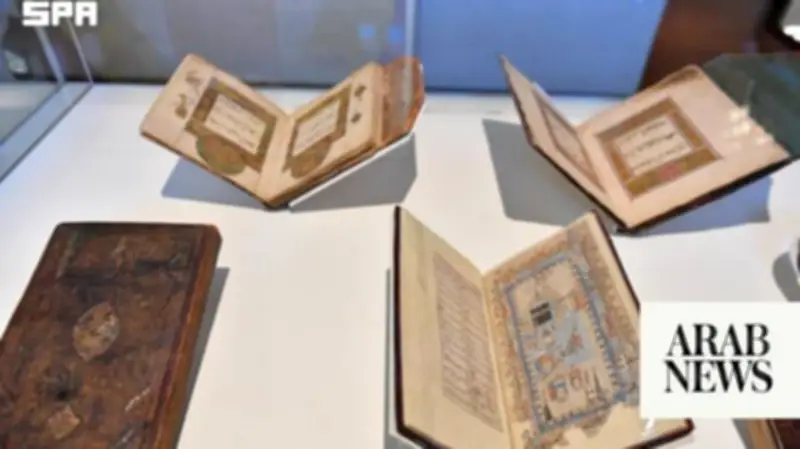
The Red Sea Museum in Historic Jeddah, known as Al-Balad, is highlighting the centuries-old connection between the Red Sea and maritime Hajj pilgrimages through a dedicated pavilion. This pavilion displays a rare collection of illuminated Qur’an copies, Islamic books, historical manuscripts, and maps that accompanied pilgrims on their sea voyages to Makkah.
Diverse Manuscripts Spanning Centuries
The collection includes Qur’anic manuscripts from different periods, featuring 17th-century Chinese manuscripts, 19th-century Kashmiri manuscripts, and a small Ottoman copy. Each piece is adorned with intricate gold decoration, fine calligraphy, and exquisite binding, reflecting the exceptional craftsmanship of Qur’anic manuscript production.
Beyond the Qur’an: Religious Artifacts and Historical Works
Other exhibits include religious artifacts, works on the Prophet’s biography, and poems of praise. A highlight is a 1506 A.D. manuscript depicting the Two Holy Mosques, considered one of the most important historical works documenting Hajj.

Preserving Heritage and Pilgrimage Routes
By showcasing the historical care devoted to the Holy Qur’an, along with the evolution of calligraphy, ornamentation, and bookbinding, the pavilion offers visitors a rich cultural experience. It also documents the spiritual and human journey of millions of pilgrims, preserving the faith and heritage of one of the world's most significant pilgrimage routes.