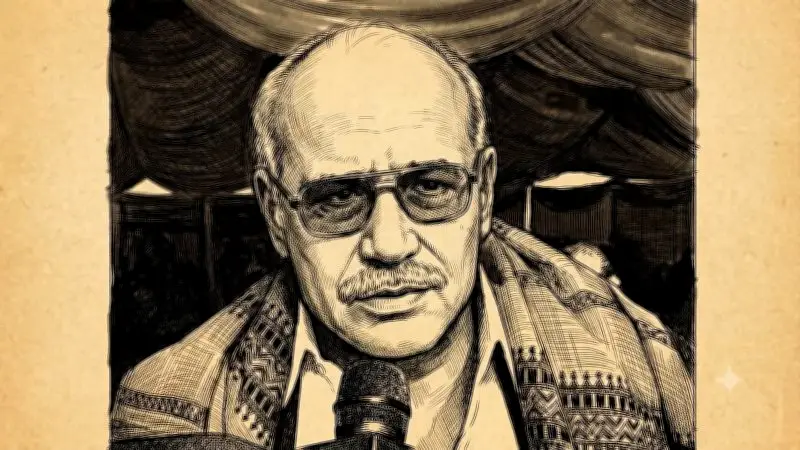
The writing of Sindh's history in South Asia has long vibrated between two extreme poles: the overly romanticised, hagiographical folklore of local traditions, and the clinical, court-centric chronicles left behind by imperial conquerors. To breach this divide requires a methodology that is both deeply rooted in local landscapes and fiercely committed to empirical validation. Dr Ghulam Muhammad Lakho's monumental work, Sindh Babat Ilmi Khojnaon (Research on Sindh), compiled expertly by Sarfraz Ahmed Lakho and published by the Endowment Fund Trust for Preservation of the Heritage of Sindh, represents exactly this type of sophisticated intervention. Covering an astonishing 1,294 years of history across nine dynasties and 37 analytical themes, this repository of knowledge leverages 652 citations to firmly pivot the study of Sindh away from inherited myths and towards evidence-based inquiry. What emerges is a cascading, smoothly written narrative that transforms our understanding of how environment, language, and subaltern agency interact to shape a region's political destiny.
Hydrology and the Shifting of Political Centres
The opening movement of the book establishes a brilliant hydrological axiom, arguing that the political fortune of Sindh is fundamentally tethered to its shifting river courses. By examining the historical city of Aror—the ancient Hindu capital of the region—the text moves past standard military explanations for urban decay. The author registers that the gradual decline and depopulation of the city began during the Umayyad Caliphate. This process of depopulation accelerated significantly during the governorship of Al-Hakam ibn Awana al-Kalbi, and political focus shifted away from Aror. In addition to that, the article charts how the decline in prosperity of Aror directly corresponded to the shifting channels of the Indus. When fluvial avulsions altered the river's course, they triggered mass depopulation, effectively forcing the relocation of Sindh's political centre. Meanwhile, Arughun gave importance to Bakhar, and Aror lost its advantage as a commercial city.
This focus on empirical sources continues as the author addresses the medieval Soomra Period, an era frequently obscured by a scarcity of verified primary materials. By meticulously categorising available sources into primary texts, secondary accounts, and dedicated monographs, and by highlighting the immense historiographical contributions of Pir Husamuddin Rashidi and MH Panhwar, the text provides a structured roadmap for future research into indigenous medieval state structures.

Subaltern Agency and Biographical Chronicles
The narrative then turns towards individual historical actors, stripping away purely hagiographical mythmaking to reconstruct the authentic political and indigenous Samma identity of Makhdoom Bilawal. Rather than portraying him merely as a passive mystic, the text positions Bilawal as a conscious leader of regional resistance against the encroaching Arghun imperial forces, reframing his brutal martyrdom as a powerful political symbol of defiance. This analytical depth is maintained as the study traces the broader evolution of biographical chronicles in Sindh, charting its trajectory from the seminal Tarikh-i-Masumi to later local texts.
The author argues that these compilations, while ostensibly focused on the virtues of saints and elites, actually function as critical repositories of contemporary socio-cultural history. The administrative machinery of the Mughal Empire in Sindh is subsequently analysed through the multifaceted legacy of Mir Abu al-Qasim Nimkeen, a complex imperial actor who simultaneously operated as an administrator, an accomplished scholar, and an enthusiastic promoter of architecture. This exploration of elite intellectualism is extended to the diverse scholarly remains of the Amir Khani Sayyids of Thatta, whose extensive records in poetry and history showcase the depth of Persian scholarship in Sindh and its connections to the wider trans-regional Islamic world.

Shifting the analytical lens towards local demography, the author investigates the historical contributions of the indigenous Khobhar tribe, identifying their exact origins and settlements while focusing on their unexpected contributions to Sufism and Islamic scholarship. The foundational chapter concludes by looking at the modern transition of historiography itself, framing Mirza Qaleech Baig as the transformative bridge between classical Persian chronicling and modern, evidence-based Sindhi historical writing, followed by a stellar tribute to Dr Haroomal Sadarangani, a pioneer who institutionalised Persian studies and cross-lingual translations in modern Sindh.
The Kalhora Dynasty and the Ecology of Power
The second major section of the book offers a breathtakingly detailed investigation into the early eighteenth-century consolidation of the Kalhora dynasty. The author explores the precise socio-political vacuum created by the decline of central Mughal authority in Sindh, which allowed localised spiritual guides to claim territorial sovereignty and systematically convert spiritual networks into bureaucratic instruments of governance. One of the most defining characteristics of the Kalhora administration was its frequent relocation of its administrative capitals.
The book provides an exhaustive chronology of these shifting seats of power, proving that these movements were dictated by ecological, military, and domestic volatility, such as changes in the course of the Indus River, internal family disputes, and localised warfare. Within this framework, the text offers a focused reassessment of Naushahro Feroze and the statesmanship of Faqir Feroz, restoring credit to an overlooked political strategist whose structural adjustments stabilised the early Kalhora state. The author demonstrates the value of material culture by analysing the burial site and funerary inscriptions of Mian Nur Muhammad Kalhoro, treating these epitaphs as uncorrupted primary archives that preserve critical biographical details and political claims.
Urban Development and Pre-Colonial Commerce
Turning towards urban and commercial geography, the book uncovers the pre-colonial history of Karachi, long before British colonial intervention turned it into a global trade hub. The author places subaltern agency at the centre of its development, showing how indigenous Sindhi Mohanas (fisherfolk) and local maritime traders laid the foundational commercial infrastructure of the city during the Kalhora era. This golden age of local administration is epitomised by Mian Ghulam Shah Kalhoro, presented here as the apex ruler of the dynasty. The text examines his military achievements, his architectural commissions like the foundation of Hyderabad, and his sophisticated diplomatic engagements.
The book also highlights the methodologies of historical geography in its search for the lost capital of Allahabad, demonstrating how competing historical views can be resolved by combining text-based research with material archaeological evidence. Pre-colonial interstate relations are explored through eighteenth-century diplomatic documents exchanged between the Kalhora state and the Khanate of Kalat, revealing how these neighbouring powers negotiated border lines and security alliances without relying on external colonial frameworks. As the Kalhora state faced mounting internal instability, its spatial orientation shifted to its final capital, Khudabad Sani, whose historical topography is meticulously mapped by the author.
This stands in stark contrast to the tragic death of Thatta as a major commercial emporium. The study tracks how the shifting of the Indus River away from Thatta's ports, combined with the deliberate creation of newer commercial centres, fundamentally altered trade routes, proving how dependent Sindh's urban landscapes are on ecological shifts. The chapter concludes by auditing the provincial material culture through the ruins of the Sahiti area, and by uncovering several lesser-known and completely forgotten Persian manuscripts that reflect the highly sophisticated intellectual culture of the Kalhora era.
Language, Literature, and Vernacularisation
The book then transitions smoothly into a dedicated exploration of classical Persian literature and its profound impact on the linguistic landscape of Sindh. It opens with an examination of Mu'ayyid al-Fuzala, one of the earliest multilingual dictionaries utilised within Sindh, looking closely at the linguistic challenges faced by medieval lexicographers as they mapped meanings across Persian, Arabic, Turkish, and indigenous Sindhi. This interaction reflects a broader social reality during the Samma dynasty, where Persian gradually replaced Arabic as the primary language of the court and bureaucracy. Crucially, the author emphasises the resilience of the indigenous Sindhi language throughout this transition, remaining the vibrant vehicle for local literary expression and spiritual oral traditions.
The Nusrat-Nama-i-Tarkhan is given a critical review, detailing its biases and historical value for understanding the turbulent Arghun and Tarkhan periods, while making a case for modern scholarly editing. The book also traces the manuscript tradition of the Bayan-ul-Arifin, the foundational text recording the spiritual discourses of Shah Abdul Karim of Bulri, examining its transmission through various copies and translations. Moving away from the southern courts, the author maps the frontier intellectualism of Shikarpur, detailing its rich, overlooked Persian literary tradition across prose, poetry, and early journalism.
This process of the vernacularisation of knowledge is shown through a historic movement to translate major Persian books into Sindhi, a cross-lingual exchange that enriched the local tongue while safeguarding historical knowledge. The section appropriately culminates with a brilliant look at Dr Nabi Bux Baloch's monumental role in locating, editing, and publishing critical editions of major classical histories, preventing the total loss of these primary sources.
Geography and History in the Arid Frontiers
The focus then shifts towards the unique arid landscape of Tharparkar, centring on the historic town of Umerkot and exploring how geography actively shaped the region's history. Functioning as a strategic frontier gateway between the Indus Valley and the Rajputana kingdoms, Umerkot faced distinct geopolitical challenges, acting as a secure refuge for displaced rulers like Emperor Humayun. In such a desert environment, water sources dictate the possibilities of urban planning, a reality investigated through the historical and ecological importance of Kolab Umerkot, also known as Lambo Talao.
The administrative complexities of the British colonial arrival in this desert are examined through the career of Colonel George Tyrwhitt, Tharparkar's first English officer, who had to navigate a highly independent, clan-based frontier society. The chapter closes by exploring the cultural, ecological, and spiritual dimensions of Shah Abdul Latif Bhittai's Risalo within the Umerkot region, emphasising Bhittai's brilliant use of the local Larr dialect to prove that his poetry is deeply rooted in the physical landscape and climate of the desert.
Classical Literature and the Evolution of Sindhi Scholarship
The final major analytical block investigates the depths of classical Sindhi literature, or Sahat, beginning with a rare, pre-colonial manuscript of Ayat al-Kursi and its accompanying Tafsir preserved in an international collection. The author uses this text to examine the evolution of the pre-colonial Sindhi script, showing that long before colonial standardisation, local scholars possessed a highly sophisticated written system. Mian Muhammad Thattvi's compilations are highlighted to demonstrate the depth of pre-colonial religious scholarship, acting as an intellectual bridge that translated orthodox theology into accessible local prose and verse.
The section concludes with a look at the valuable manuscript of Tafsir Raghbat al-Talibin, making a strong case for institutional preservation and arguing that these texts prove Sindh had a highly analytical, productive scholarly class contributing to the wider Islamic world. This is seamlessly tied to the miscellaneous section, which explores how local spiritual lineages, such as Mian Haji Saleh Dhahri within the Luari Sharif Sufi tradition, acted as communal anchors providing essential social cohesion during periods of political fragmentation.
The historical survey concludes by tracing the evolution of Sindhi drama over the past century, illustrating how the stage has consistently mirrored the changing anxieties and political aspirations of Sindhi society from the British colonial era into Pakistani times. No doubt, Sindh Babat Ilmi Khojnaon stands as a monumental triumph of modern South Asian historiography. By organising an expansive historical trajectory, tracking numerous dynasties, and exploring its themes through an uncompromising empirical framework, Dr Ghulam Muhammad Lakho has successfully transformed the study of Sindh from inherited, unverified narratives into an active, evidence-based inquiry. His interdisciplinary approach successfully weaves together the story of how climate change and the River Indus dictate political destiny, while celebrating subaltern agency and rescuing forgotten literary traditions from the margins of history. This book is an indispensable addition to the library of professional historians, researchers, students of South Asian studies, and any general reader eager to discover an authentic, beautifully written, and evidence-based account of Sindh's rich past. Dr Lakho's work does more than simply document history; it revives a rich heritage and inspires future generations to continue exploring the past with analytical rigour. For anyone wishing to engage with the true, uncorrupted depth of Sindh's historical and cultural legacy, this masterwork is an absolute must-read.