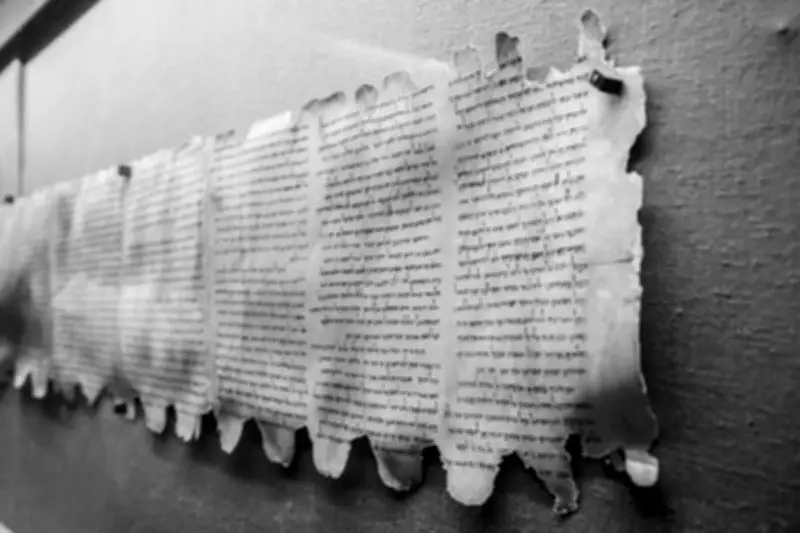
The Dead Sea Scrolls, a collection of Jewish texts discovered between 1947 and 1956 near the Dead Sea, have unveiled invaluable insights into ancient religious and historical perspectives. Comprising parchment and papyrus scrolls, these artifacts include fragments of every book in the Hebrew Bible except Esther. Dating back over two millennia, the scrolls provide a glimpse into the cultural and religious milieu of Second Temple Judaism.
Discovery and Composition
Written by various authors, the texts encompass diverse genres, including biblical manuscripts, sectarian writings, and legal documents. The scrolls were found in eleven caves near the archaeological site of Qumran, with the first discoveries made by Bedouin shepherds. Over the following decade, thousands of fragments were recovered, eventually pieced together to form more than 900 manuscripts.
The collection includes copies of biblical books that are over 1,000 years older than any previously known Hebrew manuscripts. This has allowed scholars to trace the textual transmission of the Hebrew Bible with greater accuracy.

Content and Significance
The scrolls shed light on sectarian beliefs, community practices, and the evolution of biblical manuscripts. They include the Rule of the Community, which outlines the governance and rituals of the Qumran community, and the War Scroll, which describes an apocalyptic battle between the Sons of Light and the Sons of Darkness. Additionally, the scrolls contain commentaries on biblical books, known as pesharim, which interpret prophecies as contemporary events.
Their discovery revolutionised biblical scholarship, deepening our understanding of the roots of Judaism and Christianity. According to scholars, the scrolls demonstrate the diversity of Jewish thought during the Second Temple period and provide context for the emergence of early Christianity.
Impact on Biblical Studies
The Dead Sea Scrolls have confirmed the reliability of the Masoretic Text, the traditional Hebrew Bible, while also revealing variant readings. For example, the Great Isaiah Scroll, one of the most complete manuscripts, shows remarkable consistency with the later Masoretic version, though with some differences. These variations help scholars understand the textual history of the Bible.
Furthermore, the scrolls have illuminated the development of Jewish law, liturgy, and messianic expectations. They include the earliest known references to the Son of Man and the Elect of God, concepts that were later central to Christian theology.