Ancient Tools Keep Sadu Weaving Alive in Tabuk
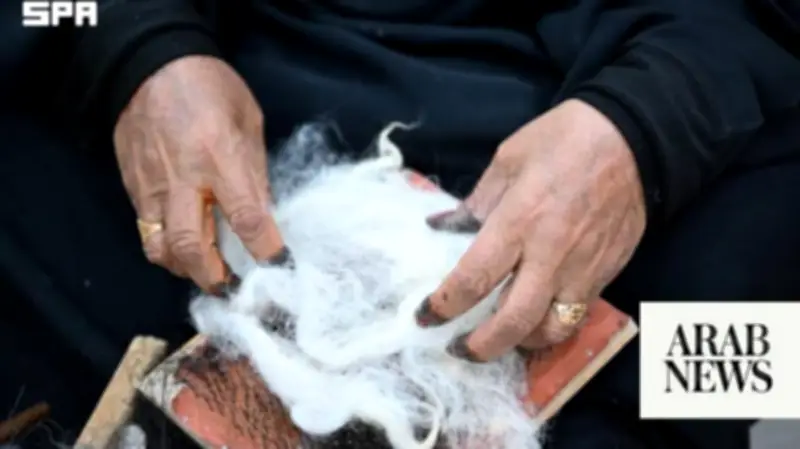
As Saudi Arabia works to preserve its traditional crafts, Bedouin artisans in the Tabuk region continue to rely on centuries-old carding and spinning tools to produce authentic Sadu textiles. The carding tool and spindle are ancient implements used to prepare raw wool and goat hair for weaving and tent making.
The Carding Process
The carding tool consists of two wooden blocks fitted with iron teeth. It detangles and softens raw wool, removing knots and strengthening the fibers. Once prepared and fluffed, the wool is spun into durable yarn using a spindle, a thin wooden stick with an X-shaped disc, ready to be woven into sturdy panels for traditional Bedouin tents.
Cultural Significance
Wool and camel-hair weaving are among the oldest traditional crafts, relying on tools and resources available in the local environment. Sadu weaving uses natural materials and inherited manual techniques, giving each piece a unique character and cultural significance. Beyond their functional use, these creations serve as expressions of local identity and tradition.

Artisan Perspective
Local craftswoman Sarah Al-Atwi said that the craft is a living cultural heritage reflecting the authentic values and lifestyle of Tabuk’s Bedouin community. These traditional practices continue to receive widespread attention and support at local heritage festivals, ensuring they are preserved and passed down to future generations.
Preservation Efforts
The inclusion of Sadu weaving at local festivals underscores the commitment to supporting traditional crafts, empowering craftswomen, and preserving cultural heritage as a vital component of the Kingdom’s national identity.