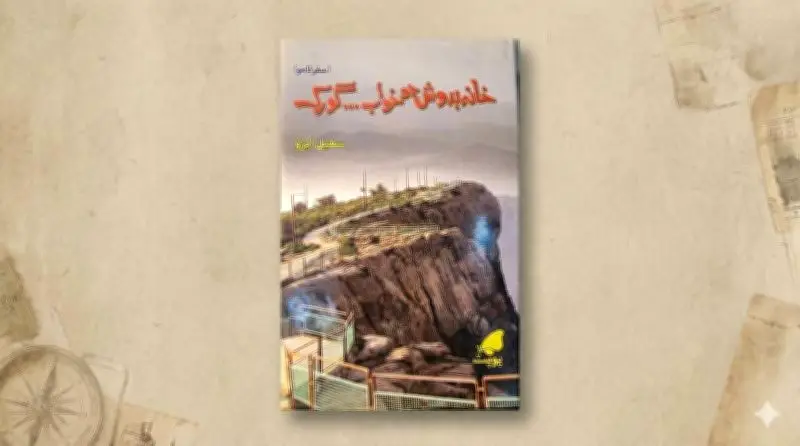
Khanbadosh jo Khuwab…Gorakh (The Nomad’s Dream…Gorakh) is a Sindhi travelogue written by Suhail Faisal Abro, who served as an Assistant Professor of Sindhi at Bhitshah College, Hala. My interest in Sindhi travel literature began with the writings of Altaf Shaikh, who introduced innovation and a modern outlook to Sindhi travelogue, and, coincidentally, Suhail also hailed from the historic town of Hala. Sadly, Suhail Abro passed away on 12th May 2022 at the age of 46, leaving behind a valuable contribution to Sindhi literature and travel writing.
Beyond his literary pursuits, Suhail was admired within literary circles for his exceptional compering skills, poetic flair, rhythmic expression and sonorous voice. Renowned broadcaster Naseer Mirza affectionately nicknamed him “Nadhro Naseer” (“Little Naseer” or “Young Naseer”), a tribute to his eloquence and captivating style of expression. Suhail embraced this comparison with humility and pride, and it remained a cherished part of his literary identity.
In this book, the author narrates his long-cherished dream of visiting Gorakh Hill Station, Sindh’s renowned and only hill station, located in Tehsil Johi, District Dadu. Nestled in the heart of the Kirthar Mountains, Gorakh Hill Station offers sweeping panoramic views of rocky escarpments, scenic valleys, boundless horizons, a cool climate, mesmerising night skies and untamed landscapes that unfold across the Sindh–Balochistan frontier. Often referred to as the “Murree of Sindh,” Gorakh stands approximately 1,734 metres above sea level.

Driven by a desire to experience Gorakh’s natural beauty and tranquil atmosphere, Suhail has beautifully recounted his journey through the Kirthar landscape, vividly describing the hardships, challenges and memorable encounters that shaped his expedition. Beyond documenting a physical journey, the book captures the emotions, curiosity and sense of wonder associated with exploration. Suhail’s evocative narration creates an immersive reading experience, transforming the reader from a passive observer into a fellow traveller. Through descriptive prose and personal reflection, one feels drawn into the landscapes, encounters and emotions experienced throughout the journey.
The Journey Of A Hill Child
The book is divided into two expeditions to Gorakh he made — the first in May 2008 and the second in July 2014 — each carrying its own experiences and depth of description. In recounting the first expedition, Suhail eloquently describes the rocky and dilapidated road conditions that made the journey both arduous and perilous. Yet, after traversing such unforgiving terrain, when he finally set foot on Gorakh Hill Station for the first time, he chose to do so barefoot, wishing to feel the tenderness of its soil. In a moment of poetic reflection, he compared himself with Neil Armstrong. However, he takes greater pride in his own landing, humourously remarking that while Armstrong stepped onto the Moon wearing a spacesuit, he touched the soil of Gorakh with his bare feet.
Suhail's casual yet engaging writing style transforms the reader into a fellow traveller, sharing in the hardships, discoveries and emotions experienced throughout the journey. Suhail wrote that for nearly twelve years, he refrained from visiting Gorakh, deterred by perceptions surrounding the deteriorating law-and-order situation in the region. His eventual journey was prompted by a cultural festival coupled with a musical evening organised by a local NGO to promote tourism. During the event, several speakers highlighted that the area’s peaceful ambience and generous hospitality had always been welcoming. Reflecting on his experience, he acknowledged that his long-held apprehensions were dispelled after visiting Gorakh Hill Station, where myth gave way to reality.

Recalling his second expedition to Gorakh Hill Station in July 2014, Suhail noted that his primary motivation was to witness the progress of infrastructure development in the region. He had heard that roads had been improved, hotels and rest houses had been established, electricity had been extended to the area, and necessities had been made readily available, eliminating the need for travellers to carry provisions for survival. Eager to experience these changes first-hand, he embarked on another journey to Gorakh. However, the reality fell short of his expectations. While acknowledging some improvements, he expressed disappointment over the limited accommodation facilities, inadequate drinking water supply and poor condition of sanitation and bathroom facilities. Suhail was particularly critical of the performance of the Gorakh Development Authority, arguing that the development of essential tourist infrastructure had not kept pace with the area's growing popularity.
Paradox Of Paradise: Reflections On Gilgit-Baltistan
Drawing a comparison with Murree, Pakistan’s premier hill resort, he observes that Murree offers hundreds of hotels, restaurants, recreational facilities and modern amenities that collectively attract tourists from across the country. In contrast, despite its immense natural beauty and tourism potential, Gorakh remained underdeveloped and inadequately promoted. Suhail’s reflections reveal a sense of frustration that such a unique destination had not received the attention and investment necessary to transform it into a world-class tourist attraction.
This book is a unique blend of travel writing, personal reflections and the challenges encountered during an adventurous journey. The narrative is enriched with philosophical observations and emotional insights that clearly capture the author's state of mind. Through his words, readers can sense his excitement at witnessing the breathtaking beauty of Gorakh, his joy at finally realising a long-cherished dream and his disappointment with the inadequate facilities and slow pace of tourism development. The book offers a distinctive reading experience. Suhail's casual yet engaging writing style transforms the reader into a fellow traveller, sharing in the hardships, discoveries and emotions experienced throughout the journey.
Beyond documenting a visit to Gorakh, the travelogue explores the myths, folklore and stories associated with the region while simultaneously presenting the realities of contemporary Gorakh. In doing so, it provides not only a radiant account of travel but also a thoughtful reflection on the relationship between nature, culture, development and human aspiration. In his book, Suhail wrote that, unlike his companions, he could not sleep in the cramped Jimny jeep. While the others drifted into sleep, he remarked, “Maut aayi to so lenge” — “When death comes, we shall finally sleep.” The statement, casual yet profound in the context of the arduous journey, acquires a poignant meaning in retrospect. Suhail Abro departed this world far too early, finding his final rest much sooner than his readers and admirers had imagined.