The recent wave of academic disruption across Karachi's public universities has exposed a deep structural crisis in Pakistan's higher education system. This crisis is increasingly shaped by austerity, fragmented administration, and neoliberal governance models that treat education as a cost centre rather than a public good.
Karachi University at the Epicentre
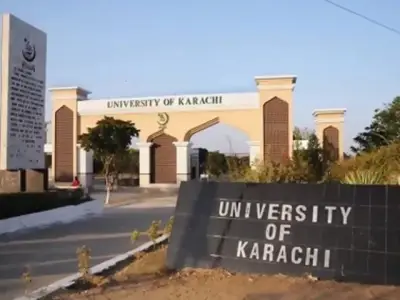
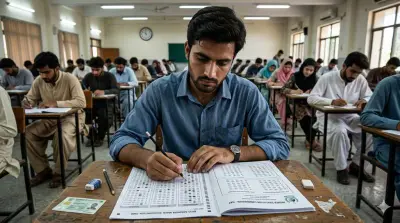
At the centre of the current unrest is Karachi University (KU), where teachers and non-teaching staff recently suspended a prolonged boycott of semester examinations after receiving government assurances regarding pending dues. The protest, led by faculty bodies including the Karachi University Teachers' Society, had lasted for over a month and brought academic activity to a near standstill. Invigilators, paper setters, and administrative staff collectively refused to participate in examinations due to unpaid salaries, delayed allowances, and unresolved financial commitments linked to evening programmes and examination duties.
Although the Sindh government has now pledged to move summaries on ex-gratia payments and housing-related allowances, the episode reflects a recurring pattern of crisis, temporary settlement, and partial concessions without structural reform of university financing. The agreement has postponed the immediate boycott, but underlying tensions remain unresolved.

Student Involvement and Broader Unrest
Importantly, the unrest at KU has not been isolated. Students have increasingly entered the protest space and aligned their concerns with those of teachers and staff. In multiple departments, student groups have voiced opposition to examination uncertainty, administrative delays, and an "unpredictable" academic calendar. In some cases, student-led boycotts have emerged in solidarity, demanding either cancellation of examinations or alternative assessment through assignments. This convergence of student and faculty grievances signals a broader breakdown of trust between universities and their primary stakeholders.
A similar situation has unfolded at the Federal Urdu University of Arts, Science and Technology (FUUAST), where teachers boycotted examinations over unpaid salaries, pensions, and suspended allowances. Once again, the university system appears locked in a cycle where academic continuity is held hostage to unresolved fiscal disputes.
Neoliberal Policies and Systemic Failures
These parallel crises are not simply administrative failures. They reflect a deeper ideological shift in the governance of public universities. Under neoliberal policy frameworks, higher education has increasingly been subjected to budget constraints, performance metrics, and partial privatisation through self-finance programmes and evening shifts. Universities are encouraged to generate their own revenue while state funding continues to decline in real terms. The result is a predictable set of outcomes: delayed salaries, unpaid dues, rising tuition fees, and deteriorating academic infrastructure.
In this model, students are treated as consumers, faculty as contractual service providers, and education is reframed as a market transaction. The recent boycotts expose the fragility of this arrangement. When revenue generation fails, or administrative delays accumulate, the burden is immediately shifted onto classrooms, examinations, and ultimately students' futures. Academic calendars become unstable, and learning is repeatedly interrupted.
Growing Political Awareness
The protests at KU and FUUAST also reflect a growing political awareness within campuses. Students are no longer passive recipients of institutional failure. They are increasingly articulating demands for accountability, transparency, and structural reform. Their participation in demonstrations alongside faculty suggests an emerging alliance that challenges bureaucratic inertia and the broader logic of austerity-driven education policy.

A Systemic Warning
What is unfolding in Karachi is not an isolated labour dispute but a systemic warning. Public universities are being stretched between underfunding by the state and increasing expectations of self-sufficiency, a contradiction that is becoming increasingly unsustainable. Without a serious rethinking of higher education financing, governance, and its social purpose, examination boycotts and academic disruptions are likely to intensify. Universities cannot function as market-driven entities while simultaneously being expected to deliver equitable, stable, and high-quality education.