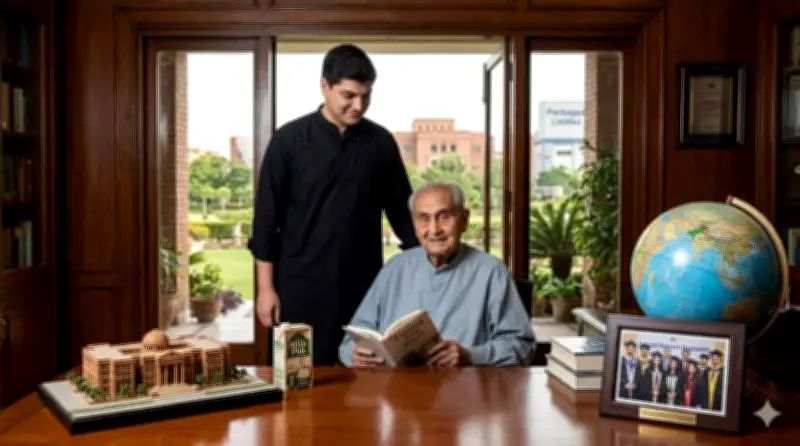
As Syed Babar Ali turns 100, Pakistan should see more than a birthday tribute. His life matters not because it has been long, but because it has been useful. At a time when public life often rewards noise, status and short-term attention, he offers a simple lesson: build something that lasts.
A Personal Encounter
I met him before leaving for my master's degree in the United States. He was pleased to hear that I was going. He spoke warmly about America, about the education that had shaped his own thinking, and about the university model that later influenced LUMS. Then he asked me what I planned to do after my degree. I told him I hoped to work abroad and settle there. He smiled and said something I have not forgotten: “You are receiving an excellent education. Why not come back? Use what you learn. Create opportunities. Share that knowledge, so others can benefit from it here in Pakistan.” It was not a lecture. It was a simple question. But it carried the weight of his whole life.
A Life of Purpose
Babar Ali Sahib was born in Lahore in 1926, before Pakistan existed. He lived through the empire, Partition, independence, war and many cycles of hope and disappointment. But his importance does not lie in what he witnessed. It lies in what he chose to do with the life he was given. For him, education has never been only a personal achievement. It is not just a degree, a passport or a way out. It is a public trust.

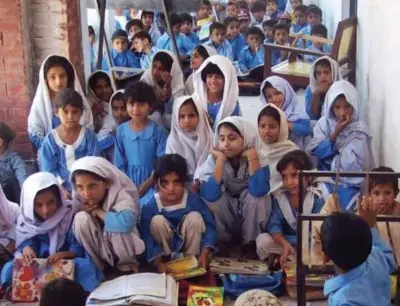
Pakistan speaks about education constantly, yet too many children are still denied a fair chance to learn. He did not treat that failure as a slogan. He treated it as work. That is why his legacy is built around institutions. LUMS was not created to copy a foreign university. It was created because Pakistan needed a serious university of its own. Packages Limited, Milkpak and the Ali Institute of Education came from the same belief: that Pakistanis could meet high standards if the right systems were built and protected.
Building for Others
When Babar Ali Sahib asked me to return, he was not being sentimental. He was reminding me that privilege is not something to display. It is something to use. This is what separates him from many public figures. He did not only speak about reform. He helped create structures that could survive beyond him. In a country where too much depends on personalities, that may be one of his greatest contributions.
The National Outreach Programme carries the same idea further. Talent in Pakistan is not limited to those who can pay for good schools. It exists in villages, small towns, crowded cities and homes where families have never imagined elite education as a possibility. If opportunity reaches those students, the result can change not only one life, but an entire family. The programme matters because it turns excellence into access, not inheritance.
Learning from Others
His autobiography is called Learning from Others. The title says a great deal. In Pakistan, powerful people often prefer to be praised rather than questioned. Babar Ali Sahib took a different path. He looked outward without insecurity and looked inward without pretending that mistakes do not matter. That habit of learning, without drama or self-importance, shaped much of what he built.
His life was also shaped by Partition. He was in Ann Arbor when independence came. Indian and Pakistani students raised both flags together. When he returned to Lahore in December 1947, many of his Hindu and Sikh friends had already left. His close friend Harcharan Singh Brar later became the chief minister of Punjab in India. Their friendship survived a border that was meant to divide lives completely. That experience seems to have stayed with him. It taught him that Pakistan cannot grow through fear, isolation or defensiveness. It must engage with the world, learn from it and still build in its own soil. That is not a weakness. It is confidence.
A Lesson for Today
Pakistan today does not lack ambition. It lacks disciplined ambition. We have many people who can criticise, predict decline or demand change. We have far fewer who are willing to spend decades building schools, companies and institutions that others can use. That is why this centenary should not be reduced to nostalgia. It should make us ask a harder question: what are we building that will outlast us?

When Babar Ali Sahib asked me to return, he was not being sentimental. He was reminding me that privilege is not something to display. It is something to use. On his hundredth birthday, the lesson is clear: build and build for others.