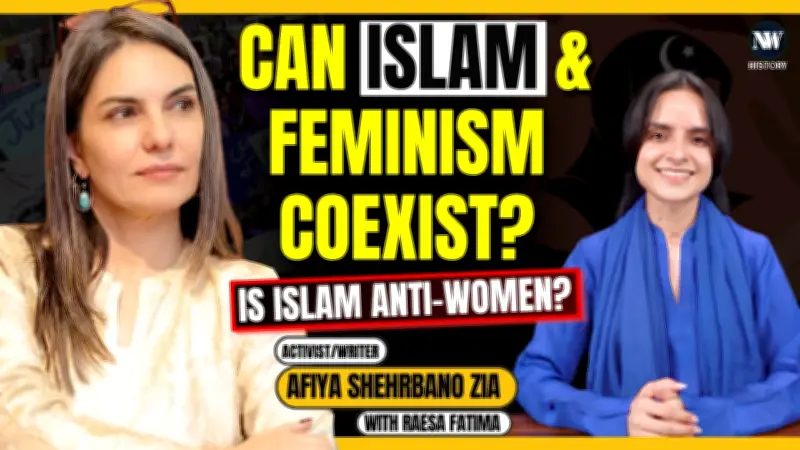
Afia Zia on Islam, Feminism, and the Future of Gender Equality in Pakistan
In a compelling and thought-provoking conversation, feminist scholar, author, and activist Afia Zia delves into the intricate relationship between Islam and feminism, examining how religious interpretations have shaped women's rights in Pakistan. She critically analyzes the lasting impact of General Zia-ul-Haq's Islamization policies, which entrenched patriarchal norms and limited women's agency in both public and private spheres.
The Rise of the Aurat March and Secularism
Zia discusses the emergence of the Aurat March as a powerful grassroots movement demanding gender justice, bodily autonomy, and an end to violence. She contrasts its secular, pluralistic vision with state-imposed religious frameworks, arguing that true equality requires separating faith from governance. The conversation also explores women's political agency, highlighting how women navigate conservative structures to assert their rights.
Economic Empowerment and Patriarchy
Economic empowerment is another key theme, with Zia noting that financial independence is crucial for women's liberation but is often undermined by systemic barriers. She critiques how patriarchy persists through cultural norms, legal loopholes, and economic disparities, making progress uneven. The discussion touches on controversial debates within feminism, including the role of religion in shaping feminist agendas and the tensions between universal rights and local contexts.

Future of Gender Equality in Pakistan
Looking ahead, Zia expresses cautious optimism, emphasizing the need for sustained activism, legal reforms, and shifts in societal attitudes. She calls for a multifaceted approach that addresses structural inequalities while respecting diverse perspectives. The interview concludes with a reflection on the ongoing struggle for gender equality, urging solidarity across different movements to challenge entrenched systems of power.
This dialogue offers a deep dive into the complexities of feminism in Pakistan, shedding light on the intersections of religion, politics, and social change.