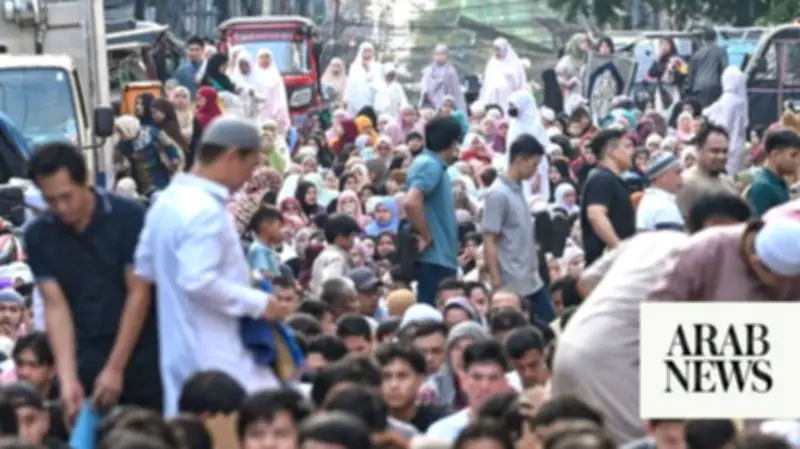
As they observed Eid Al-Adha, Muslim Filipinos reconnected with their families, relatives, and cherished traditions unique to their minority community in the predominantly Catholic country. Like Muslims worldwide, those in the Philippines began the day before sunrise, waking early for morning prayers and to honor the holiday that emphasizes sacrifice, gratitude, charity, and compassion.
Community Spirit and Feasts
After prayers, families offer goats or cows and distribute the meat to the community. Feasts and celebrations are shared with relatives, friends, neighbors, and guests. For Tahir Malikol, a chef and educator from Cotabato City known for promoting the heritage of Bangsamoro, the communal spirit of Eid is its main hallmark. "We celebrate it as a feast where everyone is welcome. Anyone who wants to visit the house and eat is invited," he said. "People come together in the spirit of bayanihan — everyone contributes something. Some bring water, some bring delicacies, others bring spices and ingredients. Everyone shares in the preparation and celebration."
Traditional Dishes
Across Muslim communities in Mindanao island, Sulu archipelago, or Zamboanga peninsula in the south of the Philippines — such as Maguindanaon, Maranao, Tausug, Yakan, Iranun, and Sama-Bajau — traditional dishes prepared only during special occasions take center stage. Among the Maguindanaon and Iranun people, one main dish is sinina, a coconut-based beef or goat stew known for its smoky, savory flavor. Maranaos have riyandang, similar to Indonesian and Malaysian rendang but with fewer spices. "Instead, the flavor comes mainly from ground rice used as starch, sakurab — a local aromatic ingredient found in Mindanao, especially in Lanao — chili and toasted coconut," Malikol said.

Tausug, Sama-Bajau, and Yakan communities serve kulma, a rich beef curry dish, and tiyula itum, or "black soup," a meat stew with a dark broth made from burned or charred coconut meat. In the past, these were reserved for royalty and high-ranking figures such as datus. "These dishes are traditionally served only during special celebrations," Malikol said. "Ordinary people were not allowed to eat them before. Even today, they are still prepared when there are special guests."
Another Maguindanao specialty is linigil, a coconut-based stew cooked slowly until the sauce reduces and becomes dry, coating the meat. There are two versions: linigil as api made with beef, and linigil a manok made with chicken. "For linigil a manok, the chicken is first boiled until tender but not fully cooked. Then it is hung upside down for 24 hours to drain all the moisture and dry out completely. The next morning it will be cooked further. This process is still followed today," Malikol said. "These dishes are served during Eid Al-Adha and Eid Al-Fitr, as well as royal enthronements of datus and sultans. The celebrations are considered incomplete without them because they are highly labor intensive and reserved for the most important occasions."
Sweet Traditions
For sweets, a highlight is dudol, made of rice flour and coconut milk, mixed and cooked by stirring slowly and continuously for six to eight hours by two people. Traditionally, while cooking dudol, people are expected to remain quiet, as it is believed the dessert will not cook properly otherwise.
Personal Connections
As they joined celebrations, many Filipinos felt reconnected not only with family members but also with memories. Aliyya Samir, from Sulu, always remembers her mother, especially when tiyula itum is served. "Before she passed, my mother would always prepare tiyula itum for Eid or any special occasion," she said. "Eating it now brings back so many memories of her warmth and the way she looked after everyone. That's exactly what makes having it during Eid so special. It feels like a warm hug from the past, a way to keep our traditions alive and a beautiful way to keep mommy's spirit right there with us at the table."

For Maher Usman, from Zamboanga del Sur, Eid Al-Adha is a time when the generosity of local people "truly shines" as they are reminded of their roots. "For us Maguindanaons, Eid Al-Adha, or what we also call Hari Raya Haji, is a reflection of our deep faith, our willingness to sacrifice and the strong bond that holds our families together," he said. "With every bite of kyuning or sinina, we are reminded of our ancestors and our identity as Maguindanaons. Sharing meals together is our way of thanking Allah and recognizing that no matter how difficult life may be, as long as we have our family and our faith, we are already blessed."