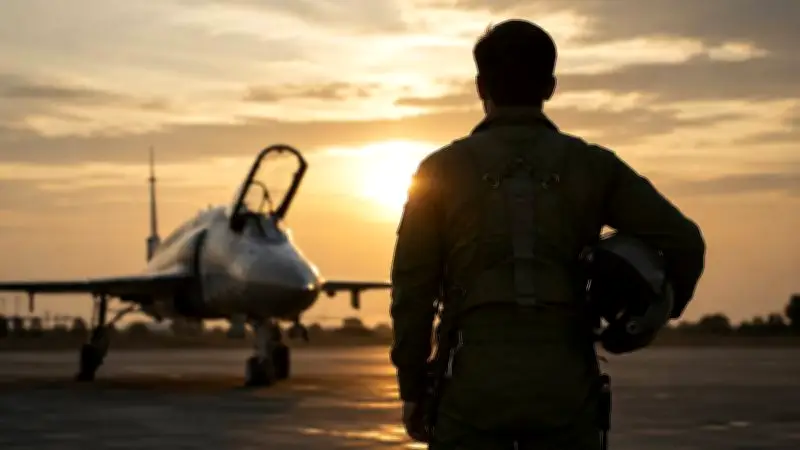
Sajad Haider, a former jet pilot in the Pakistan Air Force, passed away on May 23, 2026. He was part of an elite group, representing just 0.0004% of Pakistan's population. His death leaves a void among family and friends, who remember him for his unique blend of toughness and kindness, his booming voice, and his selflessness.
The Final Moments
On the night of May 23, his family received two messages: one about a cardiac attack, the other confirming his death. His three siblings rushed to the hospital, only to find him wrapped in crisp white sheets in the ICU. He was taken to the mortuary and placed in a drawer. On the morning of May 25, after the ghusal, he was seen again, wrapped in white, before being laid in a grave.
A Life of Routine and Change
In his later years, Sajad Haider spent his days watching television, from Western comedies to Geo plays, and especially his niece's plays. He had begun to slouch, which a physiotherapist corrected. The physio also noted blisters on his lower legs, requiring antibiotics. In his final months, he lumbered rather than walked, finding even short distances painful, yet he rarely complained.

His health declined from pneumonia, treated from May 2, with a second X-ray showing improvement. However, blisters on his feet and fluid leakage may have contributed to his demise. He was hospitalized on a dermatologist's advice.
Reflections on Death
The author reflects on the distinction between the theory and practice of death. Visits to the graveyard, covering his grave with rose petals, bring peace to the living. The author imagines Sajad Haider reunited with loved ones in a spacious, joyous courtyard, free from pain.
The dhobi's reaction to the news—shock, silence, then Arabic verses and duas—exemplified a mix of theory and practice. Sajad Haider, if alive, would have grinned at this distinction. Now, the practice of death is his alone.
Legacy and Lessons
Sajad Haider's life offers lessons in resilience, kindness, and the acceptance of mortality. His memory endures through the stories of his booming voice, his love for family, and his quiet strength. As the author notes, the empirical reality of loss is beyond words, but the gratitude for having known him remains.