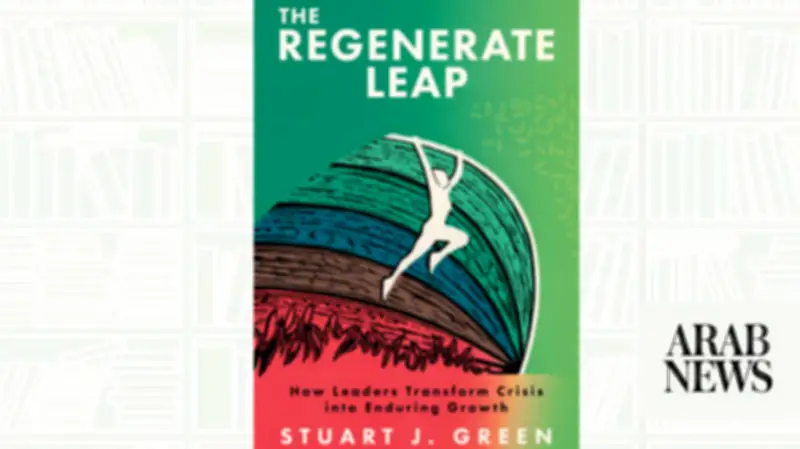
In February 2017, Stuart Green received a devastating phone call. His wife, attorney Mia Green, had been ambushed and shot 29 times in front of their three children. His world burned down completely in an instant. Resilience books proved useless in the aftermath. They all assumed solid ground to return to. But Green’s ground had turned to ash. He needed something far beyond bouncing back.
From Resilience to Regeneration
His book, “The Regenerate Leap,” reads as both a personal memoir and a manifesto for navigating what he calls an age of polycrisis. Green’s central premise is that resilience focuses on recovery, while regeneration emphasizes transformation. Whether readers find the distinction convincing may depend on how familiar they are with existing resilience literature.
He found his answers in a burned forest with his children. They noticed that life had not returned to normal. Instead, it grew back differently, more diverse and more beautiful than before. Drawing on ecological metaphors, the author compares human recovery to the regeneration of forests after fire. Forests regenerate into more resilient ecosystems, and human systems follow the same pattern. The analogy is accessible and memorable, though at times may risk oversimplifying complex human experiences.

The Regenerate Framework
The “Regenerate Framework” has three main phases. “RAZE” clears away denial and embraces brutal reality. “ENRICH” builds agency, skills, and support systems. “GROW” transforms identity and helps others do the same. At the heart of the book is Green’s belief that people can reclaim agency after trauma by reframing themselves as authors rather than victims of their stories.
Forgiveness as Liberation
One of the book’s most striking sections concerns forgiveness, which he frames not as an act of absolution but as a means of personal liberation. He addresses his wife’s killers without hatred or revenge. “We forgive you,” he writes. “Not because you deserve it. But because we choose to walk free, unshackled by hatred.” Green points to his children’s response to the tragedy as an example of the regenerative mindset he advocates throughout the book.
A Catalyst for Reinvention
The book’s appeal lies in its insistence that adversity can be a catalyst for reinvention rather than merely recovery. Ultimately, “The Regenerate Leap” is less concerned with resilience as traditionally understood and more focused on transformation, offering readers a framework that is equal parts personal testimony and leadership philosophy.