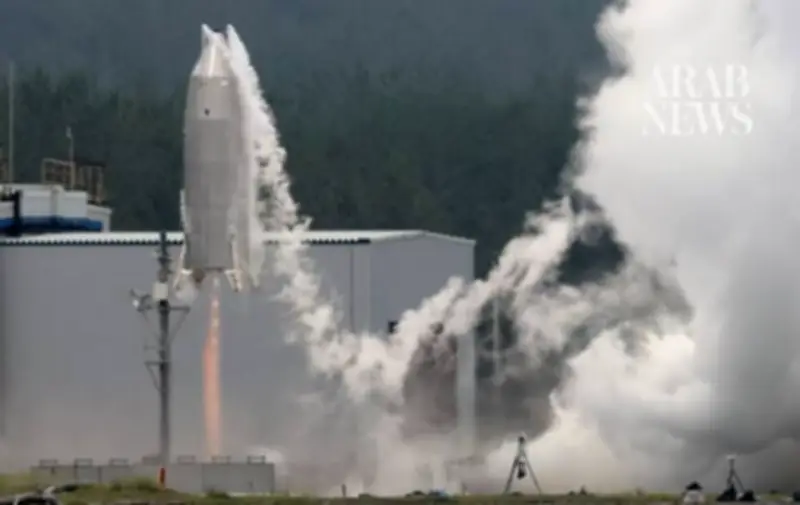
Japan's space agency, the Japan Aerospace Exploration Agency (JAXA), announced on Saturday the successful completion of the first lift-off and landing test of its prototype reusable rocket, marking a significant step in cost-cutting rocket technology dominated by SpaceX.
Test Flight Details
The prototype, named Reusable Vehicle eXperiment (RV-X), was launched from JAXA's Noshiro Rocket Testing Center in the Akita region of northern Japan. It reached an altitude of approximately 10 meters (33 feet) before landing, with the entire flight lasting about 40 seconds, according to JAXA.
Takashi Ito, the JAXA engineer who led the launch, expressed relief and satisfaction with the outcome. “I feel we have put a great deal of time and effort into this, and now that the prototype has taken off and landed without problem, I must say I feel a great sense of relief,” Ito told reporters.

Data Analysis and Future Steps
Ito noted that the agency will review the data to fully determine the test's success, but he is “confident” that the team “obtained very useful data.” This test is a crucial step toward developing reusable rockets that can drastically reduce launch costs.
Reusable Rocket Technology Context
Most rockets are designed for single use, with components falling into the sea, burning up in the atmosphere, or remaining in orbit as debris. The first launch stage is the most expensive component. Reusable rockets, pioneered by SpaceX with its Falcon 9 since 2017, can significantly lower costs by allowing the most expensive parts to be recovered and reused.
Japan is racing to boost the international competitiveness of its rocket industry. In June, JAXA successfully launched its flagship H3 rocket, months after a previous mission to put a satellite into orbit ended in failure. Additionally, in June last year, a subsidiary of Honda became the first Japanese company to successfully launch and land a reusable rocket.
Global Competition
China achieved its first successful reusable rocket landing on Friday, a breakthrough that could challenge US dominance in the field. Japan's successful test adds to the growing global momentum toward reusable launch systems, which are seen as key to reducing the cost of space access.