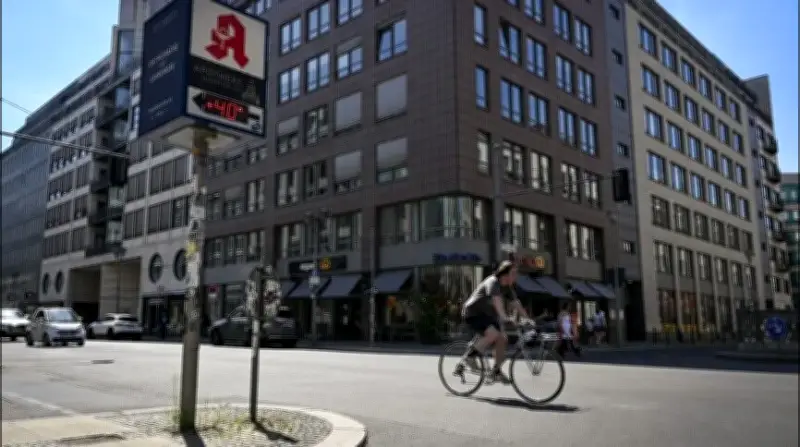
A severe heat wave that intensified over the weekend has disrupted transport and healthcare services across Germany, with temperatures exceeding 41°C (104°F) in some regions, according to local officials and media reports.
Transport Disruptions and Infrastructure Damage
Rail and tram services were disrupted in several cities, while sections of motorway infrastructure were damaged as extreme heat caused cracks in road surfaces. Leipzig suspended tram services after expansion joints melted, while damaged rail segments in Essen were replaced following heat-related deformation, authorities said.
Healthcare System Under Strain
The heat wave also forced the evacuation of residents from care homes in some regions, while patients in hospitals without air conditioning endured difficult conditions, according to local reports. In North Rhine-Westphalia, an investigation has been launched after a death at a care facility. The reports also stated that 26 people drowned in separate incidents while attempting to cool off in lakes, rivers and other bodies of water during the heat wave.

Fire Risk and Public Safety Measures
Fire risk levels were raised to their highest in several federal states, with officials urging the public to avoid lighting fires outdoors and to stay away from forested areas.
Lack of Air Conditioning and Climate Adaptation Concerns
The widespread use of air conditioning remains uncommon in Germany, particularly in residential buildings, schools, hospitals and care homes, highlighting broader concerns about the country's resilience to heat. Public concern about climate adaptation has grown, with residents calling for stronger government action.
“We see the consequences. Train stations are closing because the tracks cannot withstand the heat, buses are stopping, and hospitals are under pressure,” Angelika, a local resident, told reporters, adding that stronger climate action was needed. Antonia, another resident, said climate policy required more decisive action, stressing that both citizens and authorities shared responsibility for adapting to rising temperatures, while highlighting the need for greater investment in hospitals and rail infrastructure.
Freund, another interviewee, said infrastructure and construction standards needed to be adapted to rising temperatures, including by making air conditioning more widely available in public buildings. In Berlin, Senegalese resident Mustafa said he spent the weekend indoors due to the heat, adding that cities needed more green spaces and less concrete to mitigate rising temperatures.
Marina Herz, a resident near Berlin, said Germany was not adequately prepared for extreme weather, noting repeated disruptions in transport and a lack of cooling systems in public infrastructure. “We are simply not prepared for these conditions. Better planning is needed,” she said. In Frankfurt, Melanie criticised the lack of air conditioning on public transport, saying Germany needed to prepare for increasingly frequent heatwaves.
Government Response and Expert Warnings
Healthcare associations also warned of inadequate preparedness. The National Association of Statutory Health Insurance Physicians criticised the government for failing to provide sufficient support to medical practices during heatwaves. Environment Minister Carsten Schneider said €100 billion ($107 billion) in federal funding was available to states and municipalities for heat adaptation measures, although local authorities argued the resources were insufficient. Experts warned that structural adaptation measures would take years to implement, with environmental specialists saying the benefits of such investments would not become apparent for another 10 to 20 years.