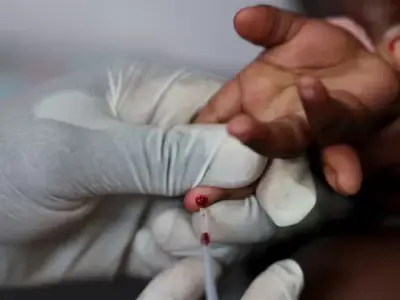
Federal Minister for National Health Services, Regulations and Coordination, Mustafa Kamal, chaired a high-level meeting to review the progress of the Prime Minister’s Hepatitis C Elimination Programme. The meeting was attended by Professor Saeed Akhtar, Head of the National Technical Advisory Group on Hepatitis, the Additional Secretary Health, the Project Director of the Hepatitis C Programme, heads of major public hospitals, and the District Health Officer (DHO) Islamabad.
Pilot Phase in Islamabad Identifies Operational Challenges
During the meeting, the Project Director briefed participants on the progress of Hepatitis C screening under the pilot phase launched in Islamabad. Speaking on the occasion, he said that the primary objective of initiating the pilot phase in Islamabad was to identify operational challenges within the system before expanding the programme nationwide. He directed the concerned authorities to resolve all identified issues and ensure that the system is fully streamlined within the next 15 days.
Minister Highlights National Importance of Hepatitis C Elimination
The Minister emphasized that timely identification and treatment of Hepatitis C patients is essential to preventing further transmission of the disease. He noted that more than 10 million people in Pakistan are estimated to be living with Hepatitis C, making its elimination a national cause of utmost importance. “The Prime Minister’s Hepatitis C Programme is among the Government’s highest priorities. Our national commitment is to make Pakistan Hepatitis-free. This is not merely a healthcare programme; it is a mission to safeguard the future of our nation,” he stated.

Key Role of PIMS and Polyclinic Hospital
Mustafa Kamal highlighted that the successful implementation of the programme in Islamabad will largely depend on the active role of Pakistan Institute of Medical Sciences (PIMS) and the Federal Government Polyclinic Hospital. He also stressed the need to intensify public awareness campaigns so that every citizen recognizes their national responsibility and comes forward for Hepatitis C screening.
Collective Effort Required for a Curable Disease
The Minister reiterated that Hepatitis C is a curable disease and said its elimination requires collective efforts from the entire nation, not just the government. He underlined that early diagnosis and timely treatment can save countless lives while significantly reducing the spread of the disease. Appealing to the residents of Islamabad, Mustafa Kamal urged them to actively participate in this national campaign by getting themselves tested. He assured that the Government is making comprehensive arrangements to provide free Hepatitis C screening and free treatment to all diagnosed patients. “The State is committed to providing free treatment to every individual diagnosed with Hepatitis C under this programme,” he added.