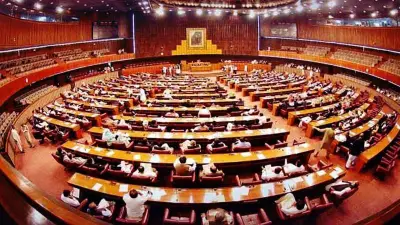
After years of bitter confrontation and fractured parliamentary politics, it is encouraging to see the government and opposition working with some degree of maturity to conclude this year’s budget session. Pakistan’s political environment has too often been defined by deadlock, walkouts and accusations. Against that background, even limited cooperation on the budget is a welcome sign.
PPP's Constructive Role
The PPP, under Bilawal Bhutto-Zardari, has shown that it can be firm in its demands without derailing the process entirely. Its objections over provincial allocations, the NFC award and development spending were serious and could not simply be brushed aside. Yet, after negotiations with the prime minister and his economic team, the party chose to remain engaged. That flexibility has helped keep the democratic process moving.
National Security and Collective Response
The same applies to the opposition’s willingness to accept that national security and defence needs require a collective response. Pakistan faces extraordinary pressures, from regional instability to economic weakness and border threats. In such circumstances, political parties must disagree where necessary, but they must also know when to act in the national interest.

Balancing Austerity and Development
Still, consensus must not become an excuse for sacrificing development at the altar of debt servicing and fiscal austerity. Pakistan’s financial difficulties are well known, and the choices available to any government are limited. There are only so many ways to meet IMF conditions, reduce deficits and protect strategic needs. But a country cannot budget only for survival. It must also budget for growth.
Freezing provincial development allocations may provide temporary fiscal space, but it is not a sustainable economic model. Provinces are where schools, hospitals, roads, water schemes and local employment programmes take shape. If development is repeatedly postponed, the cost will appear later in the form of weaker growth, deeper inequality and greater public frustration.
Looking Ahead
The budget session has shown that political consensus is possible. The next challenge is to ensure that this consensus produces not only austerity, but also development, reform and long-term economic confidence.