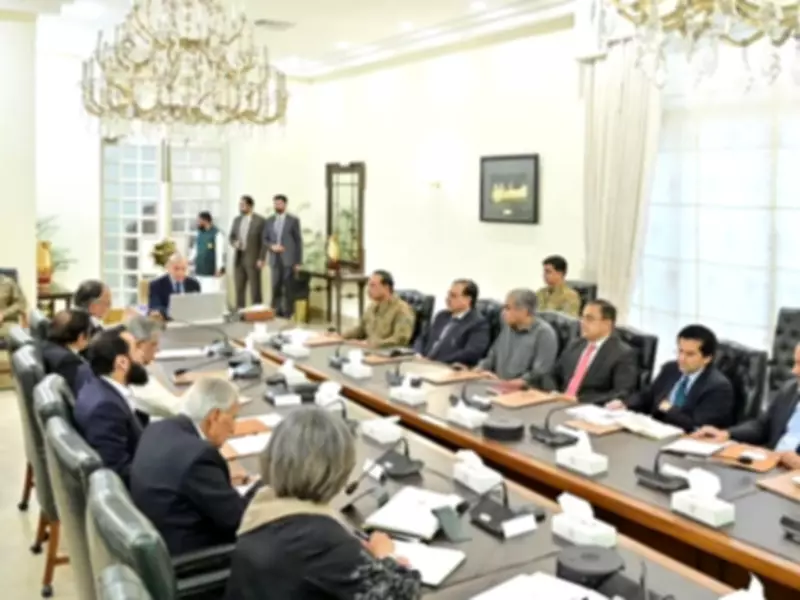
Prime Minister Shehbaz Sharif Convenes High-Level Security Meeting Amid Regional Turmoil
Prime Minister Shehbaz Sharif chaired a critical high-level meeting on Sunday to comprehensively review pressing regional and national security issues. The urgent gathering was convened in response to escalating tensions following the United States and Israel's coordinated military strikes on Iran, which have plunged the Middle East into a renewed state of confrontation. A primary focus of the discussions was the immediate and safe evacuation of Pakistani citizens currently in Iran, ensuring their protection amidst the volatile situation.
Evacuation Plans and Border Security Under Scrutiny
According to an official statement released by the Prime Minister's Office, the meeting conducted a detailed assessment of the regional landscape. Officials were briefed on internal security arrangements and the ongoing measures to safeguard Pakistani nationals abroad. On the direct instructions of Prime Minister Shehbaz, the Foreign Office provided a comprehensive briefing outlining efforts to facilitate the safe return of citizens from Iran. The evacuation process is being coordinated through Azerbaijan to ensure a secure pathway for their return.
The deteriorating security situation along the Pakistan-Afghanistan border was also a key agenda item. In response to what authorities termed "unprovoked cross-border attacks," Pakistan has launched 'Operation Ghazab-Lil-Haq.' Information Minister Attaullah Tarar confirmed that security forces have eliminated 415 Afghan Taliban fighters during this major military offensive. Security sources emphasized that the operation remains ongoing and will continue until all strategic objectives are fully achieved, underscoring the armed forces' commitment to national defense.

Domestic Unrest and Constitutional Measures
The regional crisis has triggered significant domestic unrest within Pakistan. Violent clashes erupted in Karachi as protesters marched towards the US Consulate, resulting in at least 10 fatalities. In a move to maintain public order, Section 144 has been enforced in Punjab and the federal capital, Islamabad, to curb demonstrations following the reported killing of Iranian Supreme Leader Ayatollah Ali Khamenei.
Furthermore, the government has deployed the Pakistan Army in Skardu under Article 245 of the Constitution to address a rapidly deteriorating law-and-order situation in the region. This constitutional provision allows for the deployment of armed forces in aid of civil power to maintain essential security.
High-Profile Attendance and Diplomatic Postponement
The high-stakes meeting saw attendance from the nation's top leadership, including:
- Chief of Army Staff and Chief of Defence Forces, Field Marshal Asim Munir
- Federal Ministers Ahsan Iqbal, Mohsin Naqvi, Azam Nazeer Tarar, Ahad Khan Cheema, Attaullah Tarar, and Ali Pervaiz Malik
- Special Assistant Tariq Fatemi
- Senior civil and military officials
Earlier in the day, Prime Minister Shehbaz also held a separate consultation with Interior Minister Mohsin Naqvi to discuss the country's overall internal situation. In light of the prevailing internal and regional instability, the Prime Minister has postponed his scheduled visit to Russia. The federal government acknowledged the visit's importance for bilateral relations but stated a new date would be set after mutual consultations, prioritizing domestic and regional security management.
Background: The Escalating Middle East Crisis
The security meeting was precipitated by a severe escalation in the Middle East. The US and Israel launched joint strikes on Iran, significantly dimming prospects for a diplomatic resolution to longstanding nuclear concerns, despite Tehran's consistent denials of pursuing nuclear weapons. In retaliation, Iran targeted Israeli and US bases across the region, with explosions reported in Kuwait, the United Arab Emirates, Bahrain, and Qatar.

Iranian state media later confirmed that Supreme Leader Ayatollah Ali Khamenei was killed in these strikes, announcing 40 days of public mourning. US President Donald Trump justified the air strikes as a necessary action to end a decades-long threat and prevent nuclear weapon development, a move that appears to contradict his previously stated opposition to complex overseas military engagements.
The Prime Minister's Office statement concluded that the meeting thoroughly examined Afghanistan's security situation and deliberated on the character and various measures required to establish sustainable peace and stability within Pakistan and the broader region.