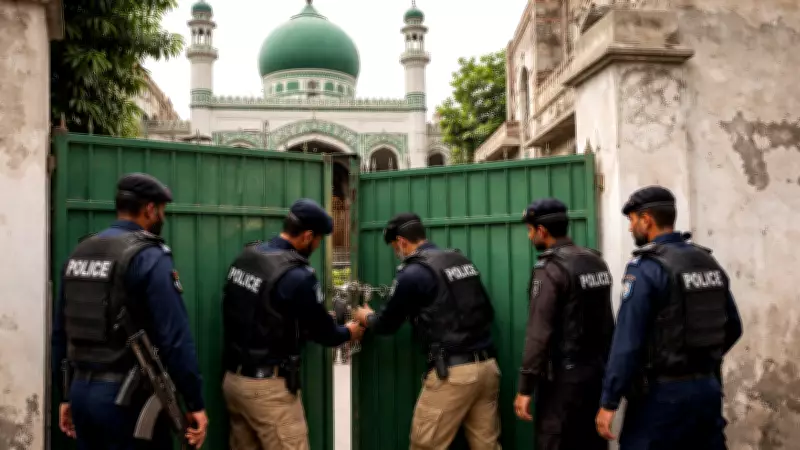
Punjab Police Bar Ahmadiyya Community from Eid Prayers, Igniting Constitutional Concerns
On March 21, 2026, Punjab Police enforced restrictions that barred members of the Ahmadiyya community from performing Eid-ul-Fitr prayers at numerous locations across the province. This action has prompted widespread allegations of violations against constitutional and human rights, with community representatives decrying the measures as a direct assault on religious freedom.
Widespread Incidents of Prayer Disruption Reported Across Districts
According to accounts from Ahmadiyya community spokespersons, police officials forcibly evacuated Ahmadi places of worship and sealed premises in several districts, citing government directives. The incidents were notably reported in Gujranwala, Sialkot, Faisalabad, and Sargodha, where authorities allegedly prevented congregational prayers and, in some cases, physically removed worshippers from prayer sites.
In Gujranwala, the local administration reportedly imposed a blanket ban on all Ahmadi gatherings for Eid prayers, effectively halting any organized religious observance. In Sialkot, police intervention occurred at six separate locations, disrupting planned services. Meanwhile, in Faisalabad, a specific place of worship was evacuated, and in Sargodha, several prayer centres were cleared and subsequently locked to prevent re-entry by community members.

Community Spokesperson Highlights Legal and Human Rights Violations
Amir Mahmood, spokesperson for the Ahmadiyya Community Pakistan, strongly condemned these actions, labeling them a "grave violation" of fundamental rights. He argued that the police measures contravene Article 20 of the Constitution of Pakistan, which explicitly guarantees the freedom to profess and practise religion. Additionally, Mahmood referenced Article 18 of the Universal Declaration of Human Rights, underscoring the international dimension of the alleged rights infringement.
Mahmood also pointed to a significant legal precedent: a Supreme Court ruling dated January 12, 2022 (Cr1.P.916-L/2021). In this decision, a bench comprising Justice Mansoor Ali Shah and Justice Amin-ud-Din Khan affirmed the right of Ahmadis to practise their faith within the privacy of their homes. The community has called on authorities to align administrative actions with these constitutional guarantees and the Supreme Court’s ruling, demanding accountability for officials who disrupted what they described as peaceful religious observance.
Authorities Remain Silent Amid Growing Controversy
As of now, Punjab Police have not issued an official statement in response to the allegations, leaving the community’s concerns unaddressed. This silence has fueled further debate about the protection of minority rights in the region, with advocates urging immediate corrective measures to uphold legal and ethical standards.