Sri Lanka Easter Bombings: Seven Years On, Victims Still Await Justice
Seven years after the horrific Easter Sunday bomb blasts that shook Sri Lanka to its core, survivors and families of the 279 victims continue to bear profound physical and emotional wounds. Their suffering is compounded by what they describe as the systematic failure of successive governments to deliver meaningful justice or uncover the full truth behind the coordinated attacks.
The Devastating Attacks and Their Aftermath
On April 21, 2019, suicide bombers targeted three churches and three luxury hotels in coordinated attacks that left 279 people dead, including 45 foreigners, and wounded approximately 500 others. The deadliest single incident occurred at St. Sebastian's Church in Negombo, where 117 Catholics were killed during Easter services.
Mercy Philomina Tissera, 67, was standing near the main entrance of the packed church when a man entered through a side door and detonated a backpack filled with explosives. "Suddenly, I felt something hit my head. I just said, 'Oh my God'... that is all I know of that moment," Tissera recalled. When she regained consciousness, she was covered in blood, holding her broken jaw with one hand until volunteers rushed her to hospital.

Justice Delayed and Denied
To date, no one has been convicted for planning or executing the attacks, though recent developments have offered glimmers of hope. In February 2026, former intelligence chief Suresh Sallay was detained for questioning regarding "conspiracy and aiding and abetting" the bombings. The retired major general, who previously headed the State Intelligence Service, remains in custody under the Prevention of Terrorism Act, though he denies all accusations.
Initial investigations identified the attacks as the work of local Islamists who declared affiliation with the Daesh group. However, subsequent inquiries have suggested possible connections between state security forces, including military intelligence, and the bombers. Some investigators allege the plot aimed to create chaos that would pave the way for Gotabaya Rajapaksa, a former military officer, to assume power.
Political Dimensions and Government Responses
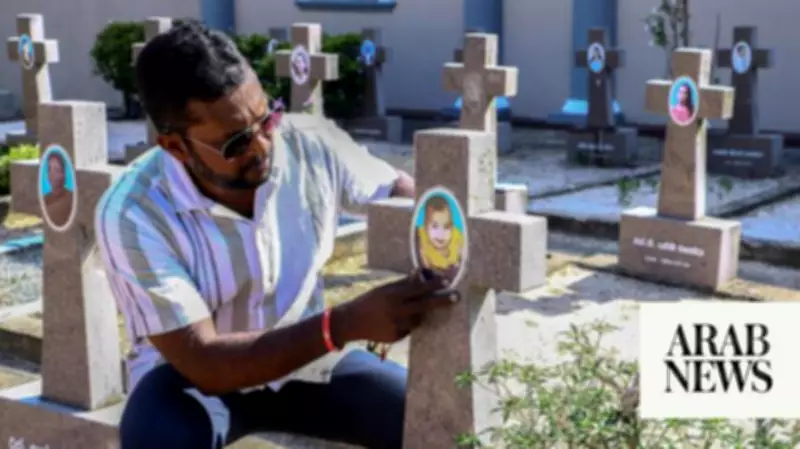
Dinal Fernando, 52, a marketing executive who survived the blast and helped transport victims to hospital, expressed frustration with the political response. "There have been three governments since the attack, but they all worked to cover it up," Fernando stated while visiting the grave of an eight-month-old baby killed in the attacks. He noted some increased trust in the current government of President Anura Kumara Dissanayake but emphasized that survivors simply want answers: "We want to know why this was done to us. Who did it?"
The political context remains contentious. Gotabaya Rajapaksa declared his presidential candidacy just two days after the attacks and won the November 2019 election, though he was forced from office in July 2022 amid economic collapse. He has consistently denied any involvement in plotting the bombings.
Legal Proceedings and International Calls
In January 2023, Sri Lanka's Supreme Court ruled that then-president Maithripala Sirisena and his top officials had failed to act on prior intelligence warnings that could have prevented the attacks. Evidence presented during civil proceedings revealed that Indian intelligence officials had warned Colombo more than two weeks before the bombings. The court ordered Sirisena and his security officials to pay 310 million rupees (approximately $1 million) in compensation to victims.
The United Nations has urged an independent investigation with international assistance to establish the "full circumstances" of the bombings, while Cardinal Malcolm Ranjith, leader of Sri Lanka's Catholic Church, lamented that the tragedy has become politicized. "Unfortunately, it hurts the people who have lost their loved ones and who are suffering," Ranjith told AFP.

Continued Struggle for Truth
As the seventh anniversary approaches, Cardinal Ranjith plans to lead a prayer march for justice in Negombo following a memorial service at St. Anthony's Church in Colombo, where 51 Catholics were killed. Reflecting on the prolonged wait for accountability, Ranjith stated: "At the end of the seventh year, what do I say? I say we are still hoping and waiting and expecting. But if nothing happens, then we will be forced to take to the streets and campaign for a just solution to this issue because we will never, never give up our struggle for truth and justice."
The survivors' physical scars may have healed, but the emotional and psychological wounds remain raw. Their collective plea, as expressed by Mercy Philomina Tissera, is simple yet profound: "Our only prayer is that something like this never happens again." As investigations continue and political debates persist, the fundamental demand for justice and transparency echoes louder with each passing year.