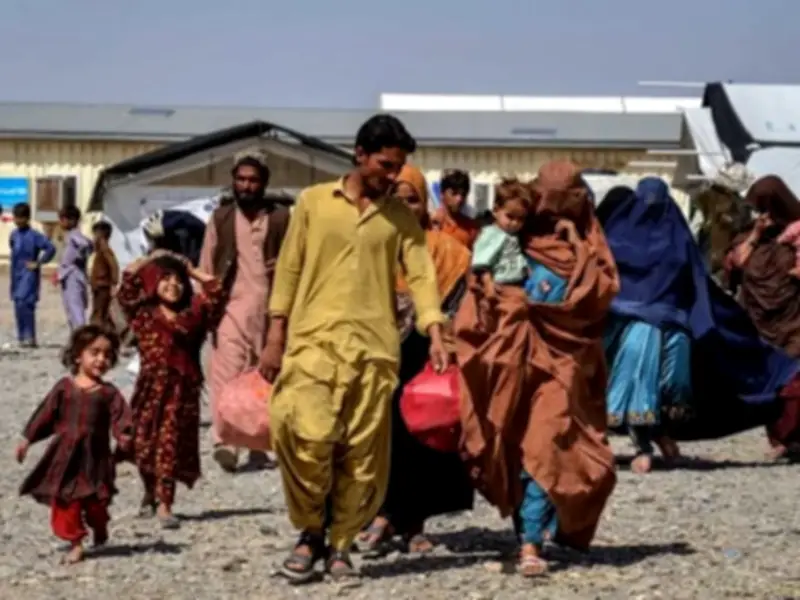
Noor Mohammad crossed the Torkham border into Afghanistan with his family, carrying little more than a handful of belongings and years of memories. Like thousands of returning Afghan families, he left behind a life built over many years in Pakistan and stepped into a future filled with both hope and uncertainty.
Originally from Logar province, Noor Mohammad said Afghan authorities provided his family with temporary shelter in a tent, food supplies, and registered them for assistance shortly after their arrival. "We have received tents and food, and officials have assured us that permanent land will soon be allocated," he said, expressing cautious optimism about starting life anew.
Mass Returns Since 2023
His story mirrors that of hundreds of thousands of Afghans who have returned from Pakistan in recent years, each facing the difficult task of rebuilding homes, livelihoods, and communities. According to the United Nations High Commissioner for Refugees (UNHCR), nearly 2.5 million Afghans have returned since 2023.

The International Organization for Migration (IOM) reports that over 1.9 million returned voluntarily or through other means, around 335,000 under voluntary repatriation programmes, while approximately 253,000 were deported. The pace of returns accelerated sharply after April 2025, with more than 1.6 million Afghans returning, including over one million during 2025 alone.
Reasons for Leaving Pakistan
Many cited fears of arrest because of invalid or expired documents as the principal reason for leaving Pakistan, while even holders of Afghan Citizenship Cards reported similar concerns. Most departures took place from Quetta, Peshawar, Nowshera, Haripur, Islamabad, Rawalpindi and Attock, with returnees settling mainly in Nangarhar, Kabul, Logar, Kandahar, Balkh, Kunduz, Baghlan and Paktia provinces.
Emergency Assistance at Omari Camp
For newly arrived families, immediate humanitarian assistance remains the top priority. Hundreds arrive daily at Omari Camp near Torkham, where Afghan authorities and international aid organisations provide emergency relief. Social worker Ehsanullah Afghan said agencies including UN refugee organisations, Wadan Afghanistan and Shapul are supplying food, drinking water, hygiene kits and, in some cases, financial assistance. Families are also surveyed to determine eligibility for longer-term support.
On the Pakistani side, voluntary repatriation centres established by UNHCR in Nowshera and Quetta continue to facilitate departures, while authorities manage documentation and processing at Landi Kotal Holding Camp and Naser Bagh.
Land Distribution and Housing Challenges
Although emergency assistance offers immediate relief, permanent housing remains one of the biggest challenges. Ibrahim Haqqani, a member of Afghanistan's interim administration, said a structured land distribution programme has been introduced for returning families. Following verification by local elders and officials, eligible households receive land, while some of the most vulnerable families are being provided ready-built houses.
Ehsanullah Afghan estimated that nearly half of returning families have already received land, although surveys for the remaining households continue. He acknowledged that the unprecedented scale of returns has placed considerable pressure on government institutions and humanitarian organisations. "Pakistan hosted our citizens for many years, and we appreciate that support," Haqqani said. "It is now our responsibility to ensure they are resettled with dignity."
Employment and Reintegration
Beyond housing, employment remains the key to successful reintegration. Imran, who previously operated a mobile phone business in Abbottabad, has resumed his trade after returning to Afghanistan. Together with several fellow returnees, he has established a mobile phone market and says business conditions are gradually improving. "We have started again despite many difficulties. There are challenges, but opportunities are increasing and people are trying to rebuild their lives," he said.
UNHCR spokesperson Qaiser Afridi stressed that creating sustainable employment opportunities is essential to prevent poverty, social instability and growing frustration among unemployed youth.

Vulnerable Groups at Risk
However, not all returnees share the same prospects. Fouzia Bibi of the Pakistan International Human Rights Organization said Afghan asylum seekers, women and families forced to abandon businesses in Pakistan remain particularly vulnerable. Many are still awaiting decisions on asylum applications and fear returning because of security concerns or restrictions affecting women, especially in education and employment.