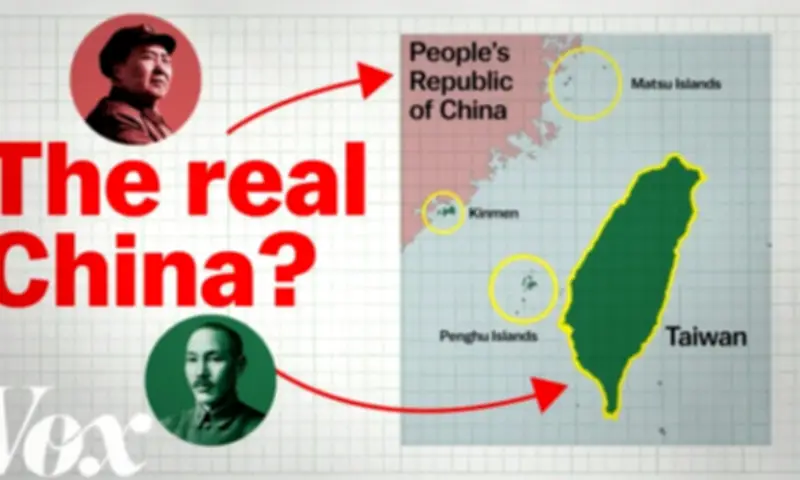
For decades, Taiwan's passport did not feature the name 'Taiwan' at all. Instead, it bore the inscription 'Republic of China.' This raises a fundamental question: if Taiwan has historically identified itself as China, who truly represents the 'real' China? This article traces the evolution of Taiwan's contested identity through the lens of a single object: its passport.
The Historical Shift in Taiwan's Passport
The journey begins with the Republic of China's expulsion from the United Nations in 1971, a pivotal moment that reshaped global recognition. Shortly after, President Richard Nixon's historic visit to Communist China in 1972 further marginalized Taipei. It was not until 2003 that the word 'Taiwan' was added to the Republic of China passport, marking a significant step in the island's self-identification.
Global Alliances and Power Dynamics
The concept of 'One China' is less about geography and more about history, power, and shifting international alliances. As Beijing's financial and political influence grows on the global stage, Taiwan's ability to maintain its autonomy becomes increasingly precarious. The United States plays a critical role in this triangular relationship, especially as Taiwan's primary arms supplier.

Key Questions and Resources
- The Many 'One Chinas': Multiple approaches to Taiwan and China are explored in a Carnegie Endowment report.
- The Collapse of One China: The Center for Strategic and International Studies analyzes the erosion of this principle.
- Cairo and Potsdam Declarations: Radio Free Asia fact-checks whether these documents 'restore' Taiwan to China.
- China's Military Activities: Tracking increased Chinese military operations in the Indo-Pacific in 2025.
- Public Opinion: Pew Research finds most Taiwanese see themselves as primarily Taiwanese, not Chinese.
- Chip Industry Dominance: The Conversation explains how Taiwan became a global semiconductor powerhouse.
- U.S. Military Support: The Council on Foreign Relations charts American military aid to Taiwan.
- Status Quo Preferences: A Global Affairs survey indicates both Americans and Taiwanese favor the current situation.
Conclusion
The evolution of Taiwan's passport reflects a broader struggle over identity, sovereignty, and international recognition. As Beijing asserts its claim, Taipei navigates a path between autonomy and integration, with the United States acting as a key external player. The future of 'One China' remains uncertain, shaped by historical legacies and contemporary power struggles.
For further reading, explore the linked resources above. If you value in-depth reporting, consider supporting independent journalism through platforms like Patreon.