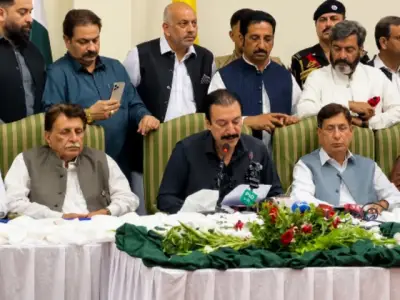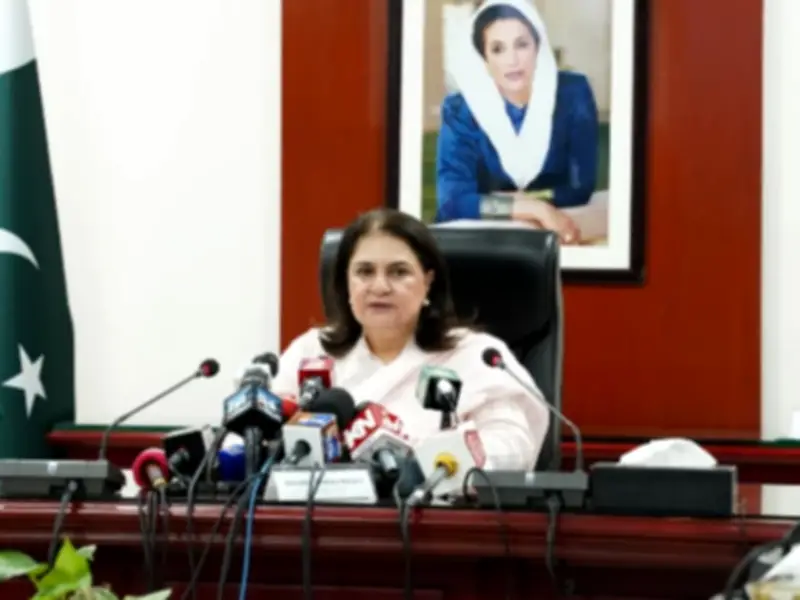
Senator Rubina Khalid, Chairperson of the Benazir Income Support Programme (BISP), on Monday strongly condemned any humiliation or disrespect towards the poor and hardworking citizens, calling for an apology from those who had undermined the dignity of beneficiary families. Her remarks came in response to comments made by Prime Minister's Adviser on Political Affairs Rana Sanaullah, who stated in a private TV programme that BISP served no purpose other than turning people into beggars.
Press Conference at BISP Headquarters
Addressing a press conference at BISP headquarters in Islamabad, Rubina Khalid emphasized that while the programme is continuously improving, this does not justify the use of insulting language for its beneficiaries. "Whenever you use such words, use them with evidence. No one has the right to insult. I request all those people to apologise to these families for hurting their dignity," she said.
The senator noted that misinformation about the programme is being spread at the national level for political purposes, despite BISP being the world's largest poverty alleviation programme. "I am not able to understand why such things are being said in our country. There are a lot of problems and issues in many institutions," she added.

Global Recognition and Trust
Rubina Khalid highlighted that several countries and international organisations are studying and learning from the BISP model, and that both the president and prime minister have full confidence in the programme. As evidence, she mentioned that the Prime Minister's Ramazan Relief Package has been successfully delivered through BISP's digital payment mechanism for the past two years.
Addressing the misconception that BISP turns people into beggars, she called it a "very wrong" perception. "It is very easy for you to become a beggar. Now I tell you, if any of us gets up and stands on a street, he can easily collect Rs 8,000 to 10,000 by evening," she said. She added that BISP supports low-income families and helps balance their expenses and income. "It is the duty of the state not to hurt the self-respect of these people. They do not have to stretch out their hands in front of anyone. So BISP does not make you a beggar, but prevents you from becoming one," she added.
Digital Wallets and Transparency
Rubina Khalid announced that all BISP payments will be made through digital wallets from July 2026, a move aimed at enhancing transparency, eliminating unauthorised deductions, and strengthening the economic empowerment of beneficiary women. She noted that more than 8 million free Benazir SIMs have already been distributed among women beneficiaries, and digital wallets are being opened in their names.
She also informed that BISP has introduced an Interoperability System, allowing beneficiaries to withdraw payments through multiple banking channels. Women facing biometric verification issues or those whose fingerprints cannot be verified will also be able to access their funds through bank accounts.
Re-certification and Socio-Economic Registry
The chairperson stated that BISP has introduced a re-certification mechanism to further strengthen transparency. Under this system, beneficiary households are reassessed every three years to ensure that only genuinely deserving families continue to receive support, while households whose economic conditions have improved can be replaced by newly eligible families.
Rubina Khalid highlighted that BISP's National Socio-Economic Registry is regarded as a credible and reliable database across the country. Provincial governments utilise this data for various welfare schemes, subsidy programmes, and social assistance initiatives aimed at supporting vulnerable populations.
Benazir Nashonuma Programme
Speaking about the Benazir Nashonuma Programme, Rubina Khalid said that more than 2.2 million pregnant and lactating women and their children are currently registered. She stated that continued efforts are being made to improve maternal and child health and nutrition, adding that the programme has contributed to a 22% reduction in stunting rates in Pakistan.

Benazir Hunarmand and Taleemi Wazaif Programmes
Under the Benazir Hunarmand Programme, young people are being provided with technical and vocational training. More than 1,000 youth have already received certificates, while another 5,000 are currently undergoing training in various fields.
The chairperson also highlighted the achievements of the Benazir Taleemi Wazaif Programme, under which more than 12 million children are currently receiving educational support. She shared that 503 students benefiting from the programme secured A+ grades in matriculation examinations, reflecting the positive impact of BISP's investments in education.
Commitment to Welfare
Rubina Khalid stated that BISP is providing services to beneficiary families through its network of 647 centres across the country. She reaffirmed the programme's commitment to becoming more transparent, efficient, and citizen-centric while continuing to work for the welfare and socio-economic uplift of poor and vulnerable segments of society.