The defense team for Tyler Robinson, the man accused of killing conservative activist Charlie Kirk, is expected to continue challenging the reliability of DNA evidence that prosecutors say connects him to the suspected murder weapon. The weeklong preliminary hearing resumes Wednesday in Provo, Utah.
FBI Analyst Questioned on DNA Methods
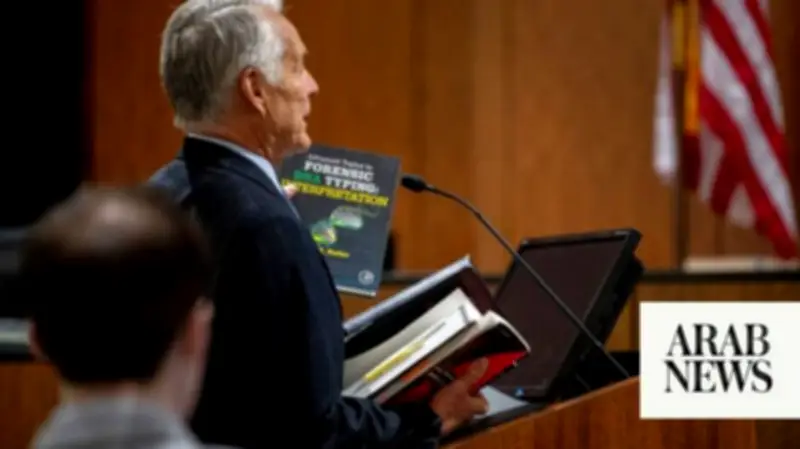
On Tuesday, defense attorney Michael Burt interrogated FBI DNA analyst Amanda Bakker about the techniques she used to link Robinson to a rifle found wrapped in a towel at Utah Valley University. Kirk was shot there in September while addressing a crowd. Burt argued that Bakker could not conclusively match Robinson to the questioned samples, a point likely to resurface during the hearing.
Deputy Utah County Attorney Ryan McBride countered that the reliability of the DNA testing could be examined at trial, asserting that the preliminary hearing is not the appropriate venue for such scrutiny. 'The point is there are explanations that are susceptible to different interpretations and arguments,' McBride said. 'The court is going to determine if it meets the threshold of reliability at trial.'

Prosecution Builds Case for Trial
Prosecutors must demonstrate sufficient evidence to proceed to trial. FBI analyst Bakker testified that after Robinson's roommate provided a DNA sample, she reran tests and attributed all DNA on the towel to two individuals. Jennifer Faumuina of the State Bureau of Investigation confirmed that one match was Robinson's roommate, Lance Twiggs, and the other was likely Robinson.
Investigators discovered the towel and the bolt-action rifle, containing one spent round, in a wooded area near the shooting scene. Prosecutors are seeking the death penalty and are urging Judge Tony Graf to find enough evidence to charge Robinson with aggravated murder.
Surveillance Video and Crime Scene Details
Utah State Bureau of Investigation Agent David Hull testified that surveillance footage showed Robinson climbing over a railing onto a rooftop, crouching, and running to a vantage point overlooking where Kirk spoke. After the shooting, Hull said, Robinson ran back across the roof, dropped to the ground, and fled on foot.
Defense attorney Kathryn Nester challenged Hull's handling of the crime scene, noting a bullet found elsewhere on campus. Hull explained that the bullet belonged to a law enforcement officer who had cleared his weapon by ejecting an unused round.
Aggravating Circumstances and Political Motivation
Prosecutors argue that the shooting endangered others at the campus event, an aggravating factor that could justify the death penalty under Utah law. They also claim Robinson targeted Kirk due to his political views. On September 10, Hull testified, Robinson visited the amphitheater where Kirk later spoke and contacted representatives of Turning Point USA, the organization co-founded by Kirk that mobilized conservative youth voters.
Robinson turned himself in after the shooting. Prosecutors allege he left a note for Twiggs, his romantic partner, stating: 'I had the opportunity to take out Charlie Kirk and I’m going to take it.' He also reportedly sent a text saying he targeted Kirk because he 'had enough of his hatred.'
Defense Challenges Political Motive Evidence
Defense attorney Richard Novak sought to block a statement from Turning Point USA board member David Engelhardt describing the group's traditional Christian values, arguing it was irrelevant to Robinson's state of mind. 'This doesn’t say anything about Mr. Robinson’s state of mind,' Novak said. 'I don’t think that this court should be deciding — based on the record before it — where, if at all, politics and religion intersect.'
Judge Tony Graf ruled the statement relevant and 'provisionally admitted' it, with a final decision deferred. Robinson has not entered a plea, and his attorneys have not commented on his guilt or innocence. They have unsuccessfully sought to remove the death penalty as a possible sentence.