Iran-US Peace Talks in Islamabad Await Framework Agreement
Iran's deputy foreign minister has confirmed that no date has been established for the next round of peace negotiations between Iran and the United States, which are being brokered by Pakistan. The announcement follows the unsuccessful conclusion of an initial round of talks, highlighting ongoing diplomatic challenges in resolving the conflict.
Framework Finalization Required Before Scheduling
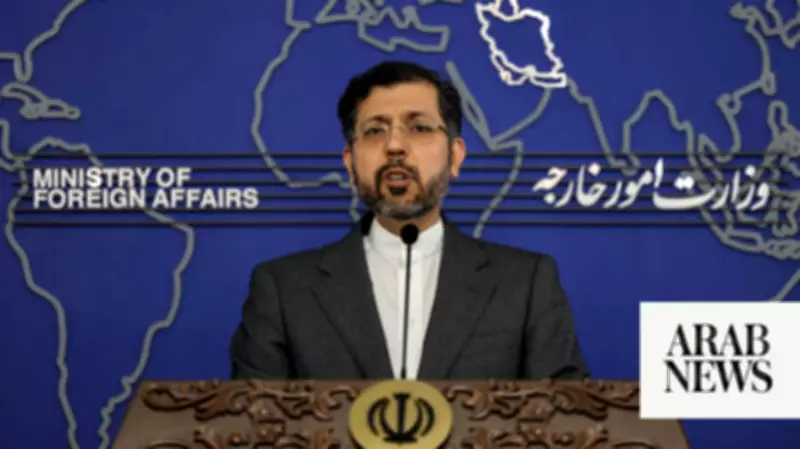
Saeed Khatibzadeh, speaking to journalists on the sidelines of the Antalya Diplomacy Forum in Türkiye, emphasized that both nations are currently focused on finalizing a framework of understanding. "Until we agree on the framework, we cannot set a date," Khatibzadeh stated. He expressed hope that once this foundational agreement is secured, the process can advance to subsequent negotiation phases.
The Iranian official underscored Tehran's commitment to diplomatic resolutions, noting, "We do not want to enter into any negotiation or meeting that is destined to fail and could serve as a pretext for another round of escalation." He assured that Iran remains deeply dedicated to pursuing peaceful dialogue despite the complexities involved.

Regional Mediation Efforts Intensify
Pakistan has been actively engaged in mediation efforts, with Field Marshal Asim Munir, the country's military chief, concluding a three-day visit to Tehran where he met with Iran's top leadership and peace negotiators. Simultaneously, Prime Minister Shehbaz Sharif returned from diplomatic engagements in Türkiye, reinforcing Pakistan's role in facilitating dialogue.
Egypt and Türkiye have joined Pakistan in diplomatic initiatives aimed at securing a ceasefire. Egyptian Foreign Minister Badr Abdelatty remarked that both nations are working "very hard" to achieve "a final agreement between the United States and Iran." He highlighted the global impact of the conflict, stating, "Not only us in the region, but the whole world is suffering from the continuation of this war." Abdelatty expressed optimism about reaching an agreement in the coming days.
Iran Criticizes US Inconsistency and Threats
Khatibzadeh dismissed recent US threats of military action, characterizing Washington's statements as inconsistent and contradictory. Referring to US President Donald Trump's frequent social media activity, he noted, "The American side tweets a lot, talks a lot. Sometimes confusing, sometimes, you know, contradictory." He added that it is up to the American people to assess whether these declarations align with international law.
The deputy minister reaffirmed Iran's steadfast position, vowing resistance to external pressure. "What we are going to do is quite clear. We will defend heroically and patriotically (our country) ... as the oldest civilization on earth," he declared.
Strait of Hormuz Navigation Dispute
Khatibzadeh also rejected US accusations that Iran is threatening freedom of navigation in the Strait of Hormuz, a vital corridor for global oil shipments. He asserted that Iran has announced safe passage for commercial vessels during the Israel-Lebanon ceasefire, provided there is prior coordination with Iranian maritime authorities.
However, he accused Washington of attempting to "sabotage" these efforts, warning, "If ceasefire terms are violated and Americans do not honor their commitments, there will be repercussions for them." This statement underscores the heightened tensions surrounding maritime security and regional stability.
The ongoing diplomatic impasse reflects broader geopolitical strains, with mediation by Pakistan, Egypt, and Türkiye continuing amidst uncertain prospects for a breakthrough. The emphasis on finalizing a framework before resuming talks indicates a cautious approach by both Iran and the United States, aiming to avoid further escalation while navigating complex international relations.