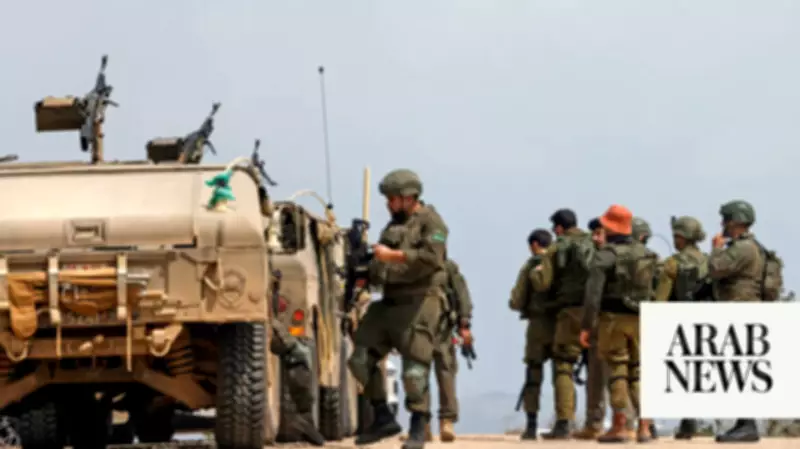
Israeli Army Conducts Demolitions in Southern Lebanon's Bint Jbeil Town
Israeli military forces have carried out a series of demolitions in the southern Lebanese town of Bint Jbeil, according to reports from Lebanese state media. This action occurred on Saturday, following the implementation of a recently agreed 10-day truce between Israel and Hezbollah, which took effect at midnight on Thursday.
Details of the Demolition Operations
The Lebanese National News Agency (NNA), the official state-run media outlet, stated that "The Israeli enemy is repeating its house detonating operations in the town of Bint Jbeil." The agency further reported that similar demolition activities were observed in other border towns where Israeli troops are currently stationed. Bint Jbeil is strategically located approximately five kilometers north of the Israeli border, making it a critical area in the ongoing regional tensions.
Prior to the truce, Bint Jbeil had been the scene of intense and heavy fighting between Israeli forces and Hezbollah militants for several days. The town holds significant historical and symbolic importance in the long-standing conflict between Israel and Hezbollah. During the 2006 war, Bint Jbeil witnessed some of the fiercest battles, with Hezbollah's resistance there becoming a central element in the group's narrative of defiance against Israeli military actions.

Historical Significance and Strategic Flashpoint
Bint Jbeil has long served as both a symbolic and strategic flashpoint in confrontations between Israel and Hezbollah. In 2000, following Israel's withdrawal from southern Lebanon after 22 years of occupation, the group's former chief, Hassan Nasrallah, delivered his iconic "Liberation" speech from the stadium in Bint Jbeil. This event cemented the town's status as a symbol of resistance and victory for Hezbollah supporters.
Israeli Defense Minister Israel Katz has previously justified such demolition operations, stating they are necessary "in order to remove once and for all the border-adjacent threats" as part of broader efforts to establish a security zone in south Lebanon. Katz emphasized that these measures are aimed at enhancing Israel's defensive capabilities and preventing future attacks from militant groups operating near the border.
Lebanese Response and Displacement Concerns
In response to the demolition plans, Lebanese Defense Minister Michel Menassa strongly condemned the actions, describing them as evidence of an intention to "forcibly displace hundreds of thousands of citizens, and systematically destroy villages." Menassa's statement highlights growing concerns about humanitarian impacts and potential violations of international law regarding the protection of civilians in conflict zones.
This is not the first instance of such operations following a ceasefire. After a November 2024 ceasefire aimed at ending the previous conflict between Israel and Hezbollah—during which Nasrallah and other top leaders were killed—Israeli troops also conducted a series of demolitions in specific towns. The recurrence of these actions raises questions about the long-term stability of truce agreements and the potential for renewed hostilities in the region.
Regional Implications and Future Outlook
The demolitions in Bint Jbeil and other border towns underscore the fragile nature of the current truce and the deep-seated tensions that persist between Israel and Hezbollah. Analysts note that such military operations could undermine diplomatic efforts to achieve a lasting peace, potentially leading to escalations that threaten regional security.
As the situation develops, international observers are closely monitoring compliance with the truce terms and the humanitarian conditions in affected areas. The ongoing presence of Israeli troops in southern Lebanon continues to be a point of contention, with Lebanese authorities calling for respect of sovereignty and the protection of civilian infrastructure.