Israeli Strikes on Paramedics Cripple Rescue Efforts in Southern Lebanon
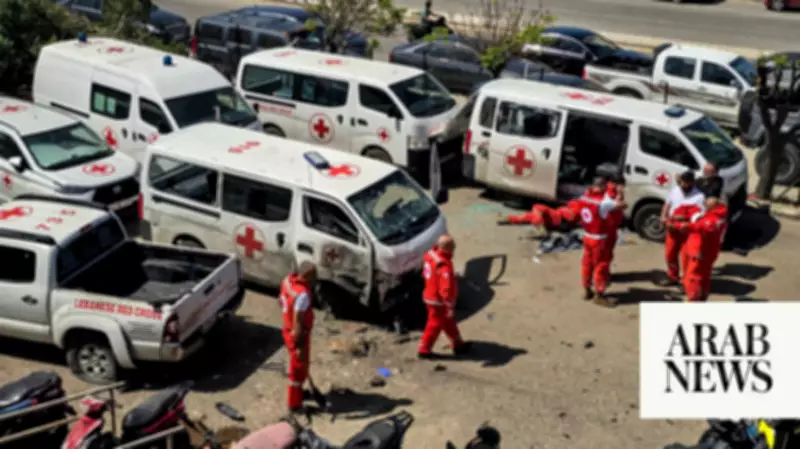
Special Lebanese Red Cross volunteers recently inspected the severe damage to their rescue ambulances at the site of an Israeli drone strike that targeted their headquarters in the southern city of Tyre on April 13, 2026. This incident represents just one example of how Israeli military actions are systematically hindering emergency response operations throughout Lebanon.
Rescue Workers Navigate Constant Danger
Wael Mousawi, a 35-year-old Civil Defense responder in Tyre, describes spending weeks moving "between death and death" as he pulls bodies from the rubble of flattened homes in southern Lebanon. Rescue teams across the country have struggled to keep pace with the overwhelming scale of destruction caused by the latest war between Israel and Hezbollah.
Paramedics and rescue workers have found themselves caught directly in the crossfire, rushing into areas that civilians are desperately fleeing. They search for survivors while navigating roads cratered by repeated airstrikes, facing dangers that have significantly slowed rescue operations. This has resulted in victims remaining trapped beneath rubble for extended periods, further straining Lebanon's already overwhelmed healthcare infrastructure.

"There was no protection for paramedics," Mousawi told reporters. "We kept going because people depended on us. These were our communities — our families, our friends."
Overwhelmed Systems and Impossible Choices
Within minutes of major strikes, hospitals and rescue teams became completely overwhelmed with casualties, many suffering severe injuries from collapsing buildings. Medical professionals note this pattern has defined the entire conflict.
"It was rare to find survivors under collapsed buildings," Mousawi explained. "The weapons used were devastating. In many places, bodies remain buried under the rubble because it was impossible to retrieve them."
Rescue teams frequently faced impossible situations, forced to withdraw mid-operation due to renewed strikes or the threat of follow-up attacks. In other cases, they made heartbreaking decisions to pull out those they could reach while leaving others behind because of urgent needs elsewhere.
"One of the hardest moments is knowing there are people still under the rubble, and you have to leave," Mousawi confessed.
Targeting of Medical Personnel and Infrastructure
Lebanese authorities and humanitarian organizations report that dozens of paramedics have been killed and hundreds injured during the conflict, which lasted more than six weeks before a 10-day ceasefire took effect on Thursday, April 17, 2026.
According to official figures:
- 67 paramedics affiliated with the Islamic Health Authority were killed
- More than 150 paramedics were injured
- 73 ambulances were damaged
- 17 emergency centers were destroyed or damaged
Civil Defense and Red Cross teams also reported significant casualties alongside repeated strikes on clearly marked emergency vehicles. The Lebanese Health Ministry has described the targeting of paramedics as a "war crime," citing recorded attacks on rescue teams in the southern town of Mayfadoun while they were responding to strikes just days before the ceasefire.
In one particularly devastating incident, a paramedic team was hit while attempting to evacuate casualties, triggering further rescue attempts that were also struck, resulting in additional deaths and injuries. In another case, two paramedics — Ali Jaber and Jawad Suleiman — were killed in late March while traveling on a clearly marked rescue motorcycle.
Conflicting Narratives and International Law
The Lebanese Red Cross emphasized that its teams operate under internationally recognized humanitarian principles of neutrality, impartiality, and independence, stressing that paramedics are protected under international law. The organization condemned the attacks as "clear violations" and emphasized that medical personnel are not legitimate military targets.

Israel, however, has accused Hezbollah of using ambulances to transport fighters and weapons — allegations the group strongly denies. In a late-March statement, the Israeli military claimed it had "struck a cell of Hezbollah military operatives who were dressed as paramedics and operated near an ambulance in southern Lebanon."
The military further alleged that "the military operatives targeted in the strike systematically used ambulances to transfer weapons between northern to southern Lebanon, as part of ongoing terrorist activities" and that "the use of ambulances and medical teams to conceal terrorist activities constitutes a severe violation of international law."
Ceasefire Agreement and Ongoing Challenges
Hezbollah drew Lebanon into the war when it launched rockets into northern Israel on March 2, 2026. Israel's retaliation has since killed more than 2,200 people, wounded 7,000 others, and displaced approximately 1.2 million Lebanese citizens — with many forced to live in temporary tent settlements.
Under the truce terms announced on Thursday, Israel stated it would retain the right to strike Hezbollah to stop "planned, imminent, or ongoing attacks," while maintaining a 10-kilometer security buffer along southern Lebanon's border. Details released by the US State Department indicate that Lebanon "with international support ... will take meaningful steps to prevent Hezbollah" from carrying out attacks.
Hezbollah, heavily impacted by Israeli airstrikes and ground operations, has signaled it will adhere to the ceasefire unless Lebanon comes under attack again. The group stated that "the fighters will keep their finger on the trigger because they are wary of the enemy's treachery."
Personal Toll and Psychological Impact
Back on the ground, Mousawi describes a scale of destruction that is difficult to comprehend. Entire areas south of the Litani River have been reduced to rubble, with buildings, roads, and critical infrastructure completely flattened.
His work has come at tremendous personal cost. Mousawi's father, also an emergency first responder in the Civil Defense, was killed during a recent rescue operation. His brother now serves in the Lebanese army.
"We never had a moment of rest," Mousawi said. "Even while drinking water or eating, we stayed on alert, ready to respond to the next strike."
In the days leading up to the ceasefire, he noted there were no longer any evacuation warnings ahead of strikes. UNIFIL peacekeepers in southern Lebanon were also among those killed, according to United Nations reports.
Shifting Operations and Ongoing Risks
When the ceasefire took effect, paramedics shifted from immediate rescue operations to organizing the return of displaced residents. They issued safety guidance via social media platforms, warning of ongoing risks despite the relative calm.
At the entrances to Beirut's southern suburbs, in Sidon, and along roads leading to accessible villages north of the Litani River, paramedics urged residents to:
- Wait until daylight to travel
- Confirm routes were safe before proceeding
- Avoid damaged buildings entirely
- Check for gas leaks or electrical hazards
- Use only clean water sources
- Keep children away from debris areas
- Report suspicious objects immediately to authorities
They also advised travelers to ensure their vehicles had sufficient fuel due to the lack of functioning gas stations in heavily targeted areas.
Despite the ceasefire, the psychological toll on paramedics remains immense. "There was no time for emotion," Mousawi reflected. "Our minds had to guide us through fire, smoke and blood. We could not collapse because people depended on us. This time, everything — people and homes — was destroyed."