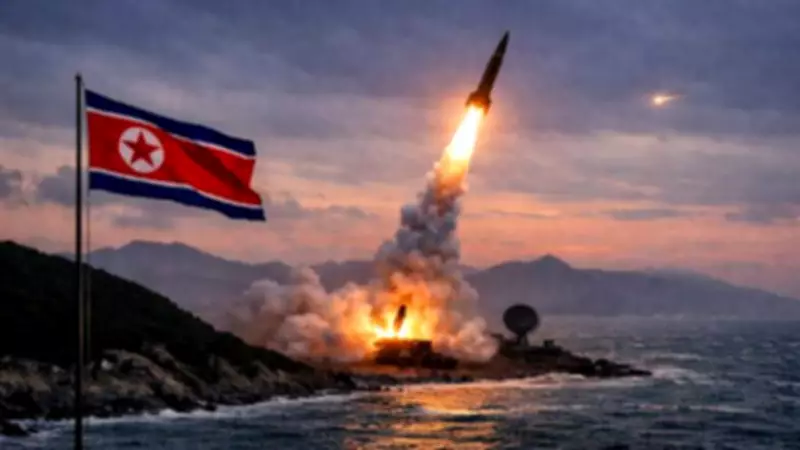
North Korea Escalates Tensions with Ballistic Missile Launches
In a significant escalation of regional tensions, North Korea has launched 10 ballistic missiles into the sea, coinciding with ongoing joint military exercises conducted by the United States and South Korea. This provocative act, reported on March 15, 2026, underscores Pyongyang's continued defiance of international norms and its opposition to allied defense preparations.
Details of the Missile Launches
The missiles were fired from various locations within North Korea and landed in the East Sea, also known as the Sea of Japan. South Korean military officials confirmed the launches, stating that they occurred over a short period and involved multiple types of ballistic missiles. The exact range and capabilities of these missiles have not been fully disclosed, but initial assessments suggest they include short to medium-range systems capable of targeting regional assets.
This marks one of the largest single-day missile tests by North Korea in recent years, highlighting the regime's accelerated weapons development program. The launches come amid heightened scrutiny of North Korea's military activities, with international observers warning of potential further provocations.

Context of US-South Korea Military Drills
The missile launches are widely interpreted as a direct response to the joint military drills between the United States and South Korea, which are currently underway. These exercises, designed to enhance interoperability and deterrence against North Korean aggression, have long been condemned by Pyongyang as rehearsals for invasion.
North Korean state media has previously labeled such drills as "hostile acts" and threatened countermeasures, making the timing of these missile tests unsurprising to analysts. The drills involve thousands of troops, advanced military hardware, and simulated scenarios aimed at addressing potential conflicts on the Korean Peninsula.
Regional and International Reactions
In response to the launches, South Korea's military has heightened its surveillance and readiness levels, while the United States has reaffirmed its commitment to the defense of its allies in the region. A spokesperson for the US Department of Defense stated that the launches are a clear violation of United Nations Security Council resolutions, which prohibit North Korea from developing and testing ballistic missile technology.
Japan, which also detected the missiles, issued a strong protest, noting that some projectiles fell within its exclusive economic zone. Prime Minister Fumio Kishida condemned the actions as a threat to regional peace and stability, calling for coordinated international efforts to address North Korea's provocations.
Implications for Regional Security
The missile launches exacerbate existing tensions on the Korean Peninsula, where diplomatic efforts to denuclearize North Korea have stalled in recent years. Experts warn that such actions could lead to a dangerous cycle of escalation, with potential risks of miscalculation or accidental conflict.
- Increased Military Posturing: Both North Korea and the US-South Korea alliance may ramp up their military activities, leading to a more volatile security environment.
- Diplomatic Challenges: The launches complicate any prospects for renewed dialogue, as they demonstrate North Korea's unwillingness to engage in good faith negotiations.
- Global Concerns: The international community, including China and Russia, faces pressure to enforce sanctions and encourage restraint, though their responses have often been mixed.
As the situation develops, regional powers are closely monitoring North Korea's next moves, with concerns that further tests or even nuclear provocations could follow. The incident serves as a stark reminder of the persistent threats posed by North Korea's military ambitions and the fragile peace in Northeast Asia.