Pakistan Reaffirms Peace Role to Iran Ahead of US Delegation Visit
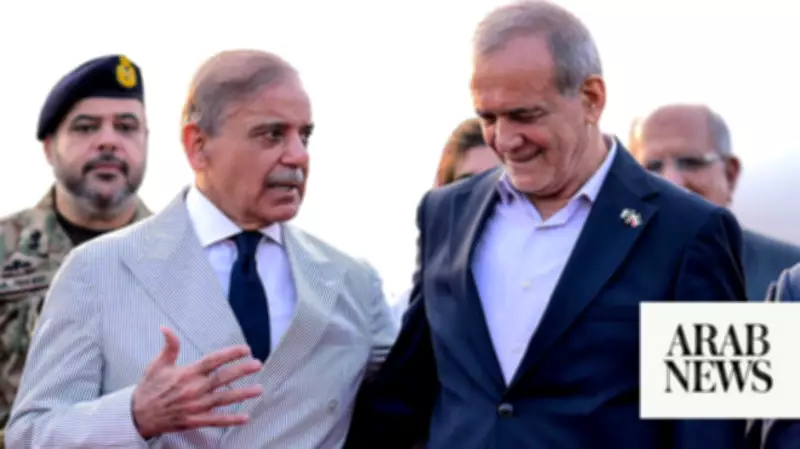
Prime Minister Shehbaz Sharif has conveyed Pakistan's steadfast commitment to acting as an honest and sincere facilitator of peace to Iranian President Masoud Pezeshkian. This assurance comes as Islamabad prepares to host a senior United States delegation led by Vice President JD Vance for crucial negotiations concerning Iran, scheduled to begin on Monday.
Diplomatic Communications and Regional Context
Sharif engaged in a telephone conversation with President Pezeshkian on Sunday night, following confirmation from former US President Donald Trump that American negotiators would travel to Pakistan for another round of talks with Iran. The White House separately verified that Vice President Vance, along with Steve Witkoff and Jared Kushner, will comprise the US delegation, with discussions set for Tuesday.
During their dialogue, Sharif briefed the Iranian leader on the evolving regional situation and detailed his recent interactions with the leaders of Saudi Arabia, Turkiye, and Qatar. "I assured him that, with the support of friends and partners, Pakistan remains fully committed to its role as an honest and sincere facilitator of lasting peace and regional stability," Sharif stated in a post on social media platform X.

Iran's Stance and Escalating Tensions
In response, Iran's official state news agency IRNA announced that Tehran would abstain from the second round of talks, citing Washington's "excessive demands, unrealistic expectations, repeated contradictions," and the ongoing US naval blockade. This decision underscores the complex diplomatic landscape as tensions between Washington and Tehran have surged again.
On Sunday, Iran's top joint military command, the Khatam Al-Anbiya, accused the US of violating a ceasefire by firing at an Iranian commercial ship in the Gulf of Oman. Trump had previously disclosed that a US destroyer ship fired on and seized an Iranian-flagged cargo vessel attempting to evade the naval blockade.
Strategic Implications for Global Energy
The incident occurs amid heightened tensions in the Strait of Hormuz, a critical conduit for global oil and liquefied natural gas shipments. The strait has been virtually closed since the onset of the US-Israeli war with Iran seven weeks ago. Although Iran briefly reopened the passage on Friday in recognition of an Israel-Hezbollah ceasefire in Lebanon, it was closed again the following day in response to the US maintaining its blockade on ships traveling to and from Iranian ports.
This closure poses significant risks to international energy markets and regional stability, highlighting the urgent need for diplomatic resolutions. Pakistan's role as a mediator is thus pivotal, aiming to bridge gaps between the involved parties and foster a conducive environment for peace talks.
As the US delegation arrives in Islamabad, all eyes are on Pakistan's diplomatic efforts to navigate these challenging negotiations and uphold its commitment to regional harmony. The outcome of these talks could have far-reaching implications for peace and security in the Middle East and beyond.