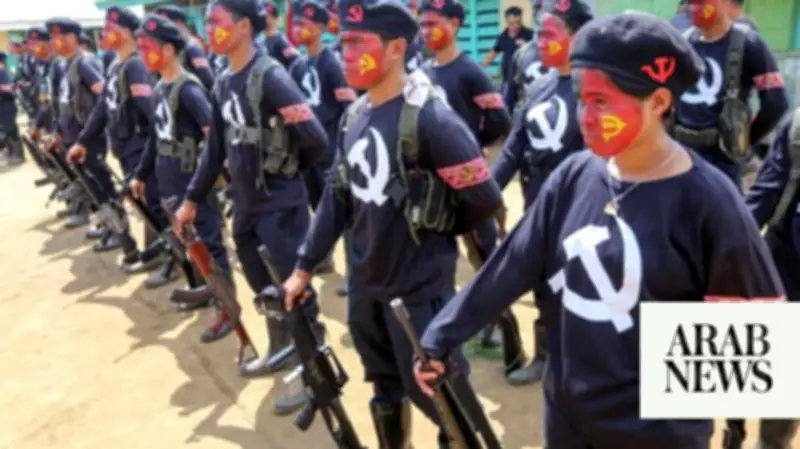
Government forces in the central Philippines have killed at least 10 Maoist guerrillas in several intense gunbattles, the military confirmed on Monday. This violent flare-up represents a significant escalation in one of the world's longest-running communist insurgencies, which has persisted for over five decades.
Deadly Clashes on Negros Island
Troops engaged in combat with remnants of the New People's Army rebel group on Sunday near the municipality of Toboso, located on Negros island. The regional military command reported that the exact number of casualties remains uncertain, with Philippine Army spokesman Colonel Louie Dema-ala indicating that as many as 19 rebels may have been killed during the operations.
Six Separate Firefights
The central Philippines military command issued a detailed statement confirming that at least 10 NPA rebels lost their lives in six distinct firefights, all occurring within Toboso on Sunday. Among the deceased was the local rebel leader, Roger Fabillar, whose elimination marks a significant blow to the guerrilla front in the region.

Established 57 years ago, the New People's Army continues to wage a protracted communist insurgency against the Philippine government. Military intelligence estimates suggest the rebel group now maintains fewer than 2,000 armed members nationwide, representing a substantial decline from its historical strength.
Civilian Displacement and Community Impact
The violence triggered significant civilian displacement, with more than 300 residents of Toboso fleeing their homes as gunfire erupted across the remote sugar cane-farming region. Toboso, a village with a population exceeding 5,000 people, saw its municipal disaster management office scrambling to respond to the crisis.
Hospicio Carbajosa, the Toboso municipal disaster management officer, provided updates to AFP, noting that some residents began returning to their homes on Monday after spending the night in an elementary school serving as temporary shelter. "We did not really see what happened, but residents told us a firefight occurred near a commercial fishery farm," Carbajosa explained, highlighting the confusion and fear that gripped the community.
Military Assessment of Rebel Activity
Colonel Dema-ala characterized the affected area as "one of the more active remnants of the guerrilla front in the central Philippines." He elaborated on the complex dynamics between rebels and local communities, noting that while the NPA "maintains a measure of local support and is able to extort the locals," growing frustration has shifted community attitudes.
"But because the community had gotten tired of them, it was the community that helped us identify their location and allowed us to conduct a military operation," Dema-ala revealed, suggesting that local cooperation played a crucial role in the successful raids.
Historical Context and Regional Patterns
Carbajosa provided important context about regional violence patterns, acknowledging that minor firefights have occurred in nearby municipalities over the past two years. However, he emphasized that none reached the scale of casualties reported in Toboso on Sunday, indicating this represents a particularly deadly episode in the ongoing conflict.
The New People's Army insurgency remains a persistent security challenge for the Philippine government, with sporadic violence continuing despite decades of military operations and peace initiatives. This latest confrontation underscores the ongoing volatility in regions where rebel remnants maintain operational capabilities.