Trump Announces US Officials En Route to Islamabad for High-Stakes Iran Negotiations
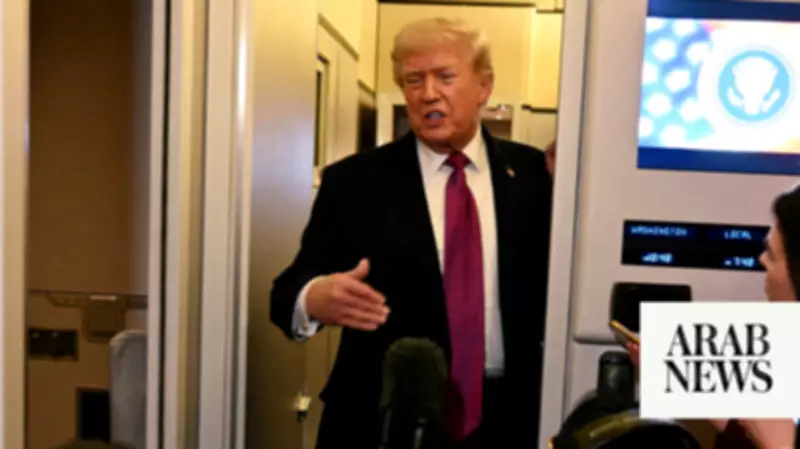
United States President Donald Trump declared on Sunday that his representatives are traveling to the Pakistani capital of Islamabad for crucial negotiations with Iran. This announcement comes in the wake of Tehran's decision to reassert control over the strategically vital Strait of Hormuz, escalating regional tensions and jeopardizing a fragile ceasefire agreement.
Ceasefire Violations and Strait of Hormuz Crisis
Iran, which had previously indicated it would permit shipping to pass through the Strait of Hormuz, abruptly reversed its position on Saturday. Tehran accused Washington of violating a two-week ceasefire pact, initially reached on April 8, by imposing a naval blockade on Iranian ports. The situation intensified when two Indian-registered vessels reported being attacked on Saturday while attempting to navigate the strait.
Shipping data revealed that traffic through the narrow maritime chokepoint had ground to a complete halt by early Sunday morning, underscoring the severity of the disruption. President Trump condemned Tehran's actions, labeling the attacks on ships as a "total violation" of the ceasefire agreement.

Trump's Ultimatum and Diplomatic Moves
In a post on Truth Social, Trump outlined the stakes of the upcoming talks, stating, "We're offering a very fair and reasonable DEAL, and I hope they take it because, if they don't, the United States is going to knock out every single Power Plant, and every single Bridge, in Iran." He confirmed that US representatives would arrive in Islamabad by tomorrow evening to engage in these critical discussions.
The US imposed the naval blockade this week after high-level talks between American and Iranian officials in Islamabad on April 11 concluded without an agreement to end the ongoing conflict. The war originated with US-Israeli strikes on Iran on February 28, and the blockade represents a significant escalation in military posture.
Preparations in Islamabad and Security Measures
In Islamabad, preparations appear to be underway for a potential resumption of negotiations, ahead of the expected expiration of the ceasefire on Wednesday. Rolls of barbed wire have been observed near the Serena Hotel, where the initial round of talks was conducted. A hotel representative confirmed that guests were instructed to vacate the premises on Sunday due to a government event, with reservations suspended until further notice.
Central Islamabad has witnessed a heightened presence of police and army personnel, although security protocols do not seem to match the level observed during the first round of talks. That earlier session was led by US Vice President JD Vance, indicating the high-profile nature of these diplomatic efforts.
Pakistan's Role as Mediator
A spokesperson for Pakistan's foreign ministry emphasized on Thursday that the country is actively maintaining communication channels between the US and Iran as part of its efforts to facilitate dialogue. The spokesperson noted that no specific dates have been finalized for the next round of talks, with consultations ongoing to establish a mutually agreeable schedule. Pakistan's involvement underscores its strategic role in mediating between the two nations amid escalating tensions.
The developments highlight the precarious state of US-Iran relations, with the Strait of Hormuz serving as a flashpoint. The outcome of the Islamabad talks could significantly influence regional stability and global energy security, as the strait is a critical conduit for international oil shipments.