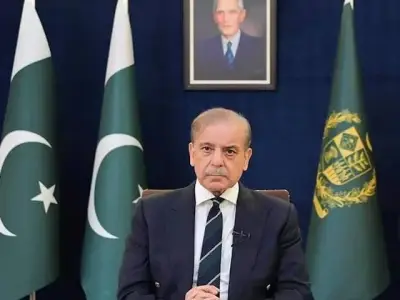
Foreign Minister Ishaq Dar has stated that US-Iran talks in Switzerland have moved into a second phase centered on nuclear issues, sanctions, and Lebanon, while cautioning that Israeli attacks on Lebanon could derail the process. In an interview with Al Arabiya, Dar explained that the negotiations could have started several days earlier but were delayed by developments in Lebanon.
Delays Due to Israeli Attacks
“These parlays, which are starting today in Switzerland, could have started a few days earlier, but because of Israel’s attack on Lebanon, they actually derailed everything and stopped everything,” Dar said. “The moment this deal was signed, we saw that there was heavy bombing in Lebanon.” He urged the world community to “convince and persuade and influence Israel not to do what they’re doing.”
Pakistan’s Mediating Role
Pakistan emerged as a key mediator during the crisis, maintaining diplomatic channels with both sides and helping facilitate negotiations that ultimately produced the Islamabad Memorandum of Understanding (MoU) on June 18. Dar said three technical groups had begun work following the signing of the MoU. “There are three technical groups, one to deal with nuclear issues vis-à-vis Iran. Second is about sanctions and de-freezing of assets. And third one is Lebanon,” he said.

Timeline for Negotiations
The discussions are taking place under a timeline that envisages some issues being concluded within 30 days, while the broader agreement is expected to take up to 60 days, with the possibility of an extension, said the foreign minister. In April, Pakistan hosted direct US-Iran talks in Islamabad and facilitated subsequent rounds of engagement, helping preserve dialogue despite repeated setbacks. After months of diplomacy involving Pakistan, Qatar, and other regional stakeholders, the process has moved to Switzerland, where technical-level discussions have begun under the framework established by the Islamabad MoU. “Pakistan has been right from day one; very, very active,” he said.
Strait of Hormuz Issue
On the Strait of Hormuz, Dar reiterated Pakistan’s position that maritime traffic should return to the status that existed before the conflict erupted on February 28, including toll-free passage for ships. “According to my interpretation, there should be no fee. Its [straits] status before the 28th of February should be restored,” said Dar. “No matter what you call it -- service fee, toll or fee -- whatever it is, our understanding is there should be nothing.” He added, “Ships are passing since 18th of June after signing of this agreement.”
Concerns Over Lebanon
The foreign minister acknowledged concerns that tensions involving Lebanon could still undermine the broader diplomatic effort. Despite the challenges, Dar voiced confidence that the US-Iran negotiations would ultimately succeed. “I have full faith that these two countries will reach a final deal,” he said.