US Navy Intercepts Iranian Cargo Ship Amid Escalating Regional Standoff
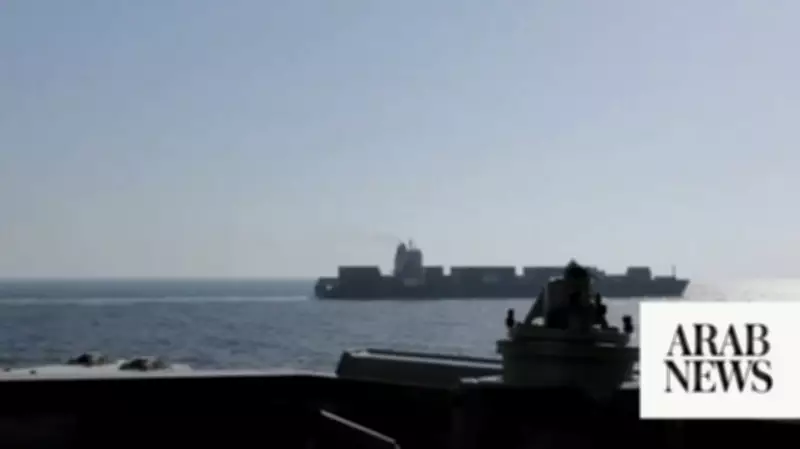
The United States military has seized an Iranian-flagged cargo vessel that attempted to run its naval blockade in the north Arabian Sea. This aggressive move comes as Iran officially rejected participation in a second round of peace negotiations, despite direct threats from US President Donald Trump regarding potential airstrikes against Iranian infrastructure.
Maritime Confrontation and Diplomatic Deadlock
President Trump announced on Sunday that US forces had taken full custody of the Iranian cargo ship M/V Touska after it attempted to breach the American blockade en route to Bandar Abbas, Iran. According to Trump's social media statement, US military personnel disabled the vessel by blowing a hole in its engine room during the interception operation.
Simultaneously, Iranian state media reported that Tehran had formally rejected new peace talks with the United States, citing Washington's "shifting positions" and "excessive demands" as primary reasons for their refusal. This diplomatic rejection occurred despite Trump's announcement that US representatives were scheduled to travel to Islamabad, Pakistan for negotiations.

Strait of Hormuz: Critical Global Chokepoint
The ongoing blockade of marine traffic through the Strait of Hormuz continues to drive global oil prices higher, with no immediate resolution in sight. Before the conflict began nearly two months ago, this strategic waterway handled approximately one-fifth of the world's oil supply, along with critical shipments of fertilizer, natural gas, and humanitarian aid to regions like Afghanistan and Sudan.
Iran has repeatedly lifted and reimposed its own restrictions on the strait, while the United States maintains its blockade of Iranian ports. On Saturday, Iranian forces fired at ships attempting to transit the waterway, demonstrating Tehran's determination to control this vital maritime corridor until what they describe as "the war fully ends."
Threats and Counter-Threats Escalate
President Trump issued stark warnings to Iran, stating that if Tehran rejects US-proposed terms, "the United States is going to knock out every single Power Plant, and every single Bridge, in Iran." These threats have drawn widespread international criticism and warnings about potential war crimes.
Iran responded with counter-threats, warning that any US attack on Iranian civilian infrastructure would result in retaliatory strikes against power stations and desalination plants belonging to Gulf Arab neighbors. Iranian President Masoud Pezeshkian, during a phone conversation with Pakistani Prime Minister Shehbaz Sharif, accused the United States of "bullying and unreasonable behavior" that has increased suspicions about Washington's diplomatic intentions.
Failed Negotiation Attempts and Security Preparations
Two previous attempts at US-Iran talks—in June of last year and earlier this year—were interrupted by Israeli and US military actions. Despite this history, the White House had prepared for renewed negotiations, with Vice President JD Vance scheduled to lead the US delegation to Pakistan, accompanied by envoys Steve Witkoff and Jared Kushner.
Pakistani authorities had begun tightening security in Islamabad in anticipation of the talks, though officials did not officially confirm that a second round of negotiations would occur. A regional official involved in mediation efforts revealed that advance US security teams were already on the ground in Pakistan, finalizing preparations for the potential diplomatic engagement.
Iran's Strategic Position and Regional Impact
Iran's Supreme National Security Council, which has recently functioned as the country's de facto top decision-making body, declared that Iran intends to maintain "oversight and control over traffic through the strait until the war fully ends." This control would include Iran-designated shipping routes, payment of transit fees, and issuance of official certificates for vessels attempting passage.

The conflict, now in its eighth week, has resulted in significant casualties across the region. At least 3,000 people have been killed in Iran, more than 2,290 in Lebanon, 23 in Israel, and over a dozen in Gulf Arab states. Military casualties include fifteen Israeli soldiers in Lebanon and thirteen US service members throughout the region.
Diplomatic Communications Reveal Deep Distrust
Iranian Foreign Minister Abbas Araghchi conveyed to his Pakistani counterpart, Ishaq Dar, that recent US actions and contradictory statements demonstrated "bad intentions and lack of seriousness in diplomacy." Meanwhile, Iran's chief negotiator, parliament speaker Mohammed Bagher Qalibaf, acknowledged that "a wide gap remained between the sides" on critical issues including Iran's nuclear enrichment program, its regional proxies, and control of the Strait of Hormuz.
First Vice President Mohammad Reza Aref emphasized Iran's position through social media, stating that "security of the strait is not free" and presenting what he described as a clear choice: "either a free oil market for all, or the risk of significant costs for everyone."
The developments indicate that regional peace remains elusive, with both sides entrenched in positions that have significant implications for global energy markets and international security. The maritime confrontation and diplomatic impasse suggest that the weeks-long blockade affecting global shipping may persist indefinitely as geopolitical tensions continue to escalate.