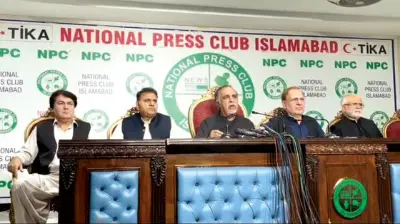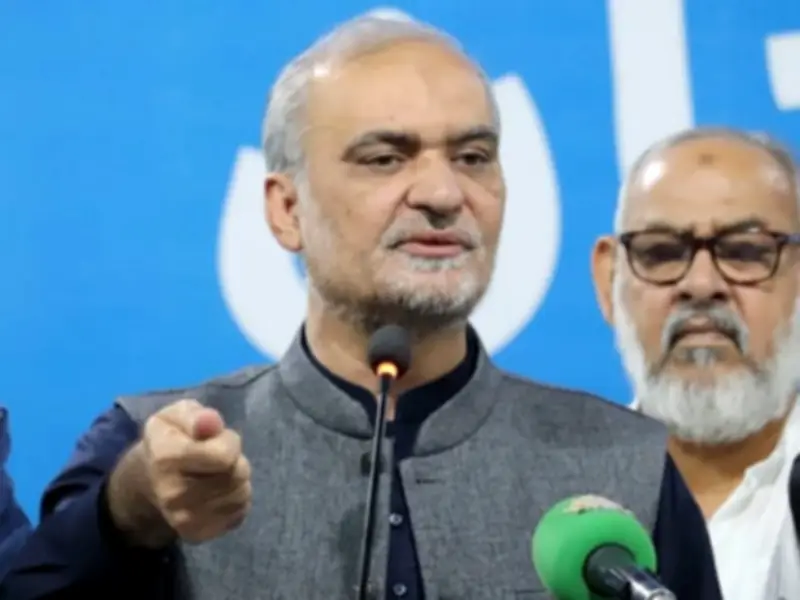
Jamaat-e-Islami (JI) Emir Hafiz Naeem-ur-Rehman launched a scathing attack on the Pakistan Peoples Party (PPP) on Monday, questioning its commitment to democracy while allegedly perpetuating a feudal system within its ranks. Addressing a press conference at the Noor Haq Institute, Naeem directly challenged PPP Chairman Bilawal Bhutto Zardari to disclose the wages paid to farmhands on his family's agricultural estates across Sindh.
Feudal Practices and Wage Demands
Naeem pointed out that the Sindh government had set the minimum wage at Rs43,000, but asked Bilawal to reveal how much his family pays laborers on thousands of acres of land. "They are not even given proper wages, just a pittance of grain, and are kept as slaves," he alleged. He accused the PPP of establishing a feudal order internally, contrasting it with the party's public posturing on democratic values. "Every child born in their family is treated as a master, while workers who have served the party for 40 years have no status," he added.
Demands for Economic Relief
The JI chief demanded the government fix petrol prices at Rs225 per litre and immediately abolish the petroleum levy, which he described as an unbearable burden on common citizens and motorcycle riders. "Ordinary people cannot even afford to pay income tax, yet they are crushed under this levy," he said. He also called for the termination of heavy taxes on electricity bills and agreements with Independent Power Producers (IPPs). Naeem warned that his party would soon call on youth across the country to protest against the "oppressive levy" by blocking major highways with their motorcycles.

Criticism of Electoral Conduct and Budget
Taking aim at the PPP's electoral record, Naeem cited the recent local government elections in Karachi as proof of the party's disdain for democratic mandates. "The PPP has never accepted democracy. They usurped JI's mandate in the Karachi local body elections and imposed their own mayor," he alleged. He also criticised the Muttahida Qaumi Movement (MQM), stating that the party had failed to secure anything for Karachi in 40 years. "Those who could not win even a single polling station were given dozens of seats," he said.
Naeem condemned the federal budget for providing no real relief to private-sector employees, labourers, or ordinary citizens. He noted that while parliamentarians received a 300 to 400 per cent increase in salaries and perks, millions of private-sector workers had not seen a pay rise in years. "It is regrettable and shameful that no increase was made in EOBI employees' pensions," he added, criticising provincial governments for spending billions on advertisements instead of public welfare.
Neglect of Education, Healthcare, and Infrastructure
The JI chief also slammed the Sindh government for neglecting education and healthcare. "Universities are not being given grants, and teachers in Karachi are protesting. If interior Sindh had adequate health facilities, why would all patients flock to Karachi?" he asked. He criticised the installation of barriers on Jahangir Road and the deterioration of University Road, saying Karachi needs 15,000 buses but the provincial government had only added 150—"kicking the grave of Hatim Tai," he quipped.
Foreign Policy and Other Issues
On foreign policy, Naeem called for resolving the Azad Kashmir issue through negotiations rather than force, asserting that 250 million Pakistanis stand with Kashmiris. He urged the government to secure the recovery of Priya Kumari and ensure the return of Pakistani citizens held by Somali pirates. He also condemned Israel's ongoing bombardment of Gaza and Lebanon, calling on Pakistan and all Islamic countries to intervene. "The concept of Israel's invincibility has ended," he declared.
Naeem criticised the government for failing to eliminate the interest-based banking system, despite pledges, adding that a large portion of the budget goes toward servicing interest-based loans. He referred to a recent speech of minority MPA Veeresh Kumar, in which he highlighted that the Holy Quran declares interest as war against Allah and His Messenger. However, he regretted that Pakistan's economy is based on interest-based system.