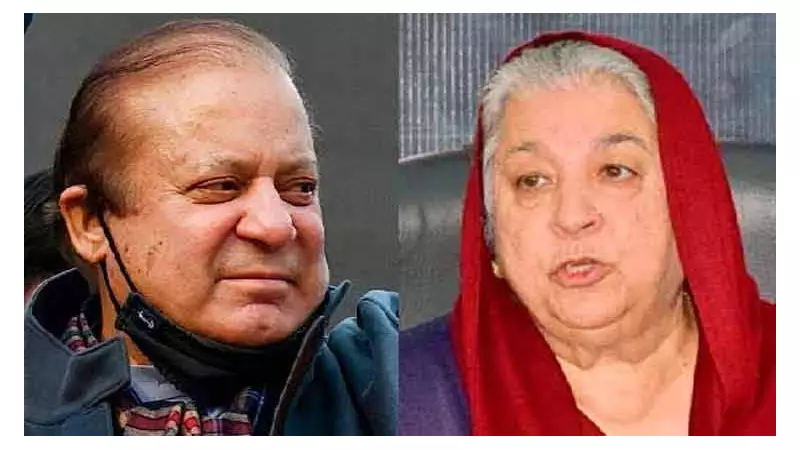
In a significant legal and political development, the Election Tribunal in Lahore has firmly upheld the victory of Pakistan Muslim League-Nawaz (PML-N) supremo Mian Nawaz Sharif from the hotly contested constituency NA-130. The tribunal dismissed the election petition filed by his rival, Pakistan Tehreek-e-Insaf (PTI) candidate Dr. Yasmin Rashid, who had challenged the results of the February 8 general elections.
The Tribunal's Verdict and Key Arguments
The tribunal, presided over by Justice Chaudhry Abdul Aziz, announced its reserved verdict after extensive hearings. The petition filed by Dr. Yasmin Rashid alleged widespread irregularities and malpractices during the polling process in NA-130, which covers parts of Lahore. Her legal team argued that the election was not conducted in a free, fair, and transparent manner.
However, the tribunal found these claims to be unsubstantiated. In its detailed judgment, it stated that the petitioner failed to provide concrete and convincing evidence to back the allegations of systematic rigging or violations of the Election Act, 2017. The tribunal emphasized that mere assertions without solid proof are insufficient to overturn the mandate given by the people.

Nawaz Sharif had secured a decisive victory in NA-130, defeating his closest competitor by a considerable margin. The tribunal's decision validates the official result announced by the Election Commission of Pakistan (ECP), reinforcing the legal standing of Sharif's return to the National Assembly from this key constituency.
Political Repercussions and Reactions
This verdict carries substantial weight for the national political landscape. For the PML-N, it is a moment of legal vindication, solidifying Nawaz Sharif's parliamentary position and boosting the party's morale. It removes a major legal hurdle that had cast a shadow over one of their most high-profile wins.
Conversely, for the PTI and Dr. Yasmin Rashid, this marks the end of a major legal avenue to contest the NA-130 outcome. The dismissal underscores the challenges opposition parties face in legally challenging election results without what courts deem to be irrefutable evidence. The decision is likely to be cited in future cases as a precedent emphasizing the high burden of proof required to nullify an election.
Political analysts suggest that while the legal battle is over, the political narrative surrounding the fairness of the February 8 elections will continue. The NA-130 case was one of the most watched election petitions, and its conclusion will be used by both sides to bolster their respective positions on electoral integrity.
Looking Ahead: Stability and Future Challenges
The tribunal's ruling brings a measure of closure to the electoral contest in one of Pakistan's most politically significant constituencies. It allows Nawaz Sharif to focus fully on his parliamentary duties without the lingering threat of his seat being contested on these specific grounds.
This verdict also highlights the critical role of the judiciary in adjudicating post-election disputes. By demanding rigorous evidence, the tribunal has reinforced a legal standard that aims to balance the right to challenge results with the need for electoral stability and respect for the declared will of the electorate.
As the National Assembly moves forward, the confirmed victory of a central figure like Nawaz Sharif from NA-130 is expected to influence legislative dynamics and political strategies. All eyes will now be on how this consolidated position plays out in the broader governance and policy-making processes of the country.