Comcast Announces Split Into Two Companies
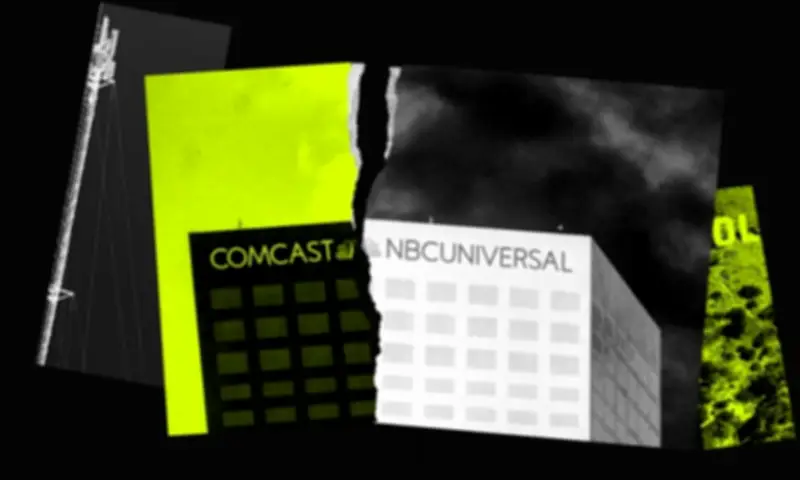
Comcast, the largest cable operator in the United States, has announced it will split itself into two separate publicly traded companies: Comcast, which will focus on broadband and wireless, and NBCUniversal, which will house NBC, Bravo, Peacock, Universal Studios theme parks, and the film and TV studio. This move comes after the spin-off of its cable networks (CNBC, MSNBC, Golf Channel) into a new company called Versant earlier this year.
The decision marks the end of a 15-year experiment in vertical integration, where Comcast sought to combine content ownership (NBCUniversal) with distribution (its broadband network). According to Peter Kafka, chief correspondent at Business Insider and host of Channels podcast, the split effectively acknowledges that the promised synergies never materialized.
"It never worked in terms of there being a synergy between owning the pipes that distribute the content and owning the content," Kafka said on Decoder. "The real answer is that they shouldn't have those two companies combined."

The Content Plus Pipes Thesis: A History of Failure
The idea of combining content and distribution, often called "content plus pipes," has been attempted repeatedly by telecom and media giants. AT&T bought Time Warner in 2016 for $85 billion, only to spin it off as Warner Bros. Discovery in 2022. Verizon acquired AOL and Yahoo, later writing down billions. AOL itself bought Time Warner in 2000 in a disastrous merger that ended in 2009.
Comcast's acquisition of NBCUniversal from GE in 2011 for about $30 billion was the most enduring example. But as Kafka notes, "It never proved that there was some benefit from adding the content company to the distribution company." The company faced regulatory restrictions from the Department of Justice, including net neutrality conditions, that prevented it from favoring its own content on its network.
"The fight was whether Comcast and other internet providers could turn internet access into cable TV," said Nilay Patel, host of Decoder. "AT&T tried it, Comcast tried it, literally every ISP tried it."
Why the Split Happens Now
Comcast's broadband business, which was once a high-margin monopoly, is now facing real competition. Fixed wireless internet from T-Mobile and Verizon has caused Comcast to lose broadband subscribers—700,000 in the last year alone. Meanwhile, its pay TV business is in free fall, with cord-cutting reducing subscriptions to under 10 million, down from a peak of over 20 million in 2008.
Wall Street had been pressuring Comcast to unlock value from its media assets, which were seen as dragging down its stock price. "After years and years of being told by Wall Street, 'We don't value this asset you own at all,' Comcast finally said, 'Okay, we will take you at your word, and we'll split it up,'" Kafka explained.
The split also removes the regulatory and political baggage of owning MSNBC and other cable news networks, which could facilitate future mergers or acquisitions.
What Happens to NBCUniversal?
As a standalone company, NBCUniversal retains valuable assets: the Universal Studios theme park business, a major film and TV studio, the NBC broadcast network (which includes NFL rights), and Peacock streaming service. However, Peacock has struggled to compete with Netflix, Disney+, and others, and Comcast has been reluctant to invest as heavily as rivals.
Kafka suggests NBCUniversal could become a target for acquisition. "You can make a pretty strong case that NBCUniversal as a standalone company is interesting, either as a standalone company or as an asset to be acquired by somebody else," he said. Potential buyers could include tech giants like Apple or Amazon, or even a merger with another media company like Paramount.
The broadcast network remains valuable primarily due to sports rights, especially the NFL. "There are only a handful of places where you can distribute NFL programming to all of America, and NBC owns one of them," Kafka noted.

The Future of Versant
Versant, the spin-off containing cable networks like CNBC, MSNBC, and Golf Channel, faces a challenging future as cord-cutting accelerates. These networks still generate significant cash from cable bundle fees, but the business is declining. "It's the greatest business model in history—you get paid no matter what because people subscribe to a cable channel subscription bundle," Kafka said. "That business is not just in decline for Versant, it's in decline overall."
CEO Mark Lazarus has said the company will try to build new revenue streams while milking the declining cable assets. But as Patel points out, "A foot in each canoe is great, but you have to turn down the money from the old canoe in order to invest in the new money you might make."
Net Neutrality and the Market
The failure of content plus pipes is closely tied to the net neutrality debate. Comcast's merger conditions prevented it from throttling competitors like Netflix or zero-rating its own Peacock service. But Kafka argues that market forces were equally important. "The market demanded net neutrality," he said. "Consumers had picked Netflix and they would not tolerate the fee."
Patel highlighted a pivotal moment: when former Netflix CEO Reed Hastings told Kafka at a Code Conference that net neutrality no longer mattered because Netflix was big enough. "That was the moment I knew it was over for the ISPs and their media dreams," Patel said.
Despite these forces, Comcast's broadband business still faces existential questions. With competition from fixed wireless, Starlink, and potential combinations with Charter, the company must find ways to grow or risk continued decline.