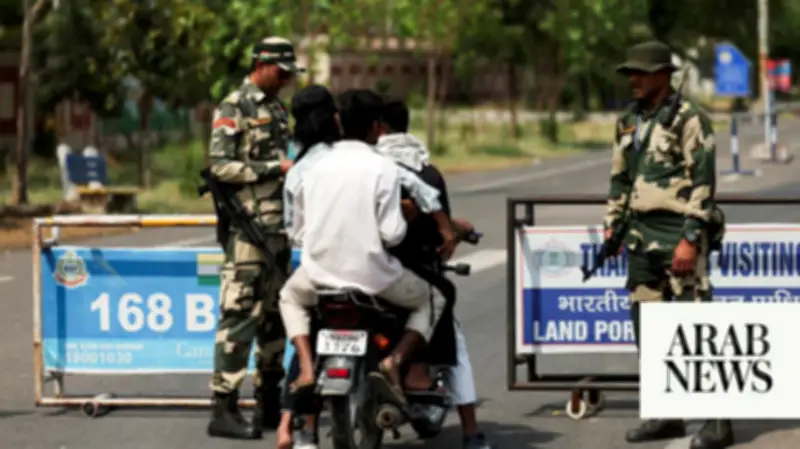
India filed charges on Monday against Hafiz Saeed, the founder of the Pakistan-based militant group Lashkar-e-Taiba (LeT), in connection with a deadly attack on tourists in India-administered Kashmir last year. The April 2025 attack near the tourist resort of Pahalgam killed 26 people, mostly Hindu tourists, sparking an intense four-day conflict between the nuclear-armed neighbors. New Delhi has accused Pakistan of backing the attack, claims Islamabad has repeatedly denied.
Charges Filed by India's National Investigation Agency
India’s National Investigation Agency (NIA) said it had charged Hafiz Saeed in “his individual capacity and also as the chief of the banned Lashkar-e-Taiba terror outfit and its active proxy organization, The Resistance Front.” Saeed was charged with “waging war against India and hatching a conspiracy from across the border,” according to a statement from the agency. The charges were filed on July 6, 2026, more than a year after the attack.
Pakistan's Response and Denial
Pakistan’s foreign ministry did not immediately respond to a request for comment, but Islamabad has previously called for an independent inquiry, saying there was no Pakistani involvement in the attack. The United Nations sanctioned Lashkar-e-Taiba in 2005 over its links to Al-Qaeda and the Taliban, and the United States in 2008 added Saeed to its global terrorism list.

Lashkar-e-Taiba's History of Attacks
Lashkar-e-Taiba is most known for its links to the 2008 attack in India’s financial capital Mumbai, where 10 gunmen laid siege to the city for three days, killing at least 166 people. The group was also involved in a 2001 attack on India’s parliament, 2005 attacks in New Delhi and Bengaluru, and a 2006 attack on Mumbai trains. Pakistan convicted Saeed, 76, in 2020 over terrorism financing charges after detaining him the previous year.
Impact of the Pahalgam Attack
Last year’s Pahalgam attack triggered a series of tit-for-tat diplomatic measures, spiralling into intense exchanges of missile, drone and artillery fire between India and Pakistan. The conflict left more than 70 people dead on both sides. Muslim-majority Kashmir has been divided between the South Asian rivals since their independence from British rule in 1947. Both countries claim the region in full, and they have fought two wars over its control. Rebel groups, demanding the divided region’s independence or merger with Pakistan, have waged an insurgency since 1989.