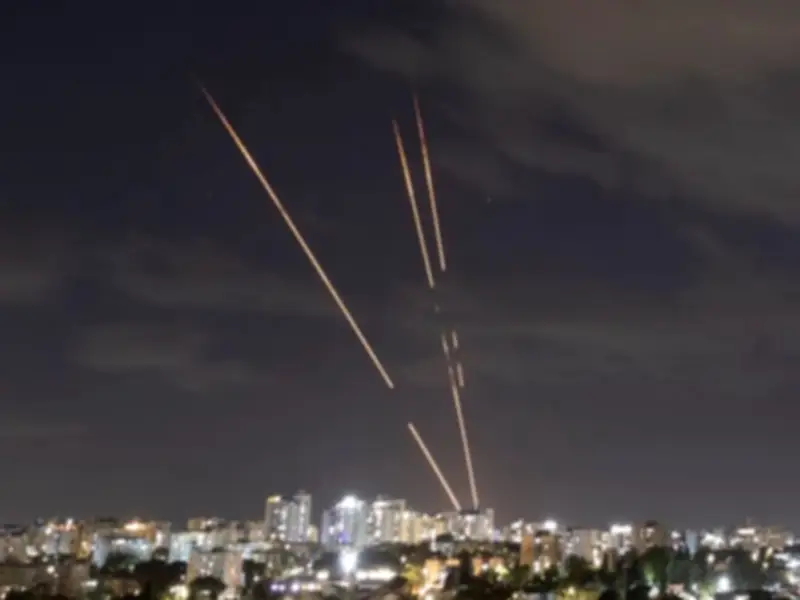
WASHINGTON/TEHRAN: Iran fired missiles at Israel late on Sunday night, the first since a fragile truce went into effect in April, Iranian Revolutionary Guards confirmed. The Guards said that the missile attack on Israel was a "warning" after the Israeli strike on Beirut earlier in the day, threatening wider strikes in the event of new aggression.
Iran's Warning and Response
"Tonight's operation was a warning. If such aggressions are repeated, the responses will be broader and will cover all US-Zionist targets in the region," the force said. Earlier, the Israeli military reported two barrages of missiles fired from Iran. "An additional barrage of missiles was launched toward the State of Israel," it said. "The aerial defence array is currently identifying and intercepting threats."
The missile strikes came as US President Donald Trump said on Sunday he would not unfreeze Iran's assets until a deal was reached, amid reports that Washington was planning to make these funds available to Gulf nations for rebuilding and repair work after the war damage. The Middle East continued to remain tense amid ongoing strikes, counter-threats and fragile diplomatic efforts to contain the widening conflict. Tensions have been particularly acute in Lebanon, where Israeli onslaughts have continued despite a truce proposal.

Iran Rejects Asset Compensation
Iran firmly rejected the suggestion that its frozen assets could be used to compensate US allies for war-related damages. Iran's Deputy Foreign Minister Kazem Gharibabadi said regional governments were "not in a position to demand reparations". In comments posted on social media platform X, Gharibabadi went further, insisting that Iran's assets were "neither war spoils for Washington nor a payment fund for its allies", signalling Tehran's hardening stance against any financial penalties linked to the conflict.
The remarks came after a source familiar with the matter told Reuters that the United States was considering making Iranian assets available to Gulf allies to help fund rebuilding and repair work in the event of future damage attributed to Iran. The proposal has not been officially confirmed by Washington.
Threats and Diplomatic Deadlock
In a separate post on X on Sunday, Iran's Parliament Speaker Mohammad Bagher Ghalibaf issued a direct warning that US and Israeli interests across the region could become "legitimate targets", citing a naval blockade and green light for Israeli military action in Lebanon. Ghalibaf accused Washington and Tel Aviv of rejecting diplomacy. "They are neither committed to a ceasefire nor believe in dialogue," he said, adding that their actions showed they "only understand the language of power". His comments followed Israeli strikes on the southern outskirts of Beirut, which Israel said were carried out in response to Hezbollah fire.
Iran has not issued an official state response to the latest Israeli strikes, but senior lawmakers have threatened retaliation. The renewed exchanges come against the backdrop of an increasingly fragile ceasefire framework between Washington and Tehran, which has struggled to hold amid repeated violations.
Trump's Stance on Deal
Speaking in a televised interview aired on Sunday, Trump, however, insisted that the United States was "very close to a deal". Trump said he would not unfreeze Iranian assets or lift sanctions before a broader agreement is reached. "Comes after," he said. "If they behave, if they do a good job, we start talking," he added, warning of renewed military action if negotiations fail. Iranian officials have repeatedly linked any broader settlement with the United States to a ceasefire in Lebanon, while Washington insists nuclear and regional security issues must be addressed separately. Analysts say the competing demands have created a diplomatic deadlock.

IAEA Resolution and Russian Criticism
To further stoke tensions, Washington is pushing a draft resolution at the International Atomic Energy Agency (IAEA), requiring Iran to disclose detailed information about its nuclear sites and enriched uranium stockpiles, including facilities damaged in recent strikes. Iranian officials maintain that Western actions, including sanctions and military pressure, are undermining prospects for diplomacy. Russia has also criticised US-led moves at the IAEA, warning they could further complicate talks on Iran's nuclear programme.
As diplomatic manoeuvring continues, the situation on the ground remains volatile. Exchanges of fire in Lebanon, drone interceptions in the Gulf, and competing political declarations from Washington and Tehran have all contributed to what officials on both sides privately describe as a precarious and unresolved crisis.