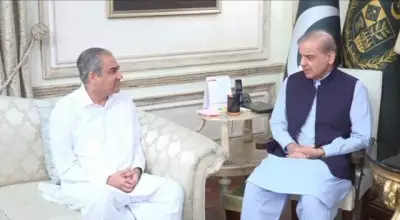
ISLAMABAD: Pakistan's Interior Minister Mohsin Naqvi delivered a "special letter" on behalf of the country's civil and military leadership addressed to Iran's Supreme Leader Mojtaba Khamenei in Tehran, amid Islamabad's ongoing diplomatic efforts to help break the deadlock between the United States and Iran, officials and Iranian media said on Sunday.
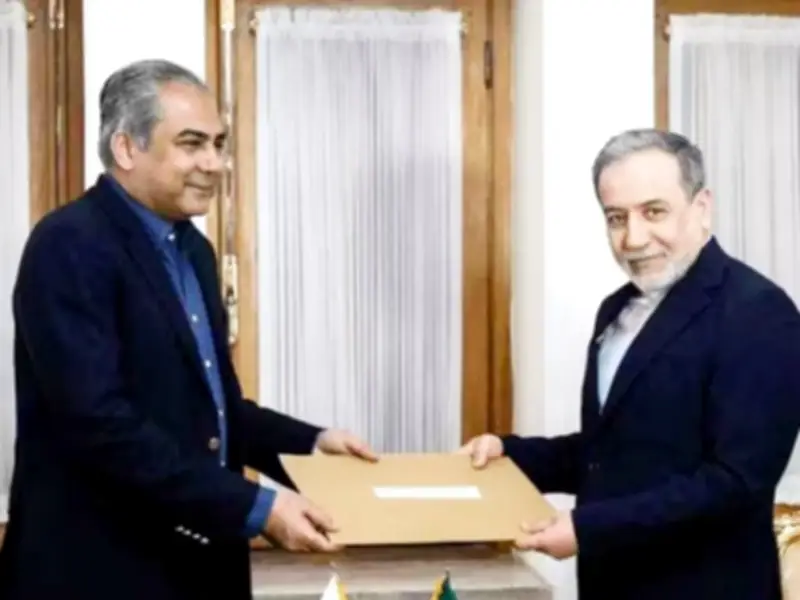
Naqvi, who arrived in the Iranian capital late Saturday, held separate meetings with Iranian Interior Minister Eskandar Momeni and later with Foreign Minister Abbas Araghchi, where he discussed "regional developments and internal security matters," according to Iranian state-linked reports. There were no details available from the Pakistani side, with one source telling The Express Tribune that Naqvi held a separate meeting with Araghchi following the delegation-level talks. It was during the separate one-on-one meeting where he was believed to have discussed the key issues.
He traveled to Tehran twice last month, and his latest trip was part of continuing Pakistani efforts aimed at breaking the deadlock. Before his arrival, Iranian media had reported that the Pakistani minister was carrying a high-level message from Prime Minister Shehbaz Sharif and Pakistan's Chief of Army Staff Field Marshal Asim Munir for Iran's top leadership.

Speaking informally to reporters in Tehran, Naqvi confirmed he had come "to deliver a special letter from the Field Marshal for His Eminence Ayatollah Mojtaba Khamenei and a message from the prime minister regarding the current situation." Iran's semi-official ISNA news agency, citing sources, said the letter was described by Naqvi as a "special communication" aimed at supporting diplomatic efforts to de-escalate the ongoing crisis.
The visit comes as behind-the-scenes mediation efforts involving Pakistan appear to have stalled, even as Washington and Tehran remain locked in a prolonged confrontation that has periodically spilled into direct and indirect military exchanges across the Gulf region. According to diplomatic sources, Islamabad has been facilitating indirect communication between the two sides for several weeks, relaying messages and proposals aimed at securing an interim understanding that could halt hostilities and create space for broader negotiations, including on Iran's nuclear program.
However, despite intermittent engagement, a breakthrough has remained elusive. Iranian adviser to the Supreme Leader, Mohsen Rezaei, recently told international media that any potential agreement would depend heavily on the release of billions of dollars in frozen Iranian assets. Separate reports have suggested that US officials are also examining financial and strategic costs linked to regional escalation, including the possibility of using Iranian assets in any future settlement framework.
Naqvi's trip to Tehran is his latest in a series of engagements with Iranian officials. He met Momeni twice earlier this week on the sidelines of the Shanghai Cooperation Organisation (SCO) interior ministers' meeting in Bishkek, reflecting what officials describe as "continuous backchannel coordination" between Islamabad and Tehran. In his meeting with Araghchi on Sunday, Naqvi was briefed on Iran's perspective regarding the evolving regional security situation, according to Iranian media releases that also published photographs of the two officials shaking hands and holding detailed discussions.
The Pakistani interior minister's visit comes at a time of heightened volatility in the Middle East, with reports of missile and drone exchanges involving US forces and Iranian-linked targets across the Gulf. Iran's Revolutionary Guard has claimed responsibility for strikes on regional installations hosting US forces, while Washington has reported intercepting incoming projectiles and conducting retaliatory strikes on Iranian surveillance infrastructure. Several Gulf states have condemned the escalation and called for restraint.

The renewed tensions have raised concerns among regional actors about the risk of a wider conflict, particularly in the strategically sensitive Strait of Hormuz, through which a significant portion of global oil shipments pass. Pakistan, which shares borders and longstanding diplomatic ties with Iran, has repeatedly called for restraint and dialogue, positioning itself as a facilitator rather than a party to the conflict. Officials in Islamabad say the latest diplomatic push reflects Pakistan's continued effort to prevent further escalation and encourage a negotiated settlement, though they acknowledge that the path forward remains uncertain. Naqvi was due to return on Sunday night and would brief the leadership about his latest trip to Tehran.