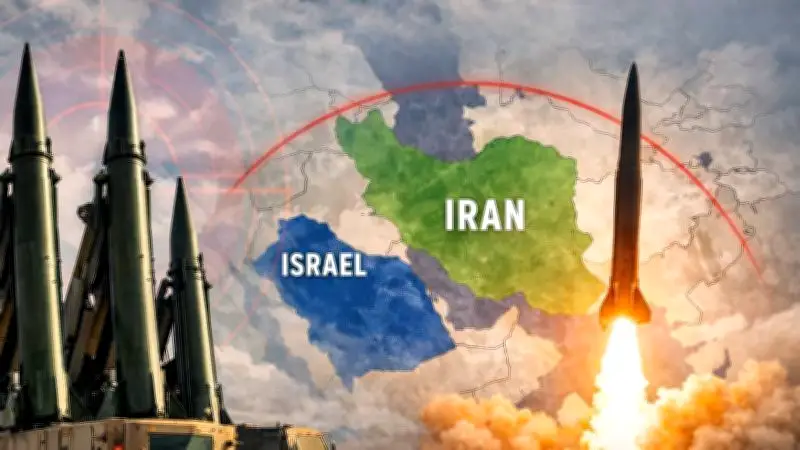
The map of the Middle East as it existed is gone. The fallout of the war in Iran has shattered the regional balance of power and turned regional politics upside down. Realpolitik dictates that geography ultimately prevails. An 18th-century topographical map showing the Ottoman, Safavid, and Mughal Empires reveals three large Muslim empires coexisting, but a relief map is needed to understand the geography. Unlike Europe, fragmented by peninsulas, forests, and mountains, the geography of the Islamic Ecumene is remarkably continuous, consisting of vast arid plateaus, trade deserts, and maritime corridors like the Red Sea and Persian Gulf. This open terrain historically allowed armies, ideas, and populations to move over immense distances with little obstruction.
Background: The Islamic Ecumene Concept
Ecumene, or oikoumene, is a Greek word meaning the known or inhabited world. Its center was the area conquered by Alexander the Great, from Alexandria in Egypt to Taxila in Pakistan. For two millennia, the lack of internal barriers meant a merchant could travel from Cairo to Damascus, through Baghdad, across the Iranian plateau, via Afghanistan or the Arabian Sea, to Lahore and Delhi—all part of the same socio-cultural milieu. This concept, coined by historian Marshall Hodgson, refers to the permanently inhabited, interconnected urban and agrarian belt that forms the cradle of Islamic civilization.
The Iran War and the R-4 Alliance
While the world focused on Burgenstock on 21 June 2026, the Foreign Ministers of Egypt, Saudi Arabia, Turkey, and Pakistan met in Cairo for the fourth Regional (R-4) meeting. Western analysts have described this as an "Islamic NATO," but that does not capture the full story. Saudi Arabia signed a Strategic Mutual Defence Agreement with Pakistan in September 2025 after Israel’s unprovoked attack on Qatar. The Iran war in February 2026 escalated this two-nation alliance into an informal Quad.

As the sole nuclear power within the Ecumene, possessing a highly disciplined military apparatus and a massive standing army, Pakistan offers the hard-power umbrella that Gulf states need in a post-American security vacuum. Countries in the region saw that the United States could not be relied upon for protection; US bases in Qatar, Kuwait, Bahrain, and Saudi Arabia became liabilities. But why Turkey, Pakistan, and Egypt? They were not targeted by Iran. This is not solely an alliance against Israel.
Structural Assets of Each R-4 Member
Each of the four powers brings distinct structural assets. Egypt controls the Suez Canal, the indispensable maritime throat of the Western Ecumene, and provides massive demographic and conventional military weight. Turkey serves as the industrial gateway to Europe, offering cutting-edge defense manufacturing, drone technology, and institutional military organization. Saudi Arabia provides financial liquidity, sovereign wealth, and energy infrastructure to bankroll stabilization and rebuilding of regional supply chains. Pakistan offers ultimate strategic depth as the sole nuclear power within the Ecumene, with a highly disciplined military and massive standing army, providing the hard-power umbrella Gulf states need.
The Future: Iran and the New Order
Observers such as Professor Robert Pape of the University of Chicago claim that Iran will emerge from this war as the fourth center of power, primarily due to its strategic geography and asymmetric forces, which give it leverage to close both the Strait of Hormuz and the Bab el-Mandeb. Through Hezbollah, Iran would assert control over pipelines into the Mediterranean. This leverage and chokehold on global trade is unique. As Napoleon Bonaparte said, "Geography is destiny." The R-4 is not just a security alliance; it is geography reasserting itself—the Islamic Ecumene returning to its natural order before British and American hegemons arrived.