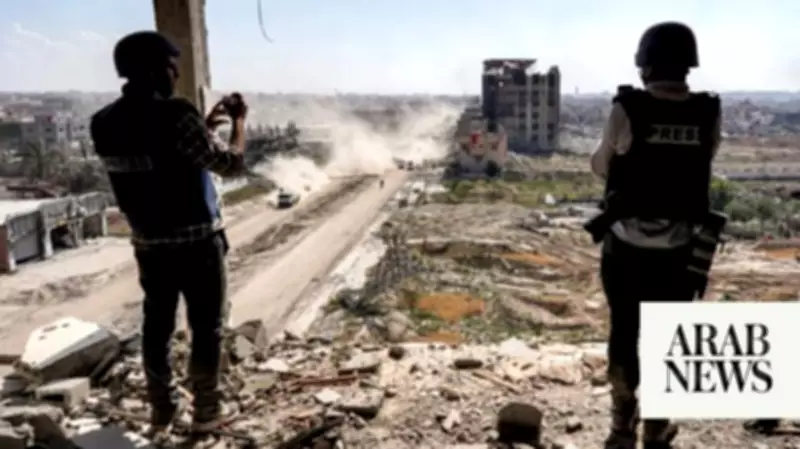
The leaders of major media companies worldwide, including The Associated Press, are urging Israel's government to lift the ban preventing foreign journalists from independently entering and reporting from Gaza. This restriction has been in place since the war began in 2023 and continues despite a ceasefire that has held for over six months.
Statement from Media Executives
“Being on the ground is essential. It allows journalists to question official accounts on all sides, to speak directly with civilians and report back what they witness firsthand,” said the statement from the executives, released Thursday. “That is why news organizations send their reporters into the field, often at great personal risk.”
Top editors from over two dozen organizations, including the BBC, CNN, MSNBC, Reuters, German news agency dpa, and The Washington Post, said the Israeli government has not responded to their efforts to discuss the situation. They questioned the rationales for maintaining the restrictions.

Israel's Justifications
Initially, Israel stated the ban was necessary because foreign journalists in Gaza could reveal the positions of Israeli soldiers, endangering them. Other justifications included the area being an active battle zone and too dangerous. The army has occasionally brought foreign reporters on highly controlled trips, but media outlets seek independent access.
“The heaviest fighting is over and there is a ceasefire in place,” the editors’ statement noted. “The hostages have come home. Journalists do not pose a threat to Israeli troops. There is a mechanism in place — however restrictive — that allows aid workers to enter and exit the territory. Why not journalists?”
Legal Efforts
The Foreign Press Association, representing international media in Israel, Gaza, and the West Bank, filed a petition in 2024 with the Israeli Supreme Court seeking independent access to Gaza. A ruling has been repeatedly delayed, most recently in January.
Reliance on Local Journalists
With foreign journalists barred, coverage of conditions on the ground has relied solely on local Palestinian journalists. These correspondents face immense personal risks, including destroyed homes and loss of loved ones. When food access became severely restricted last year, many faced hunger, prompting the Agence France-Presse in July to raise alarms about their survival. The AP and Reuters echoed these concerns.
The editors emphasized: “This has pushed the responsibility for covering this devastating war and its aftermath almost entirely on our Palestinian colleagues ... They should not have to shoulder this burden alone, and they should be protected.”
Casualties Among Journalists
According to the Committee to Protect Journalists, over 200 journalists and media workers have been killed, far more than in other conflicts like the Russia-Ukraine war. Among the victims was Mariam Dagga, a 33-year-old visual journalist freelancing for the AP and others. She and four other journalists, including Reuters cameraman Hussam Al-Masri and freelance journalist Moaz Abu Taha, were killed in an Israeli strike on a medical facility in August. The AP’s reporting questioned the rationale for the strike on the hospital, a known gathering place for journalists. AP and Reuters later called on Israel to explain the incident and outline steps to protect reporters.
Press Freedom Week
The statement from the editors was released during Press Freedom Week. “Freedom of the press is a basic value in any open society. It is time for the delays to end. Let us into Gaza.”