The recent military exchanges between Israel, Iran, and the United States may be remembered less for their direct impact than for what they revealed about a changing international order. For nearly two years after the Hamas attacks of October 7, 2023, the Middle East appeared to be moving toward a new strategic reality dominated by Israeli military superiority.
Military Dominance and Its Limits
Israel's campaigns in Gaza and Lebanon, repeated strikes in Syria, and direct confrontation with Iran projected an image of overwhelming force. Across the Arab and Muslim world, fears grew that the balance of power had tilted decisively in Israel's favor. The phrase "Greater Israel," once confined to ideological debates among religious-nationalist circles, re-entered mainstream political discourse. While Israel has never adopted this as official policy, rhetoric from ministers like Itamar Ben-Gvir and Bezalel Smotrich—both supporters of expanding settlements and opponents of Palestinian statehood—deepened regional anxieties that military success might translate into permanent political change.
Yet the ceasefire with Iran told a different story. It demonstrated that even overwhelming military superiority has limits. Israel displayed remarkable intelligence and operational reach, and the United States reaffirmed its role as the indispensable security actor. But neither could shape the region solely through force. Iran remained standing, the Strait of Hormuz became a challenge, Arab states resisted being drawn into a wider war, and diplomacy succeeded where escalation threatened to fail.

A Multiplex World Order
This outcome points to a larger shift in international politics. For three decades after the Cold War, the global order rested largely on American primacy. Today, Washington remains powerful but constrained, managing competition with China, the war in Ukraine, Middle East instability, and shifting alliances. Nearly two decades ago, Fareed Zakaria argued that the defining story of the 21st century would be "the rise of the rest." More recently, scholar Amitav Acharya has described the current system as a "multiplex world"—power distributed among numerous actors rather than concentrated in a single hegemon.
Perhaps the most striking feature of the crisis was not the military exchanges but the number of countries involved in preventing escalation. Pakistan maintained channels of communication with actors trusted by few others. Türkiye balanced its NATO membership with regional dialogue. Saudi Arabia invested heavily in preventing a wider conflict that could jeopardize its economic transformation. Oman and Qatar played their familiar roles as discreet intermediaries. None possess the military reach of the US or economic weight of China, yet each became indispensable because they could communicate with everyone.
Pakistan's Diplomatic Role
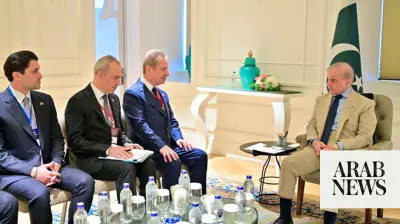
Pakistan's case is peculiar. During the conflict, its diplomatic engagement—traditionally viewed through security challenges and regional rivalries—demonstrated a less appreciated strength. Working alongside Qatar, Türkiye, and Saudi Arabia, Islamabad supported efforts to reduce tensions and maintain communication channels when the risk of regional escalation was high. It did not shape events through military intervention. Its value lay in helping diplomacy remain possible when direct communication between adversaries had become difficult.
This reflects a broader change in how influence is exercised. The Middle East war shows the international system is becoming neither unipolar nor rigidly multipolar but evolving into a flexible order where power is shared among major powers, regional actors, and influential middle states. Military power remains essential but is no longer sufficient to shape political outcomes alone. The ability to mediate, communicate, and build consensus has become a strategic resource.
For Pakistan, this should be encouraging. The country's future relevance will depend less on its economy or military size than on its ability to convert geography into diplomacy, relationships into influence, and strategic location into strategic purpose. In the emerging world, those who build bridges may prove as important as those with the greatest power.