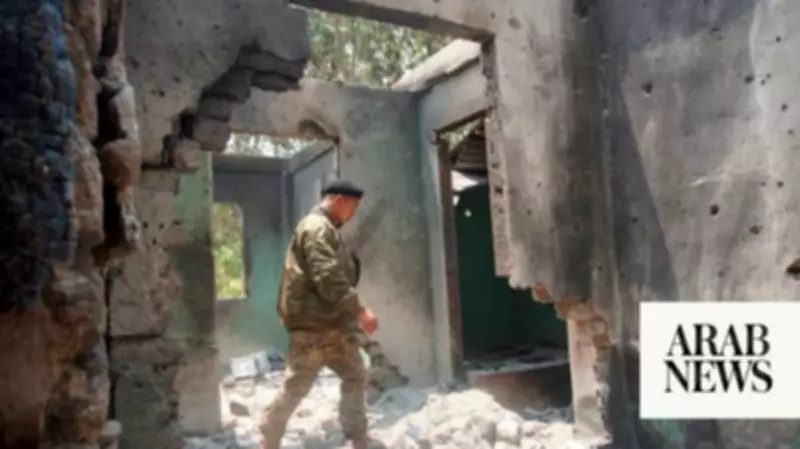
Myanmar's military, the Tatmadaw, has shifted from a defensive posture to an offensive one as the resistance movement weakens after five years of civil war. A little over a year ago, the military was pushed out of large areas in the north by seasoned militias and forced into defensive actions across the country. However, with tens of thousands of new conscripts, the Tatmadaw has reversed some losses and is poised to resume offensives.
Changing Dynamics on the Ground
According to Morgan Michaels, a Singapore-based analyst with the International Institute of Strategic Studies, the Tatmadaw is reasserting itself while the resistance movement is petering out. He noted that armed resistance will continue until a comprehensive political solution is reached, but the Tatmadaw has retaken the strategic initiative. Weariness after five years of conflict, which has killed tens of thousands including 8,000 civilians and displaced millions, is widespread. Aung Thu Nyein, a Myanmar political analyst based in Thailand, highlighted that many locals just want the fighting to stop, regardless of who wins.
China's Influence and Ceasefires
China has exerted pressure for stability in Myanmar, a critical source of rare earths and natural resources. Beijing has invested billions in mines, pipelines, and infrastructure, and is a major arms supplier to the Tatmadaw. Initially supporting the Three Brotherhood Alliance's offensive in October 2023 due to concerns over organized crime, China later cut arms supplies and pushed for ceasefires. The Myanmar National Democratic Alliance Army and Ta'ang National Liberation Army agreed to ceasefires, leaving the Arakan Army as the only active member in Rakhine state.

Pro-Democracy Forces and Unity Challenges
The ouster of Aung San Suu Kyi in 2021 gave rise to pro-democracy People's Defense Forces (PDFs), many affiliated with the shadow National Unity Government (NUG). The Burma Liberation Democratic Front emphasized the need for top-level coordination between ethnic armed organizations (EAOs) and the NUG, but noted differences in strategy and tactics. The Tatmadaw is actively trying to divide revolutionary forces, the group said.
Recent Elections and Peace Overtures
The military junta held elections criticized as neither free nor fair, with Min Aung Hlaing sworn in as president. China congratulated him and sent its foreign minister. The elections freed up soldiers for offensives. Min Aung Hlaing invited armed groups to peace talks by July 31, without mentioning the NUG, which denounced the offer. The Tatmadaw continues large-scale offensives, including in Sagaing to retake Indaw, while defending against Karen National Liberation Army advances near the Thai border.
Analysts suggest the junta aims for limited ceasefires to redirect resources against groups unwilling to negotiate. Michaels concluded that while some opposition is needed to justify military rule, the current level of armed resistance is unsustainable.