North Korea on Wednesday strongly condemned remarks made by the top American military official in South Korea, who described his host nation as 'the dagger in the heart of Asia.' The criticism came from state-run Korean Central News Agency (KCNA), which published commentary by analyst Kim Myong Chol, accusing the United States of being 'the chieftain of harassing peace and the world's worst war empire.'
US General's Controversial Statement
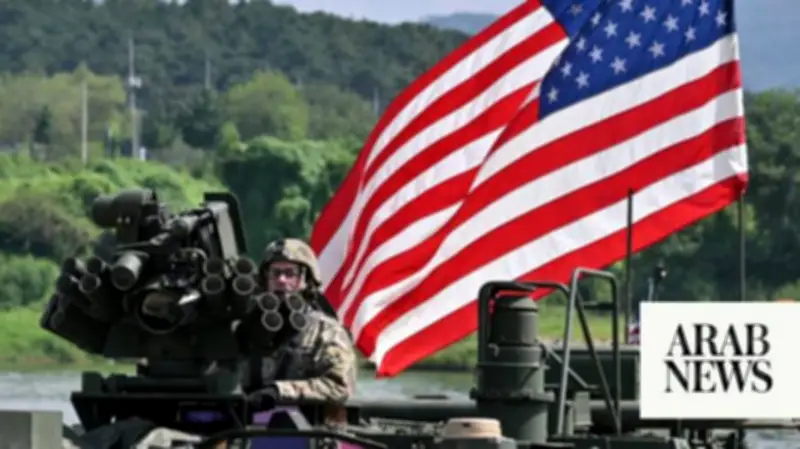
General Xavier Brunson, commander of US Forces Korea (USFK), made the remarks in an interview amid growing speculation that Washington may seek to expand the USFK role in countering China's regional influence. About 28,500 US troops are stationed in South Korea to help guard against the nuclear-armed North. In the interview, Brunson said, 'When (the Chinese) look out from the east coast of China, what they see is there's Korea, the dagger in the heart of Asia.' He also compared Japan to a 'shield that's sort of a backstop' against China's regional ambitions, according to a transcript posted by the Strategic Studies Institute of the US Army War College.
North Korea's Response
Kim Myong Chol, who is based in Japan and considered an unofficial overseas spokesman for North Korea, stated that Brunson's comments reflected Washington's intention to use South Korea 'as an important geopolitical instrument to realize its regional strategy aimed at containing China.' China has for decades been Pyongyang's main trading partner and a key source of diplomatic and economic backing. The KCNA commentary further accused the US of being a destabilizing force in the region.

South Korea's Reaction
Seoul's presidential office said at the weekend that it was aware of Brunson's remarks and has been 'maintaining communication at various levels regarding all relevant issues.' Local media outlets including News1 and JTBC reported that Seoul has raised concerns with the United States over the general's comments. Beijing's embassy in Seoul last week condemned the remarks as having 'truly crossed the line' and 'rife with hostility and aggression toward China,' questioning whether they were authorized by Washington.