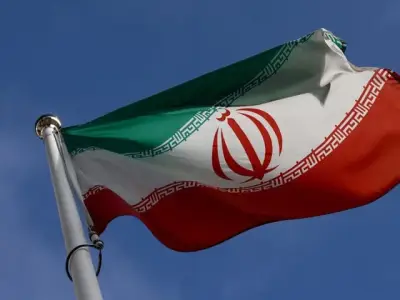
Those new to the culture of Iran and Persian vernacular, and those intending to successfully conduct diplomatic negotiations in Iran, must familiarise themselves with the term ta'arof, a style of interaction in which indirectness, politeness, and awareness of hierarchy are used to preserve respect and social etiquette. Having spent considerable time negotiating with Iranian officials and academic circles, I have come to understand that practices such as ta'arof are far more than ornamental features of Persian culture; they are subtle instruments through which power, legitimacy, and hierarchy are continuously performed and preserved.
The Art of Ta'arof in Iranian Diplomacy
The baseline rule of ta'arof is simple: you never take what is offered at face value, and you never say exactly what you want on the first try. Instead, you engage in a polite verbal tug-of-war. For example, when you try to pay a shopkeeper in Iran, they will routinely push your money away and say 'Qabel nadareh', which means 'It is not worth anything, and it is free for you.' If you actually take the item, as my husband once did, and walk away, you have crossed a significant social taboo (he was promptly called back and required to pay). The rule dictates that you insist on paying, they refuse again, you insist again, and usually by the third or fourth round, they accept the money. In view of the above, to Iranians, how you say something matters just as much as what you are actually saying.
Contrast with American Directness
In contrast, American communicative norms reflect a direct communication style that is low-context and efficiency-oriented. Clarity is prioritised over etiquette. Hence, while one expects ta'arof to create a buffer that allows one to navigate ambiguity and save face, one cannot overlook the fact that American directness minimises such ambiguity and can feel rather dismissive to those accustomed to interactional cues. Therefore, any credible intermediary between Washington and Tehran must possess fluency in both opposed strategic languages, and Pakistan is one of the very few states capable of doing so because its diplomatic culture has been shaped by both Persianate and Western strategic traditions.

Pakistan's Unique Position
Thanks to its cultural proximity to Iran, where Tehran's diplomatic and consular affairs in the United States (US) are handled by the Iranian Interests Section of the Pakistani Embassy in Washington, and its decades of post-Soviet strategic ties with the US, Pakistan undeniably possesses the necessary bicultural fluency and institutional memory required to bridge the divide between both worlds. Research on international mediation shows that successful intermediaries are not necessarily the most powerful actors, but those capable of reframing signals in ways that allow adversaries to de-escalate without suffering reputational loss. Effective mediation requires cultural fluency.
Understanding Both Sides
After decades of security cooperation with Washington, from Cold War alignment through the post-9/11 counterterrorism partnership, Pakistan has a good working understanding of America's preference for direct, transactional bargaining where outcomes are measured in deliverables. Iran chose Islamabad for its most substantive regional diplomacy during the crisis, while Washington simultaneously deepened institutional engagement with Pakistan, together signal that both sides recognise where the only workable neutral channel currently exists. Its relationship with Iran, especially pre-revolution alignment, and pragmatic engagement since the 2010s, has taught Islamabad that Tehran operates in a socio-political culture where national dignity and face-saving are central to what any agreement must deliver.

Navigating Diplomatic Deadlock
This distinction matters enormously in practice. When US President Trump issues a public ultimatum, or Iran makes harsh declarations, neither side can visibly retreat without appearing weak, hence creating the classic diplomatic deadlock that game theorists call a 'game of chicken', i.e. where both parties drive toward collision because neither can be seen to swerve first. Pakistan's value here is precisely its ability to translate Washington's pressure into language Tehran can absorb without offence, and reframing Iranian compromises as sovereign choices rather than surrenders. Few states possess this combination of institutional access, and in the current landscape, the Gulf's traditional brokers are constrained. Iranian strikes on Qatar's Ras Laffan knocked out 17% of Qatar's LNG capacity, thereby limiting its mediation role. Oman's track collapsed when Iran targeted its ports at Duqm and Salalah. The UAE has crossed from host to participant: it secretly struck Iran's Lavan Island refinery, making it the only nation besides Israel and the US to participate actively in the tensions. Pakistan has the default capacity to fill the vacuum, as it does not recognise Israel and carries no relationship with Tel Aviv that Tehran would object to.
Pakistan Walks a Tightrope
The Israeli targeting of Khamenei and Larijani has further destabilised the internal architecture Iran needs to negotiate credibly. In hierarchical systems, removing apex figures fractures chains of command and creates ambiguity over who can legitimately commit the state, hence favouring the Islamic Revolutionary Guard Corps' rise. With a military establishment in the driving seat, one sees narrow strategic flexibility, which inevitably makes diplomacy challenging. However, it is precisely this kind of fragmented environment that Pakistan is uniquely equipped to navigate. Islamabad's decades of managing engagement across the Afghan Taliban's fractured command architecture, including the Quetta Shura, the Haqqani Network and Doha-based political negotiators, have openly demonstrated its capacity to maintain simultaneous channels across ideologically driven actors who disagreed internally over whether to negotiate at all.
Leverage and Trust
Pakistan's detention of Mullah Baradar in 2010, widely interpreted as Islamabad's move to reassert control over Taliban negotiating channels he was pursuing independently, demonstrated not only that it understood where real enforcement capacity resided beneath formal organisational hierarchies, but that it possessed the leverage to shape who could negotiate, on what terms, and when. Therefore, Pakistan understands that in personalised, hierarchical political cultures like Iran, real leverage lies in strategic trust and discreet backchannel relationships. Moreover, Pakistan's status as a nuclear-armed state enhances its credibility as a mediator, as nuclear peers are often treated as 'strategically sovereign actors', and are more trusted in high-stakes security bargaining due to demonstrated escalation control and second-strike deterrence.
Inside the Islamabad Talks
It must be remembered that Pakistan is not only trying to architect a comprehensive peace settlement, but more crucially, providing a communication channel that both Washington and Tehran will actually use. That Iran chose Islamabad for its most substantive regional diplomacy during the crisis, while Washington simultaneously deepened institutional engagement with Pakistan, together signal that both sides recognise where the only workable neutral channel currently exists. Beijing already brokered the 2023 Saudi-Iran normalisation, and if Washington does not use Pakistan now, it cedes the region's deal-making role entirely. Pakistan has hosted Saudi, Egyptian and Turkish foreign ministers for coordinated de-escalation talks, deployed 13,000 troops to Saudi Arabia under its mutual defence pact, and has consistently consulted Gulf partners through parallel diplomacy even while maintaining Iranian trust.
Financial Vulnerability and Independence
Critics cite the UAE's withdrawal of its $3 billion deposit as proof that Pakistan's financial vulnerability makes it susceptible to Gulf pressure rather than an independent broker. In practice, ironically, Pakistan's dependence on multiple donors pulls it in the opposite direction: it has a structural incentive to avoid alignment and instead prioritise de-escalation to preserve room with all sides. A country simultaneously indebted to Gulf creditors, dependent on International Monetary Fund programmes shaped by Washington, and bordering Iran across 900 kilometres, cannot afford to be seen as anyone's proxy without losing the very access that makes it valuable. Research on third-party mediation consistently finds that mediators with 'multiple dependencies' across conflict parties achieve higher settlement rates than formally neutral states with no stakes in the game.
Historical Context
Washington's decades of security assistance (over $33 billion since 2002) have forged deep institutional ties between the United States and Pakistani militaries. That relationship was on open display when US President Trump's 'favourite' Field Marshal Munir visited the White House. This arrangement reflects the unusually direct trust between the two security establishments, which is much needed to make high-stakes back-channel diplomacy possible. Perhaps the most overlooked insight is that Pakistan has already lived through a covert nuclear accommodation with Washington. In the 1980s, the US consciously looked away from Pakistan's accelerating programme because the Afghan jihad partnership outweighed non-proliferation orthodoxy—what scholars of International Relations (IR) have called strategic ambiguity management.
Between Washington and Tehran
Iran is therefore being asked to trust a state that has itself navigated the passage between nuclear ambition and great-power accommodation and survived it. And for the US, Pakistan solves one core problem: how do you open a door you spent four decades welding shut? Direct talks carry crippling domestic costs for both Iran and the US, so Pakistan provides a plausible deniability framework that allows preliminary contact to proceed without either government publicly climbing down. Washington's real Iran objectives vis-à-vis stopping nuclearisation, keeping the Strait of Hormuz open, and checking proxy expansion are met by Pakistan, as it is the only interlocutor that can signal American seriousness to Tehran while simultaneously reassuring Riyadh and Abu Dhabi.
The China Factor
Then there is the China factor: Beijing already brokered the 2023 Saudi-Iran normalisation, and if Washington does not use Pakistan now, it cedes the region's deal-making role entirely. As established at the outset of this article, Islamabad's value lies in its simultaneous embeddedness in both US and Iranian strategic ecosystems, and as Touval and Zartman argue, this dual positioning fits the logic of 'insider-partial mediators', where actors with credible access to both sides outperform neutrals by transmitting assurances, interpreting intentions, and overcoming barriers to credible communication between rivals.
A Tested Mediator
Pakistan is not new to this role; it has already performed it. From managing the nuclear ambiguity bargain with Washington in the 1980s to keeping steady diplomatic channels with Tehran through decades of Western pressure, it has repeatedly acted as a quiet conduit between adversaries. Both capitals are therefore not being asked to trust a hypothetical mediator, but one they have already tested before, and whose failure they can least afford right now. In the logic of ta'arof, where real agreement only comes after both sides have been allowed to perform resistance long enough, Pakistan has the requisite patience and the position to hold that space open.