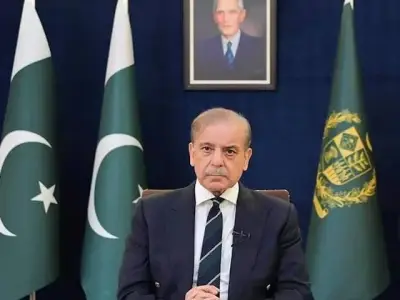
Prime Minister Shehbaz Sharif stated on Tuesday that Iran's ballistic missile program is not included in the Islamabad Memorandum of Understanding between Tehran and Washington, cautioning that "spoilers" are attempting to create confusion and disrupt the emerging peace process.
Clarification on the Memorandum
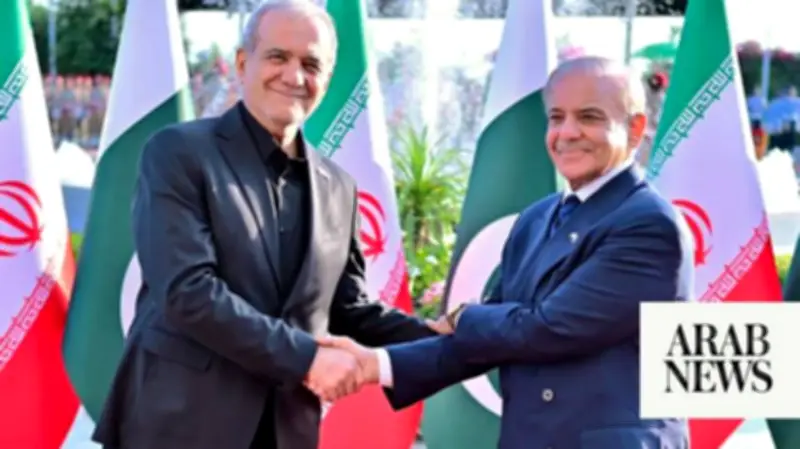
Speaking at a joint press conference with Iranian President Masoud Pezeshkian during his visit to Islamabad, Sharif said: "I would say with fullest command at my domain that this MoU does not mention about ballistic missiles. It was never on the table, it was never on the agenda and Iran side never wanted to even discuss about it."
The memorandum, signed last week after months of conflict, establishes a framework for a ceasefire, the reopening of the Strait of Hormuz, and negotiations toward a broader settlement. The first high-level talks under the agreement were held in Switzerland on Sunday, producing a roadmap toward a final deal within 60 days and mechanisms to support its implementation.

Warning Against Spoilers
Sharif warned that unnamed actors are trying to undermine the diplomatic process. "There are spoilers all over the world to scuttle this peace deal," he said. He also rejected double standards regarding missile capabilities, stating: "There cannot be double standards, two standards, that some countries can have ballistic missiles and Iran shouldn't have. You cannot digest this kind of duplicity."
Iran's Stance
President Pezeshkian echoed Sharif's position, emphasizing that Iran will not compromise on its missile program under any future agreement. "If it was not for Iran's missile capabilities, our country would have been plundered and destroyed and plowed by the US regime and the Zionist regime, like what the Israelis did in Gaza," he said. "We shall never compromise on our missile program and capabilities. And this shall never be part of any agreement between Iran and any other party."
Focus of the Islamabad Memorandum
The text of the Islamabad Memorandum centers on nuclear issues, including Iran's commitment not to develop nuclear weapons, arrangements for enriched material, and future negotiations on enrichment. The document contains no explicit reference to Iran's ballistic missile program, which both leaders confirmed falls outside the agreement's scope.
Pakistan's Mediation Role
President Pezeshkian's visit comes as Pakistan seeks to build on its mediation efforts between Washington and Tehran. Islamabad hosted the first direct high-level engagement between US and Iranian officials in April and helped facilitate a ceasefire that led to the signing of the memorandum. At talks held in Bürgenstock on Sunday, Pakistan and Qatar, acting as mediators, announced that the parties agreed on a roadmap toward a final agreement within 60 days. The mediators also said the sides established a communication line to safeguard commercial shipping through the Strait of Hormuz and agreed to create a Lebanon-focused "de-confliction cell" to support implementation of the accord.