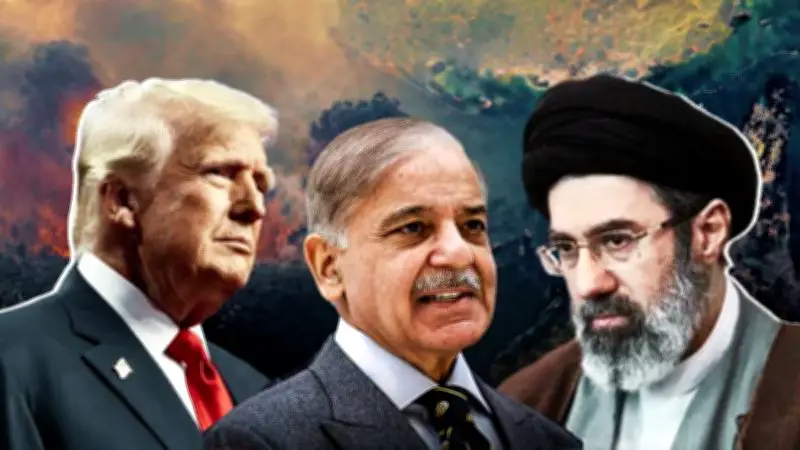
Prime Minister Shehbaz Sharif's announcement that the United States and Iran have reached a peace agreement marks what could become one of the most consequential diplomatic developments of recent years. At a time when the world appeared to be moving closer to another major regional conflict, the prospect of a negotiated settlement between Washington and Tehran offers a welcome reminder that diplomacy remains the most effective tool for resolving even the most difficult disputes.
Global and Regional Implications
If the agreement holds and is successfully implemented, it could help avert a wider conflict in the Middle East, stabilize global energy markets, and reduce tensions in a region that has long been a source of uncertainty for the international community. But beyond its global significance, the development also carries profound implications for Pakistan. It represents an opportunity for the country to redefine its role in international affairs and to translate diplomatic success into broader national gains.
The importance of a peace agreement between the United States and Iran cannot be overstated. Relations between the two countries have been marked by decades of hostility, mutual suspicion, sanctions, proxy conflicts, and recurring crises. Any confrontation involving Washington and Tehran carries consequences far beyond the borders of either country. The Middle East remains central to global energy supplies, international trade routes, and geopolitical stability.

Escalation between the United States and Iran would almost certainly have affected oil markets, increased shipping risks, disrupted supply chains, and created economic uncertainty across the world. For many countries, including Pakistan, the prospect of a prolonged conflict was particularly troubling. Rising energy prices would have placed additional pressure on economies already struggling with inflation and fiscal constraints. Regional instability would have affected trade, investment, and economic confidence. A peaceful resolution, therefore, represents not merely a diplomatic achievement but a significant contribution to global economic and strategic stability.
Pakistan's Mediating Role
Yet perhaps the most interesting aspect of this development is Pakistan's reported role in helping facilitate the agreement. For much of its history, Pakistan's international image has often been shaped by security concerns, regional rivalries, and domestic political challenges. While the country has played important roles in various international developments, it has rarely received recognition as a mediator capable of helping bridge differences between major powers. The apparent success of this diplomatic effort suggests that Pakistan may be entering a new phase in its foreign policy evolution.
What makes Pakistan uniquely positioned in such situations is its ability to maintain relationships across multiple geopolitical divides. It enjoys longstanding ties with the United States while also sharing deep historical, cultural, religious, and geographical connections with Iran. Pakistan maintains close relations with the Gulf states, strategic cooperation with China, and productive partnerships with Turkey and other regional actors. In a world increasingly characterized by polarization and strategic competition, countries that can communicate with all sides possess a valuable diplomatic asset.
Diplomatic Relevance and Credibility
The reported role played by Pakistan demonstrates the growing importance of what might be called diplomatic relevance. International influence today is not measured solely by military power or economic size. It is also measured by a country's ability to contribute to solutions. Nations that can facilitate dialogue, reduce tensions, and create diplomatic openings often find themselves exercising influence disproportionate to their economic weight. This is particularly important for Pakistan because it offers an alternative narrative about the country's place in the world.

For too long, Pakistan has often found itself discussed primarily in the context of challenges rather than opportunities. The country's diplomatic engagement in a matter of global importance presents a different image—one of responsibility, credibility, and constructive international engagement. Such moments matter because perceptions shape realities in international relations. Countries that are viewed as reliable and constructive partners are more likely to attract investment, strengthen diplomatic relationships, and enhance their standing within international institutions. International credibility is an asset, and like all assets, it can generate dividends if managed effectively.
Building on Success
The challenge now is to ensure that this diplomatic success does not remain an isolated achievement. Pakistan has an opportunity to build upon the goodwill and visibility generated by its role in facilitating dialogue. The country's leadership should view this moment not merely as a foreign policy success but as part of a broader strategy to enhance Pakistan's international profile. Diplomatic achievements should ultimately support national development objectives, including economic growth, investment attraction, trade expansion, and technological cooperation.
There is an important lesson here for policymakers. Strategic relevance alone is not enough. History is filled with examples of countries that possessed significant geopolitical importance but failed to convert that importance into sustainable economic progress. Pakistan must avoid that mistake. Diplomatic capital should be leveraged to attract investment, expand exports, strengthen regional connectivity, and deepen economic partnerships with countries across the world.
This is particularly relevant at a time when Pakistan is seeking to stabilize and modernize its economy. International investors and businesses pay close attention to a country's global standing and reputation. A nation perceived as a contributor to regional stability is naturally more attractive than one associated with instability or uncertainty. While diplomacy alone cannot solve economic challenges, it can help create a more favorable environment for economic engagement.
Realism and the Path Forward
At the same time, realism remains essential. Peace agreements are often easier to negotiate than to sustain. The issues that have divided the United States and Iran over the years are complex and deeply rooted. Implementation will require political will, patience, and continued diplomatic engagement from all parties involved. There will almost certainly be setbacks, disagreements, and moments of tension. For this reason, it would be premature to declare the end of regional instability. The true test of the agreement will be whether it survives changing political circumstances and evolves into a durable framework for coexistence and cooperation.
Nevertheless, even at this stage, the significance of the development should not be underestimated. The fact that dialogue prevailed over confrontation is itself an important achievement. Equally significant is the demonstration that Pakistan can play a constructive role in shaping international outcomes. In recent years, Pakistan has often spoken about its desire to move from geopolitics to geoeconomics. The two are not mutually exclusive. Indeed, successful geoeconomic strategies are frequently built upon diplomatic credibility and geopolitical relevance.
The country's recent diplomatic engagement provides an opportunity to connect these two objectives. Pakistan has shown that it can do more than respond to international events—it can help influence them. That is a position of strength. The task now is to transform this diplomatic success into a broader national strategy that advances economic growth, strengthens international partnerships, and enhances Pakistan's standing in the world. Moments of strategic opportunity are rare in international affairs. When they arrive, successful nations recognize them, build upon them, and convert them into lasting advantages. Pakistan may now have such an opportunity before it. The challenge is to seize it.