G7 Leaders Gather in France Amid Trump Tariff Threats and Iran Deal Questions
The leaders of the Group of Seven wealthy nations are set to arrive at a French lakeside resort on Monday, amid unease among allies over President Donald Trump's tariff threats and questions about the US commitment to the global order.
Discussing the next steps on Iran after the US and Tehran said they had reached a preliminary deal to end their war will be one of several issues the global leaders will wrestle with during the June 15-17 G7 summit in Evian-les-Bains. They will also seek common ground on the war in Ukraine, tackling global economic imbalances, and sourcing critical minerals outside of the dominant supplier China.
Trump is due to arrive at a time when global leaders are increasingly wary of the United States, although French officials were glad to have secured his presence after he left last year's G7 summit in Canada early.

Trump Threatens Tariffs on French Wine
Underscoring the tensions, Trump in an interview with the New York Post before leaving for the summit warned that the US would “have no choice” but to apply 100% tariffs on French wine unless Paris eliminates its digital tax on American tech giants. Many G7 leaders have been directly impacted by Trump's volatile moves on the global stage that have upended the Middle East, global trade, and diplomacy. His actions have led to larger questions about the US commitment to the post-war global order it helped establish.
Trump is due to meet Middle Eastern leaders and attend a working session with Ukrainian President Volodymyr Zelenskiy during the summit. The Zelenskiy meeting on Tuesday comes at a time when Russian advances in Ukraine have slowed and Ukraine seeks more military funding from its allies, but also after a barrage of attacks on Kyiv.
“This attack only strengthens our determination to do everything, with our allies and partners, to work towards a ceasefire that Russia stubbornly refuses, then to peace. We will work on it at the G7,” France's President Emmanuel Macron said in a post on X.
Zelenskiy's hand has improved since Trump famously told him in the Oval Office last year: “You don't have the cards.” But he may find greater US support elusive as Trump prioritises drawing a line under the Iran conflict, which has dented his support domestically.
Details of Iran Deal
G7 leaders will be keen to learn the details of the US-Iran deal. A memorandum of understanding is scheduled to be officially signed on Friday in Switzerland but precise terms were not immediately known. Trump said the Strait of Hormuz, a major shipping route for global oil and gas supplies that Iran has effectively shut down for months, would open on Friday, and that he had ordered the end of the US blockade of Iranian ports.
France and Britain have been working on a military plan to send a mission to the region that would help open the Strait, although that would depend on Tehran's green light. So far, it indicated it would not accept Western navies in the zone.
“With the ceasefire, it boosts the chances of the G7 being more constructive as we can now really talk about something operational, which we can work on collectively,” said a senior French official. A senior US official briefing reporters on Saturday acknowledged that the Franco-British mission could be useful going forward. The United Arab Emirates, directly harmed by the war, and key mediators Qatar and Egypt will also attend the G7.
Macron's Moment in Final Term
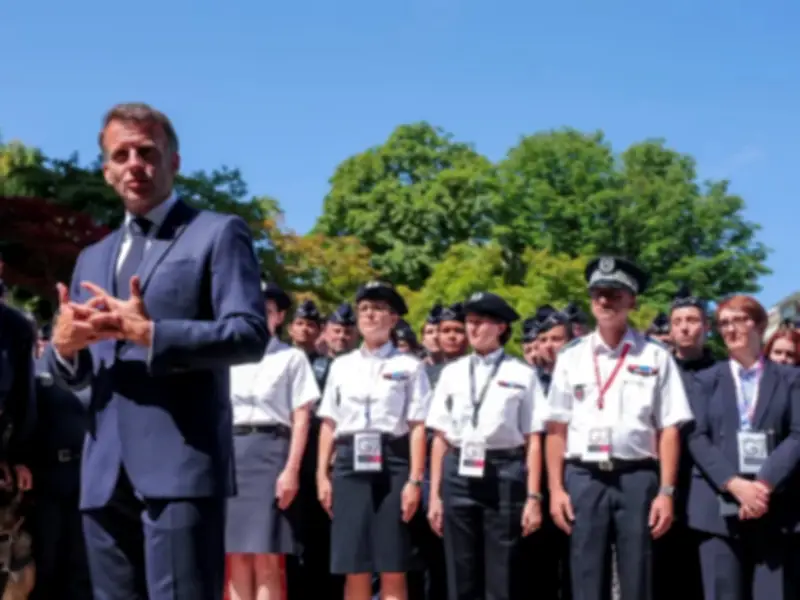
Trump will be greeted by Macron, for whom this summit serves as a diplomatic capstone for his second and final term in office, which draws to a close next year. He is increasingly seen as a lame duck domestically but he still has pull on the global stage, and was able to get Trump to agree to a glitzy dinner at the Palace of Versailles on Wednesday to mark 250 years of US independence, during which France played a decisive role in helping Washington to sever ties with Britain.

Macron has sought to use France's presidency of the G7 to push for action on global macroeconomic imbalances, a longstanding US concern, before Washington takes the chair of the G20 this year and the G7 next. France has framed the issue as a shared responsibility in that China overproduces, the United States overconsumes, and Europe underinvests. But Trump's warning on tariffs may cause some friction.
French officials had said that the digital tax issue would not be an issue for the G7, when asked before the summit. “On the question of taxing digital giants, decisions have already been made on this topic, so they’re not to be discussed at the G7. European rules apply,” the presidential adviser said.