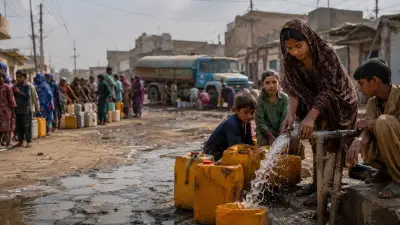
Pakistan has approximately 90 days of water storage capacity, significantly below regional and global standards, the government stated on Thursday. It announced plans to convene a high-level task force meeting to address growing concerns over water security in a country heavily dependent on rivers and seasonal flows.
Water storage deficit poses risks
The lack of adequate storage capacity poses risks to food security, economic stability, and long-term growth. The government is seeking to expand reservoirs and improve water management. However, efforts to expand water storage have long been slowed by political disagreements, particularly between upper and lower riparian provinces. Downstream regions such as Sindh have repeatedly expressed concerns that new dams and upstream diversions could reduce their share of water flows, while successive governments have struggled to build consensus on large reservoir projects.
Planning minister calls for consensus
“The dam is not against any province, the lack of water is against every province,” Planning Minister Ahsan Iqbal said, according to a social media post by his ministry, highlighting the need for consensus on building new reservoirs. The Ministry of Planning and Development also shared a graphic showing Pakistan’s water storage at roughly 90 days, compared with more than 120 days in comparable regional economies and a global standard of around 300 days.

“Pakistan’s water supply is insufficient for an economy dependent on rivers, glaciers, snowmelt and monsoon,” the ministry said.
Mounting water stress
The ministry’s statement comes at a time when Pakistan faces mounting water stress due to population growth, erratic monsoon patterns, and shrinking glacier reserves. Pakistan is also navigating heightened tensions over transboundary water resources after India suspended the decades-old Indus Waters Treaty (IWT) last year and blamed Pakistan for a militant attack in Indian-administered Kashmir that killed 26 people, an allegation Pakistan denied.
Signed in 1960, the treaty was brokered by the World Bank and governs the distribution of waters from the Indus river system, allocating the western rivers — Indus, Jhelum and Chenab — primarily to Pakistan, which relies on them for most of its agriculture. The agreement was long viewed as one of the most durable arrangements between the nuclear-armed neighbors, surviving decades of hostility, until the two countries went to a brief but intense military conflict in May 2025.
Task force on water security
“The Ministry of Planning, Development & Special Initiatives has arranged a meeting of the Task Force on Water Security, focused on expanding storage capacity, strengthening water management, and promoting urban water solutions,” the statement said. Officials say addressing the storage gap will require a mix of large, medium and small dams, alongside measures such as groundwater recharge, floodwater retention and rainwater harvesting in urban areas.
“Strengthening water security today is essential for food security, economic stability, and a prosperous Pakistan tomorrow,” the ministry said.