A senior official from US President Donald Trump's Board of Peace has revealed plans for a pilot "humanitarian zone" in southern Gaza, designed to shelter tens of thousands of vetted Palestinian civilians. The initiative, disclosed to AFP on condition of anonymity, is envisioned as a "starting point" for the Palestinian technocratic committee tasked with governing Gaza's transitional phase under Trump's 20-point peace plan.
Location and Security Arrangements
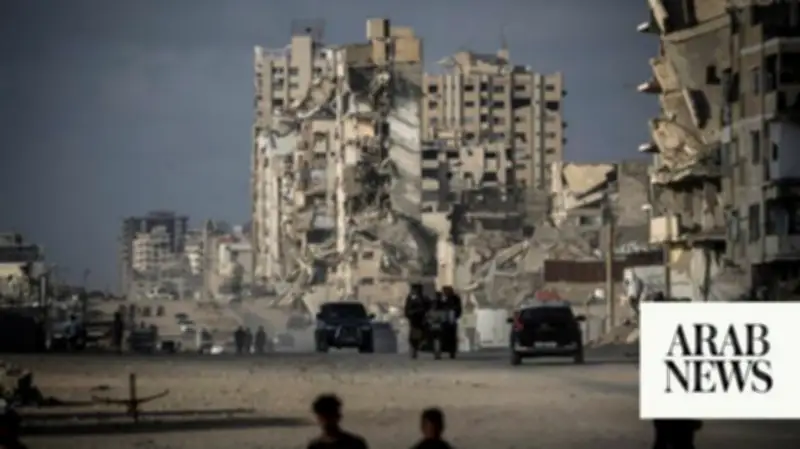
The proposed zone is being eyed for Rafah, a city at Gaza's southern edge that was heavily damaged by Israeli bombing during the war and is now largely under Israeli military control. The official stated that the zone would be secured by multinational troops from the International Stabilization Force (ISF), a fledgling body operating under the Board of Peace. The National Committee for the Administration of Gaza (NCAG), a group of Palestinian technocrats established by the Board, would handle screening and access control, supported by the ISF.
According to the official, the ISF would act as a "kind of buffer" between the Palestinian population and the Israeli military. "A screening mechanism will ensure that armed individuals and militants cannot enter these safe humanitarian zones," he said, adding that the Israeli military (IDF) would have no contact with the civilian population and no role in separating these areas from the rest of Gaza.

Movement and Governance
The official emphasized that movement in and out of the zone "will remain free for all unarmed civilians." He explained that the pilot project could enable tens of thousands of people to voluntarily relocate to the area, where the NCAG would exercise effective governance. "There's one pilot project we're looking at particularly, that maybe you can get the NCAG a starting point, you can enable tens of thousands to come if they wish voluntarily to this area, and you start giving them a space where they exercise effective governance and they're the administration," the official said.
However, no construction work has begun, and the exact positioning within Rafah remains vague. The NCAG is currently stuck in Cairo and has yet to enter Gaza, as efforts to advance the US-backed ceasefire plan have stalled for months.
Legal Concerns and Criticism
The concept of closed humanitarian zones has raised serious reservations among diplomats and NGO officials working in Gaza. Speaking to AFP on condition of anonymity, they argued that such a mechanism appears incompatible with international humanitarian law. Critics say grouping civilians into demarcated areas subject to access controls could amount to forced displacement, restrict freedom of movement, and undermine the principle of impartiality.
Since the truce between Israel and Hamas came into effect in October 2025, Israeli forces have expanded their presence in Gaza, now controlling more than 60 percent of the territory. The Board of Peace, formally established earlier this year as part of the UN Security Council-endorsed ceasefire plan, aims to facilitate a transition away from Hamas rule while restoring civilian administration and basic services.