President Donald Trump recently suggested a potential ceasefire after a conversation with Russian President Vladimir Putin, stating, "I suggested a little bit of a ceasefire, and I think he might do that." However, despite such proposals, Russia shows little sign of ending the war that has claimed nearly half a million lives since the full-scale invasion began over four years ago.
Shifting Global Focus
The war in Ukraine and US diplomatic efforts for a ceasefire have taken a backseat to the crisis in the Middle East. Initially, Russia appeared to benefit from the Iran conflict, with rising oil prices, lifted sanctions on Russian energy exports, and diversion of US munitions from Europe to the Middle East. Yet, battlefield developments tell a different story.
Territorial Stalemate
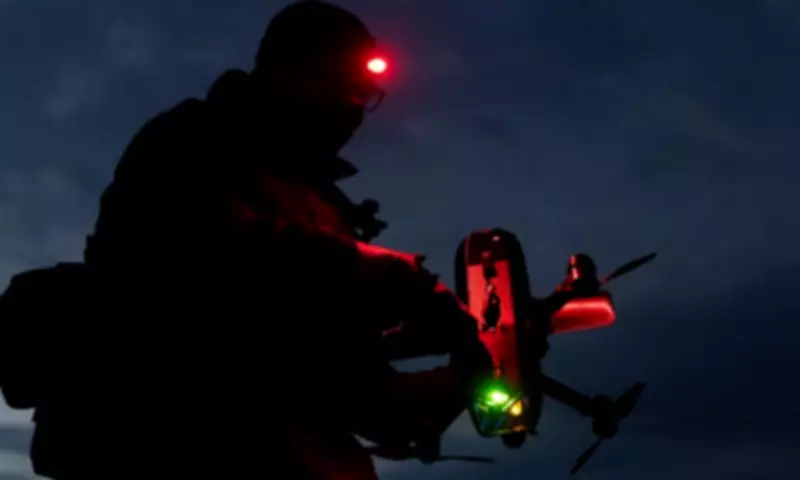
Russia made almost no territorial gains in March and may have lost some ground since mid-March, despite launching a spring-summer offensive. The Institute for the Study of War assesses that Russia is unlikely to capture Ukraine's heavily fortified "fortress belt" in the Donbas region. Ukraine estimates Russian casualties at a record 35,351 per month in March, with 96 percent caused by drones.

Ukraine has improved its air defense, downing a record 33,000 drones in March. Long-range strikes deep into Russia have also increased, targeting oil infrastructure. Reuters estimates that 40 percent of Russia's oil export capacity has been taken offline by Ukrainian strikes.
Growing Indigenous Capabilities
While Ukraine still relies on US systems like Patriot interceptors, European countries now provide most military aid. Ukraine's indigenous drone production and air defense coordination have led to lucrative defense deals with Persian Gulf and European countries. Foreign Minister Andrii Sybiha claims Ukraine's frontline position is the "strongest" in a year.
Retired Australian General Mick Ryan argues that "the strategic scales are beginning to tip in Ukraine's favor." Though not yet winning, Ukraine appears to be avoiding defeat.
Drone Swarms and Stalemate
Russian advances average 15 to 70 meters per day since 2024, the slowest in a century, with over 300 Russian casualties per kilometer captured. Austrian military analyst Franz-Stefan Gady notes that "the Russian strategy remains 'attrition, attrition, attrition.'" The front line is a drone-dominated no-man's land, making large-scale attacks difficult.
Olga Oliker of Crisis Group states, "The advances we're seeing aren't what will change the future of the war. Both sides are still fighting in the expectation that the other will break politically."
Signs of Strain in Russia
The Kremlin has scaled back its May 9 Victory Day parade, with no military hardware on display for the first time in decades. Russia has also throttled internet services, and Putin remains in isolation due to assassination fears. However, public opposition to the war is rare, and Putin shows no sign of backing down.
Ukraine's Resilience
Ukraine faces recruiting and manpower issues, but fears of a Russian victory have faded. Jeffrey Edmonds, a former Pentagon staffer, says, "Everything is proving more resilient than people anticipated." US-led ceasefire efforts are on hold due to focus on Iran, but Ukraine's position is stronger than expected.
While the war's end remains unclear, Ukraine's resilience has challenged assumptions of inevitable defeat.