The United Nations has formally added Israel to its annual blacklist of parties accused of conflict-related sexual violence, a move that has intensified tensions between Israel and the world body. The listing, based on a UN report documenting alleged violations against Palestinian detainees, drew a sharp rebuke from Israel's UN Ambassador Danny Danon and renewed criticism of the UN's handling of the Gaza war.
UN Report Details Alleged Abuses
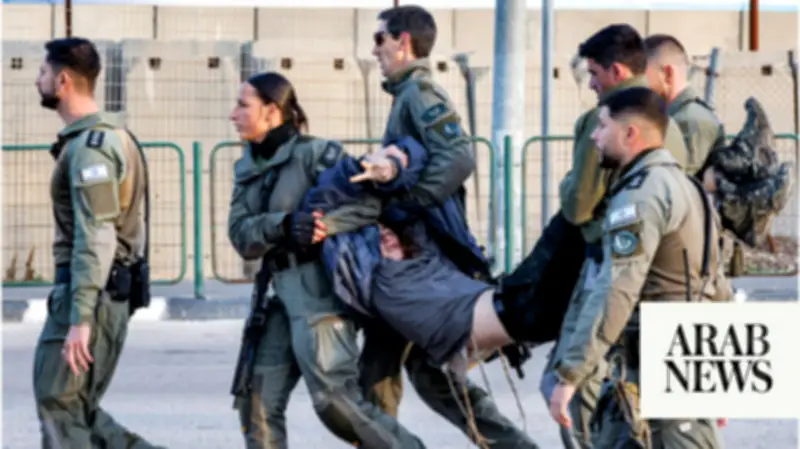
The UN's annual report on conflict-related sexual violence, dated April 21, 2025, documented patterns of sexual violence against Palestinians detained in Israel and the occupied Palestinian territories. It verified multiple incidents, including rape, gang rape, physical violence to the genitals, and threats of rape, involving 14 men, seven women, nine boys, and one girl from Gaza and the West Bank. According to the report, 13 cases occurred in 2025 and 18 in 2023 and 2024.
The alleged perpetrators included Israeli armed and security forces, such as the Israel Defense Forces, the Israel Prison Service's Keter special forces, and the police counterterrorism unit Yamam. Violations reportedly occurred during detention and interrogation at sites including Sde Teiman, Etzion detention center, Majnunah camp, an unidentified military base, and several Israel Prison Service facilities.

Israel's Furious Response
At a June 19 General Assembly event marking the International Day for the Elimination of Sexual Violence in Conflict, Danon berated senior UN officials for the inclusion. In a May 28 post on X, he denounced the “political decision” as “disconnected from the facts and reality.” In another post, he wrote: “We are done with the secretary-general’s lies. Equating the democratic State of Israel with Hamas terrorists is a new low.”
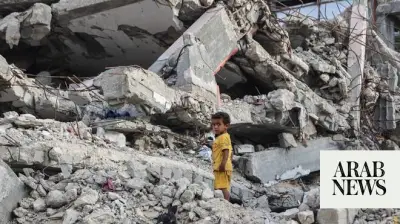
The UN had already added Hamas to the sexual violence blacklist following the Oct. 7, 2023 attacks on southern Israel, which killed about 1,200 people and took 251 hostage. Israel's military response in Gaza has since killed more than 73,000 Palestinians, displaced roughly 90 percent of the population, and destroyed entire neighborhoods, according to UN reports.
Symbolic but Potentially Consequential
Brian Katulis, a senior fellow at the Middle East Institute, told Arab News that the listing is “mostly symbolic on its own” but could prompt some countries to cut support or downgrade ties with Israel. He said it could be used as a basis for more measures to isolate Israel. However, he noted that such mechanisms “mostly document alleged abuses after the fact and rarely do much to prevent future instances.”
Harout Ekmanian, a public international law attorney, told Arab News that the listing “is not a criminal judgment and should not be treated as one.” He explained it is a reporting and compliance mechanism under UN Security Council Resolution 1960 for identifying parties credibly suspected of patterns of rape or other conflict-related sexual violence. Its legal significance lies in documentation, public attribution, and follow-up pressure, not in establishing individual criminal responsibility.
Broader Context of Allegations
The allegations against Israel are not new. A March 2025 report by a UN Independent International Commission of Inquiry found that sexual and gender-based violence is being perpetrated across the Occupied Palestinian Territory as a strategy of war. In August 2024, the UN cited credible information of sexual violence by Israeli forces against Palestinian detainees and said inspectors had been denied access to facilities.
The UN report noted that the verified cases should be seen as indicative rather than comprehensive, citing continued denial of access by Israel to detention sites and Gaza. It added that challenges to reporting sexual violence persisted due to explicit threats by Israeli armed and security forces coercing detainees not to report abuse.
In May 2025, Israel dismissed rape allegations outlined in a column by New York Times journalist Nicholas Kristof, which was based on accounts from 14 Palestinian victims, and threatened to sue the newspaper.

Escalating UN-Israel Tensions
The blacklist designation and Israel's threats to cut ties with UN Secretary-General Antonio Guterres reflect a relationship that has grown increasingly hostile since Oct. 7, 2023. Israeli authorities have repeatedly condemned Guterres and other UN officials over criticism of the war in Gaza, and Guterres was declared persona non grata in Israel in 2024.
Whether or not the blacklist produces immediate consequences, it adds to an expanding UN record of alleged abuses that will be more difficult for the international community to ignore. The UN report itself underscores that it does not make legal determinations regarding armed conflicts or prejudge the legal status of non-state actors, but the listing still carries reputational and diplomatic weight.